

68
second layer which defines the land use in Japan’s urban fringe is a “Rural” layer
based on the Agricultural Land Act of 1952. The Japanese agricultural system had
long been based on a landlord-tenant farmer system, which prohibited Japanese
agriculture from becoming modernized and thus caused tenant farmers to endure
extremely low income. The Agricultural Land Act aimed to eliminate such a system
and modernize agriculture by making farmland available to all tenant farmers. The
Act, however, also prohibited non-farmers from owning their own farmlands
because the former landlord-tenant farmer system could very well have been
revived if farmlands were bought by non-farmers, especially by enterprises, and
rented out to farmers.
The Agricultural Land Act can therefore be interpreted as an act that aimed to
draw a line between people: sharply differentiating farmers and non-farmers. The
Urban Planning Act of 1968 was an act to draw a line between land use differentiating urban (UPA) and rural (UCA) land uses. Japanese did not ignore but have
carefully been obeying the regulations. However, because these two layers followed different orders – people-oriented versus land-oriented – a chaotic-looking
situation occurred when these two were overlaid. The situation should not be
labelled “disordered” because each layer is well controlled albeit following different orders. Order is there, but is not visible at a glance. The layers must be separated to understand the order of each layer, which is called an underlying “hidden
order” (Ashihara 1989).
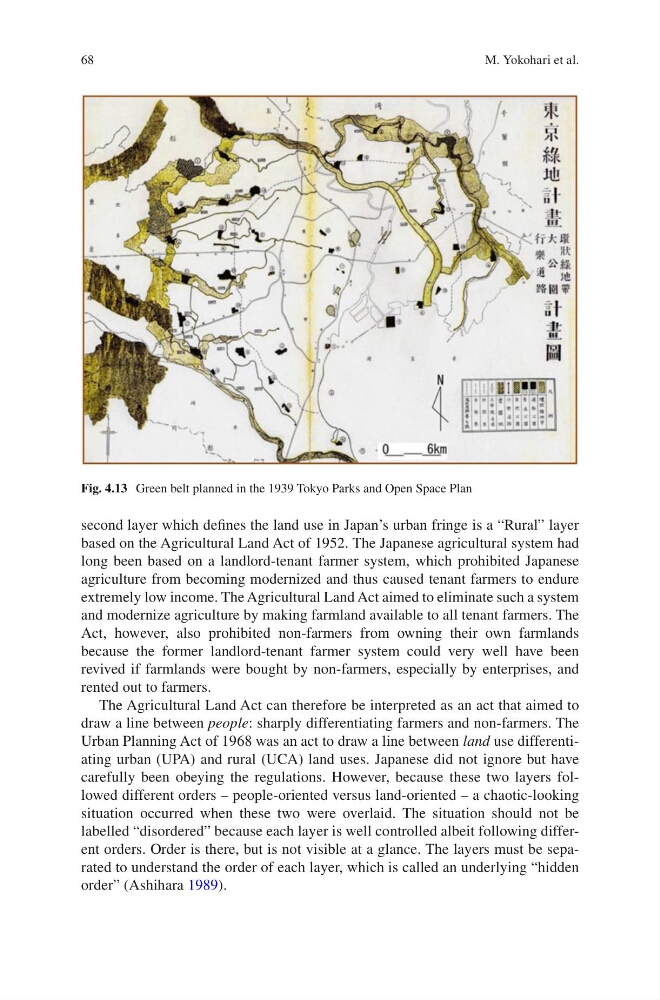
Fig. 4.13 Green belt planned in the 1939 Tokyo Parks and Open Space Plan
M. Yokohari et al.
second layer which defines the land use in Japan’s urban fringe is a “Rural” layer
based on the Agricultural Land Act of 1952. The Japanese agricultural system had
long been based on a landlord-tenant farmer system, which prohibited Japanese
agriculture from becoming modernized and thus caused tenant farmers to endure
extremely low income. The Agricultural Land Act aimed to eliminate such a system
and modernize agriculture by making farmland available to all tenant farmers. The
Act, however, also prohibited non-farmers from owning their own farmlands
because the former landlord-tenant farmer system could very well have been
revived if farmlands were bought by non-farmers, especially by enterprises, and
rented out to farmers.
The Agricultural Land Act can therefore be interpreted as an act that aimed to
draw a line between people: sharply differentiating farmers and non-farmers. The
Urban Planning Act of 1968 was an act to draw a line between land use differentiating urban (UPA) and rural (UCA) land uses. Japanese did not ignore but have
carefully been obeying the regulations. However, because these two layers followed different orders – people-oriented versus land-oriented – a chaotic-looking
situation occurred when these two were overlaid. The situation should not be
labelled “disordered” because each layer is well controlled albeit following different orders. Order is there, but is not visible at a glance. The layers must be separated to understand the order of each layer, which is called an underlying “hidden
order” (Ashihara 1989).
Fig. 4.13 Green belt planned in the 1939 Tokyo Parks and Open Space Plan
M. Yokohari et al.