

108
Yanagisawa, and three teachers from Gojome High School agreed that local youth
are an important focus group for the town to train human resources who take initiatives to design the future of Gojome. Based on this common understanding, a workshop targeting a group of nine local youth in the town was conducted.
5.3.2 Conceptual Design of Workshop: Placemaking Concept
To develop a workshop for the local youth, the concept of placemaking was utilized.
Placemaking has emerged in urban studies and is a process that designs a third place
in urban environment. Third place is a concept coined by American urban sociologist
Ray Oldenburg and refers to places inside cities where people feel comfortable to be
and to socialize with others, which are separately recognized from their home (first
place) and their work environment (second place) (Oldenburg 1999). Some examples
of third places are cafés, libraries, and art galleries. Oldenburg’s argument is that cities need the function of a third place to ensure the well-being of residents. However,
in reality, the process of placemaking extends beyond the physical planning of third
places; it includes various forms of discussions and negotiations among different
stakeholders both in its planning and the actual operation of such third places.
Mitomo (2015), a leading scholar on placemaking concept in Japan, conducted a
review on the placemaking concept. Although the covered literature was limited to
0.0%
10.0%
20.0%
30.0%
40.0%
50.0%
60.0%
70.0%
80.0%
90.0%
100.0%
0
2,000
4,000
6,000
8,000
10,000
12,000
14,000
16,000
18,000
1980 1982 1984 1986 1988 1990 1992 1994 1996 1998 2000 2002 2004 2006 2008 2010 2012 2014
Population
Age 0-15
Age 16-64
Age 65-plus
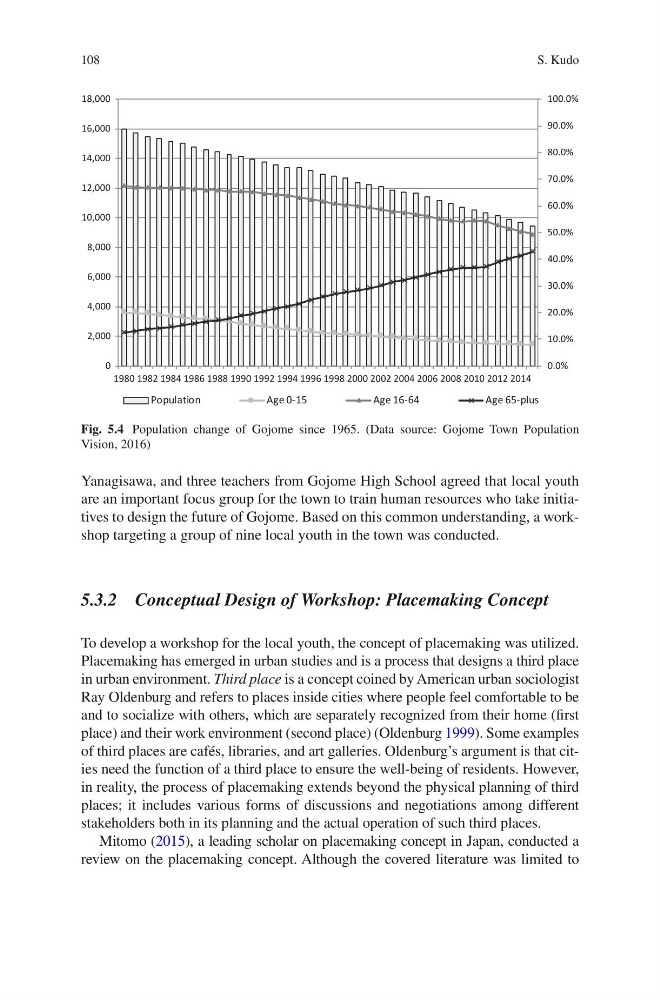
Fig. 5.4 Population change of Gojome since 1965. (Data source: Gojome Town Population
Vision, 2016)
S. Kudo
Yanagisawa, and three teachers from Gojome High School agreed that local youth
are an important focus group for the town to train human resources who take initiatives to design the future of Gojome. Based on this common understanding, a workshop targeting a group of nine local youth in the town was conducted.
5.3.2 Conceptual Design of Workshop: Placemaking Concept
To develop a workshop for the local youth, the concept of placemaking was utilized.
Placemaking has emerged in urban studies and is a process that designs a third place
in urban environment. Third place is a concept coined by American urban sociologist
Ray Oldenburg and refers to places inside cities where people feel comfortable to be
and to socialize with others, which are separately recognized from their home (first
place) and their work environment (second place) (Oldenburg 1999). Some examples
of third places are cafés, libraries, and art galleries. Oldenburg’s argument is that cities need the function of a third place to ensure the well-being of residents. However,
in reality, the process of placemaking extends beyond the physical planning of third
places; it includes various forms of discussions and negotiations among different
stakeholders both in its planning and the actual operation of such third places.
Mitomo (2015), a leading scholar on placemaking concept in Japan, conducted a
review on the placemaking concept. Although the covered literature was limited to
0.0%
10.0%
20.0%
30.0%
40.0%
50.0%
60.0%
70.0%
80.0%
90.0%
100.0%
0
2,000
4,000
6,000
8,000
10,000
12,000
14,000
16,000
18,000
1980 1982 1984 1986 1988 1990 1992 1994 1996 1998 2000 2002 2004 2006 2008 2010 2012 2014
Population
Age 0-15
Age 16-64
Age 65-plus
Fig. 5.4 Population change of Gojome since 1965. (Data source: Gojome Town Population
Vision, 2016)
S. Kudo