

107
over, which was 34.4% in 2016, and the highest depopulation rate in the last three
census surveys. Gojome is a representative small-size municipality in rural Japan
where aging and shrinking population have influenced local communities in terms
of its economic, environmental, and social activities.
Figure 5.4 shows population changes of Gojome for 1965–2015, and population
predictions until 2040. In 1965, the total population of Gojome was 18,862 people.
The town has experienced continual population decline since 1965, and in 2015 the
total population was 9433 people, about 50% of the total population size of 1965
(Fig. 5.4). Subsequently, the share of young people (age 0–15) declined over time:
around 20% in 1980, but only 7.9% of the total population today. This continuous
decline of local youth further accelerates the aging of Gojome.
One main reason for the town’s continuous and constant depopulation is the outmigration of local youth, particularly 15- to 18-year-olds. According to the principal
of Gojome Junior High School, the only junior high school in Gojome, only 30% of
graduates choose to go Gojome High School, the only high school in Gojome. The
remaining graduates go to high schools in neighboring municipalities. The author
and, Ryu Yanagisawa, community development officer in Gojome, had a discussion
with the teachers of Gojome High School and shared a concern that the type of
education local schools have provided might have influenced the local youth’s
mindsets to naturally imagine their better future would always be outside the town.
We also shared a concern that the town is losing its next generation of residents
who play a key role in sustaining local activities and traditions. The author, Mr.
Akita Prefecture
Gojome
town
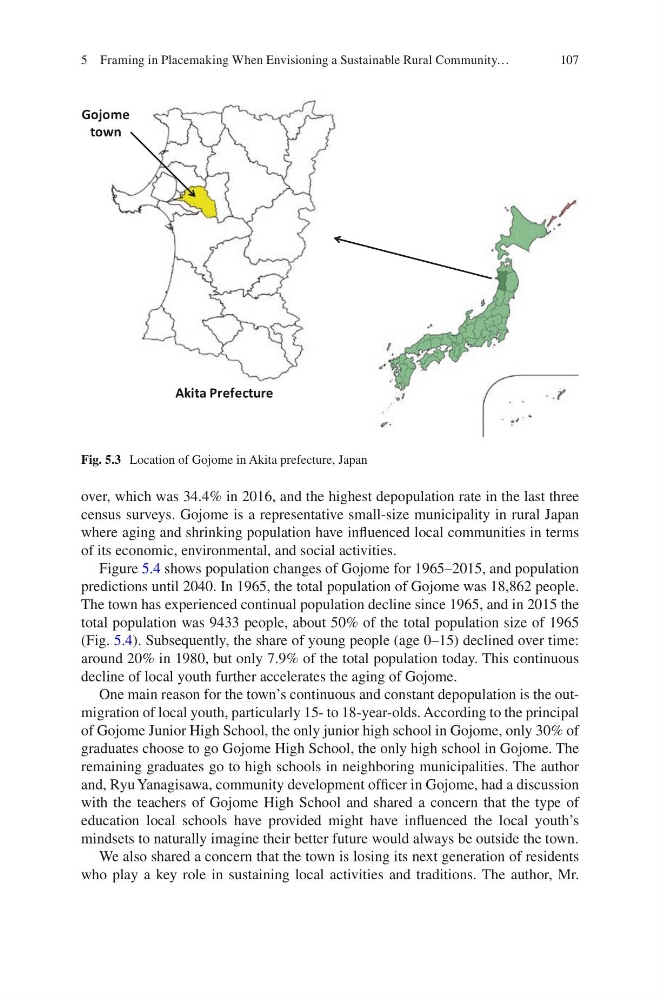
Fig. 5.3 Location of Gojome in Akita prefecture, Japan
5 Framing in Placemaking When Envisioning a Sustainable Rural Community…
over, which was 34.4% in 2016, and the highest depopulation rate in the last three
census surveys. Gojome is a representative small-size municipality in rural Japan
where aging and shrinking population have influenced local communities in terms
of its economic, environmental, and social activities.
Figure 5.4 shows population changes of Gojome for 1965–2015, and population
predictions until 2040. In 1965, the total population of Gojome was 18,862 people.
The town has experienced continual population decline since 1965, and in 2015 the
total population was 9433 people, about 50% of the total population size of 1965
(Fig. 5.4). Subsequently, the share of young people (age 0–15) declined over time:
around 20% in 1980, but only 7.9% of the total population today. This continuous
decline of local youth further accelerates the aging of Gojome.
One main reason for the town’s continuous and constant depopulation is the outmigration of local youth, particularly 15- to 18-year-olds. According to the principal
of Gojome Junior High School, the only junior high school in Gojome, only 30% of
graduates choose to go Gojome High School, the only high school in Gojome. The
remaining graduates go to high schools in neighboring municipalities. The author
and, Ryu Yanagisawa, community development officer in Gojome, had a discussion
with the teachers of Gojome High School and shared a concern that the type of
education local schools have provided might have influenced the local youth’s
mindsets to naturally imagine their better future would always be outside the town.
We also shared a concern that the town is losing its next generation of residents
who play a key role in sustaining local activities and traditions. The author, Mr.
Akita Prefecture
Gojome
town
Fig. 5.3 Location of Gojome in Akita prefecture, Japan
5 Framing in Placemaking When Envisioning a Sustainable Rural Community…