

11
ness opportunities such as the prospect of mega solar power. This is the true worth
of Vision 2050.
A low-carbon society is one that keeps the use of the fossil resources that emit
greenhouse gases under control. However, this does not mean the aim is to suppress
human activities or economic development. A happy low-carbon society is not some
pipe dream. Rather, it is a vision for feasible sustainable development.
1.2.7 Premises Consequent on Being a Realistic Vision
Vision 2050 is premised by growth in developing countries and standards of living
being maintained in developed countries. If the people of developing countries have
standards of living on par with those of developed countries in 2050, then the
amount of energy consumed will swell to triple the level of the benchmark year.
However, this does not mean that anyone has the right to say that for this reason
developing countries want to maintain their statuses of living at current levels. The
modernization of developing countries cannot be denied. Moreover, it is clear in the
first place that if this happened, then we would be faced with a world of terrorism,
coups d’état, and gloom.
Furthermore, while it is crucial that we rethink our lifestyles when it comes to
reducing energy use, we must avoid being excessive in our expectations. There are
Solar cells roof
Improved thermal
insulation with doubleglazed windows
Refrigerator with high
energy efficiency
Fuel cells with high
energy efficiency, hot
water supply by heat
pump, etc.
Hybrid vehicles,
electric vehicles, etc.
Insulation
material
Refrigerators: Annual power
consumption
Made in1995: 990 kWh
Made in 2015: 180 kWh (440 L)
Comfortable living and health
promotion
Air conditioners: Annual power
consumption
Made in 1995: 1,490 kWh
Made in 2016: 816 kWh (2.8-kW class)
Energy-saving with
LED light bulbs
Air conditioner with
high energy efficiency
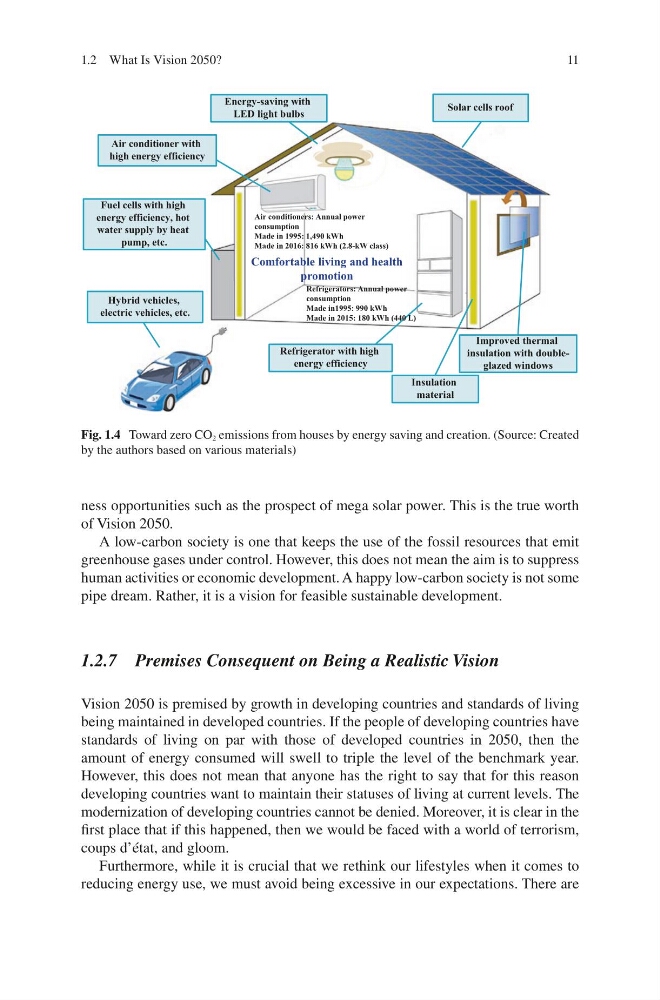
Fig. 1.4 Toward zero CO 2 emissions from houses by energy saving and creation. (Source: Created
by the authors based on various materials)
1.2 What Is Vision 2050?
ness opportunities such as the prospect of mega solar power. This is the true worth
of Vision 2050.
A low-carbon society is one that keeps the use of the fossil resources that emit
greenhouse gases under control. However, this does not mean the aim is to suppress
human activities or economic development. A happy low-carbon society is not some
pipe dream. Rather, it is a vision for feasible sustainable development.
1.2.7 Premises Consequent on Being a Realistic Vision
Vision 2050 is premised by growth in developing countries and standards of living
being maintained in developed countries. If the people of developing countries have
standards of living on par with those of developed countries in 2050, then the
amount of energy consumed will swell to triple the level of the benchmark year.
However, this does not mean that anyone has the right to say that for this reason
developing countries want to maintain their statuses of living at current levels. The
modernization of developing countries cannot be denied. Moreover, it is clear in the
first place that if this happened, then we would be faced with a world of terrorism,
coups d’état, and gloom.
Furthermore, while it is crucial that we rethink our lifestyles when it comes to
reducing energy use, we must avoid being excessive in our expectations. There are
Solar cells roof
Improved thermal
insulation with doubleglazed windows
Refrigerator with high
energy efficiency
Fuel cells with high
energy efficiency, hot
water supply by heat
pump, etc.
Hybrid vehicles,
electric vehicles, etc.
Insulation
material
Refrigerators: Annual power
consumption
Made in1995: 990 kWh
Made in 2015: 180 kWh (440 L)
Comfortable living and health
promotion
Air conditioners: Annual power
consumption
Made in 1995: 1,490 kWh
Made in 2016: 816 kWh (2.8-kW class)
Energy-saving with
LED light bulbs
Air conditioner with
high energy efficiency
Fig. 1.4 Toward zero CO 2 emissions from houses by energy saving and creation. (Source: Created
by the authors based on various materials)
1.2 What Is Vision 2050?