

xxix
do not fit into these categories, such as lower back pain, atopy, and depression. The
deciding factors, then, are big data and analysis, as well as the utilization of information technology such as artificial intelligence. It is not hard to imagine that a huge
industry will be created from such technologies.
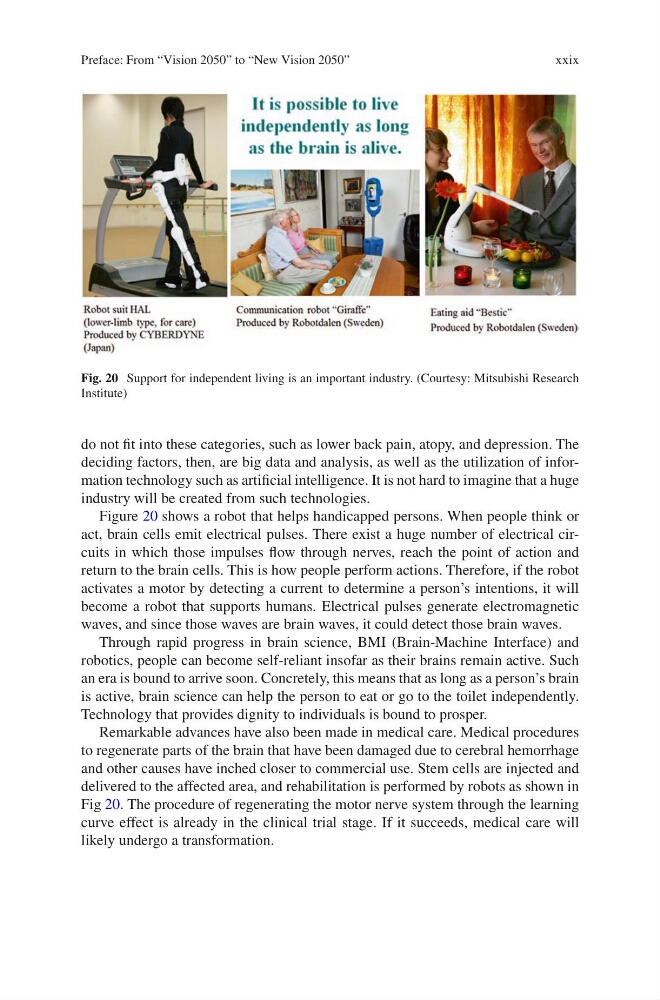
Figure 20 shows a robot that helps handicapped persons. When people think or
act, brain cells emit electrical pulses. There exist a huge number of electrical circuits in which those impulses flow through nerves, reach the point of action and
return to the brain cells. This is how people perform actions. Therefore, if the robot
activates a motor by detecting a current to determine a person’s intentions, it will
become a robot that supports humans. Electrical pulses generate electromagnetic
waves, and since those waves are brain waves, it could detect those brain waves.
Through rapid progress in brain science, BMI (Brain-Machine Interface) and
robotics, people can become self-reliant insofar as their brains remain active. Such
an era is bound to arrive soon. Concretely, this means that as long as a person’s brain
is active, brain science can help the person to eat or go to the toilet independently.
Technology that provides dignity to individuals is bound to prosper.
Remarkable advances have also been made in medical care. Medical procedures
to regenerate parts of the brain that have been damaged due to cerebral hemorrhage
and other causes have inched closer to commercial use. Stem cells are injected and
delivered to the affected area, and rehabilitation is performed by robots as shown in
Fig 20. The procedure of regenerating the motor nerve system through the learning
curve effect is already in the clinical trial stage. If it succeeds, medical care will
likely undergo a transformation.
Fig. 20 Support for independent living is an important industry. (Courtesy: Mitsubishi Research
Institute)
Preface: From “Vision 2050” to “New Vision 2050”
do not fit into these categories, such as lower back pain, atopy, and depression. The
deciding factors, then, are big data and analysis, as well as the utilization of information technology such as artificial intelligence. It is not hard to imagine that a huge
industry will be created from such technologies.
Figure 20 shows a robot that helps handicapped persons. When people think or
act, brain cells emit electrical pulses. There exist a huge number of electrical circuits in which those impulses flow through nerves, reach the point of action and
return to the brain cells. This is how people perform actions. Therefore, if the robot
activates a motor by detecting a current to determine a person’s intentions, it will
become a robot that supports humans. Electrical pulses generate electromagnetic
waves, and since those waves are brain waves, it could detect those brain waves.
Through rapid progress in brain science, BMI (Brain-Machine Interface) and
robotics, people can become self-reliant insofar as their brains remain active. Such
an era is bound to arrive soon. Concretely, this means that as long as a person’s brain
is active, brain science can help the person to eat or go to the toilet independently.
Technology that provides dignity to individuals is bound to prosper.
Remarkable advances have also been made in medical care. Medical procedures
to regenerate parts of the brain that have been damaged due to cerebral hemorrhage
and other causes have inched closer to commercial use. Stem cells are injected and
delivered to the affected area, and rehabilitation is performed by robots as shown in
Fig 20. The procedure of regenerating the motor nerve system through the learning
curve effect is already in the clinical trial stage. If it succeeds, medical care will
likely undergo a transformation.
Fig. 20 Support for independent living is an important industry. (Courtesy: Mitsubishi Research
Institute)
Preface: From “Vision 2050” to “New Vision 2050”