

87
depending on the weather, a power storage system is necessary to achieve a balance
between power supply and demand.
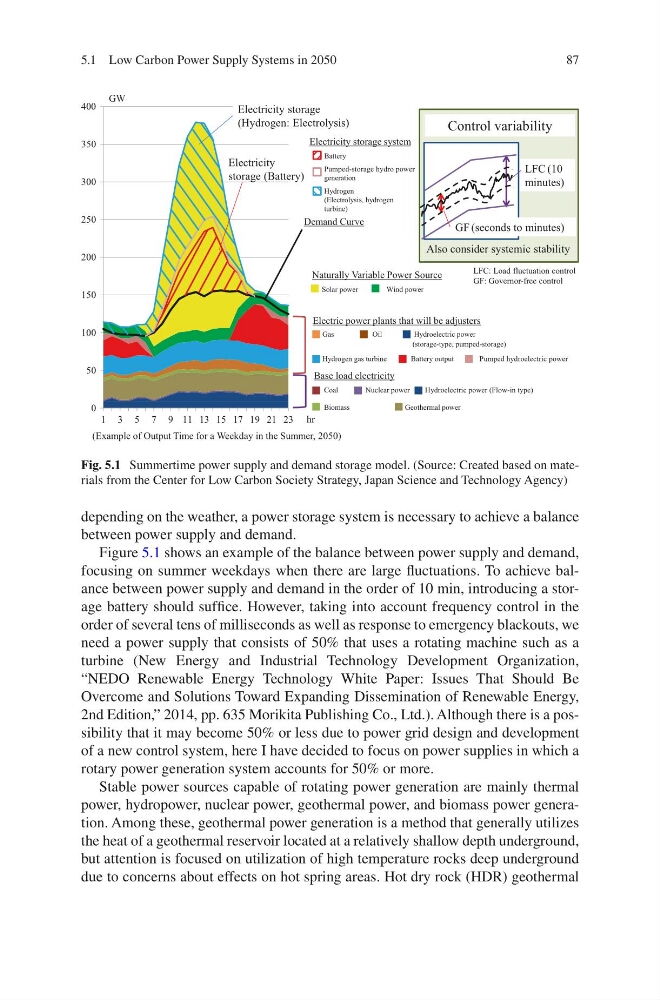
Figure 5.1 shows an example of the balance between power supply and demand,
focusing on summer weekdays when there are large fluctuations. To achieve balance between power supply and demand in the order of 10 min, introducing a storage battery should suffice. However, taking into account frequency control in the
order of several tens of milliseconds as well as response to emergency blackouts, we
need a power supply that consists of 50% that uses a rotating machine such as a
turbine (New Energy and Industrial Technology Development Organization,
“NEDO Renewable Energy Technology White Paper: Issues That Should Be
Overcome and Solutions Toward Expanding Dissemination of Renewable Energy,
2nd Edition,” 2014, pp. 635 Morikita Publishing Co., Ltd.). Although there is a possibility that it may become 50% or less due to power grid design and development
of a new control system, here I have decided to focus on power supplies in which a
rotary power generation system accounts for 50% or more.
Stable power sources capable of rotating power generation are mainly thermal
power, hydropower, nuclear power, geothermal power, and biomass power generation. Among these, geothermal power generation is a method that generally utilizes
the heat of a geothermal reservoir located at a relatively shallow depth underground,
but attention is focused on utilization of high temperature rocks deep underground
due to concerns about effects on hot spring areas. Hot dry rock (HDR) geothermal
0
50
100
150
200
250
300
350
400
1 3 5 7 9 11 13 15 17 19 21 23
Base load electricity
Coal
Nuclear power
Hydroelectric power (Flow-in type)
Biomass
G eothermal power
Electric power plants that will be adjusters
Gas
O il
Hydroelectric power
Hydrogen gas turbine
Battery output
Pumped hydroelectric power
Naturally Variable Power Source
Solar power
Wind power
Electricity storage system
Battery
Pumped-storage hydro power
generation
Hydrogen
(Electrolysis, hydrogen
turbine)
Control variability
LFC (10
minutes)
GF (seconds to minutes)
(Example of Output Time for a Weekday in the Summer, 2050)
Demand Curve
GW
Electricity storage
(Hydrogen: Electrolysis)
Electricity
storage (Battery)
hr
LFC: Load fluctuation control
GF: Governor-free control
Also consider systemic stability
(storage-type, pumped-storage)
Fig. 5.1 Summertime power supply and demand storage model. (Source: Created based on materials from the Center for Low Carbon Society Strategy, Japan Science and Technology Agency)
5.1 Low Carbon Power Supply Systems in 2050
depending on the weather, a power storage system is necessary to achieve a balance
between power supply and demand.
Figure 5.1 shows an example of the balance between power supply and demand,
focusing on summer weekdays when there are large fluctuations. To achieve balance between power supply and demand in the order of 10 min, introducing a storage battery should suffice. However, taking into account frequency control in the
order of several tens of milliseconds as well as response to emergency blackouts, we
need a power supply that consists of 50% that uses a rotating machine such as a
turbine (New Energy and Industrial Technology Development Organization,
“NEDO Renewable Energy Technology White Paper: Issues That Should Be
Overcome and Solutions Toward Expanding Dissemination of Renewable Energy,
2nd Edition,” 2014, pp. 635 Morikita Publishing Co., Ltd.). Although there is a possibility that it may become 50% or less due to power grid design and development
of a new control system, here I have decided to focus on power supplies in which a
rotary power generation system accounts for 50% or more.
Stable power sources capable of rotating power generation are mainly thermal
power, hydropower, nuclear power, geothermal power, and biomass power generation. Among these, geothermal power generation is a method that generally utilizes
the heat of a geothermal reservoir located at a relatively shallow depth underground,
but attention is focused on utilization of high temperature rocks deep underground
due to concerns about effects on hot spring areas. Hot dry rock (HDR) geothermal
0
50
100
150
200
250
300
350
400
1 3 5 7 9 11 13 15 17 19 21 23
Base load electricity
Coal
Nuclear power
Hydroelectric power (Flow-in type)
Biomass
G eothermal power
Electric power plants that will be adjusters
Gas
O il
Hydroelectric power
Hydrogen gas turbine
Battery output
Pumped hydroelectric power
Naturally Variable Power Source
Solar power
Wind power
Electricity storage system
Battery
Pumped-storage hydro power
generation
Hydrogen
(Electrolysis, hydrogen
turbine)
Control variability
LFC (10
minutes)
GF (seconds to minutes)
(Example of Output Time for a Weekday in the Summer, 2050)
Demand Curve
GW
Electricity storage
(Hydrogen: Electrolysis)
Electricity
storage (Battery)
hr
LFC: Load fluctuation control
GF: Governor-free control
Also consider systemic stability
(storage-type, pumped-storage)
Fig. 5.1 Summertime power supply and demand storage model. (Source: Created based on materials from the Center for Low Carbon Society Strategy, Japan Science and Technology Agency)
5.1 Low Carbon Power Supply Systems in 2050