

76
4.2 Innovations Emerging from Theory and IT
4.2.1 Pursuing Efficiency to the Utmost Limit
Overall, we are moving in the direction indicated by the three goals in Vision 2050.
Innovations are necessary to achieve the three goals of tripling the energy efficiency,
doubling the share of renewable energy, and establishing a material circulation system. However, innovation cannot occur by just waiting. As both scientists and engineers conduct research seriously and engage in technological development, they
often say, “We cannot increase efficiency any further,” or “We are doing our best.”
However, pioneers have opened up a new world by developing ways to overcome
that wall.
One good example is pollution control in Japan and Germany. Due to the spread
of pollution accompanying economic development since the 1950s, strict environmental regulations have been laid in Japan and Germany. Some believed that the
regulations would cause a decline in the productivity of factories and would not be
economically feasible. It certainly must have been difficult to overcome the situation by relying on the existing technology at the time.
However, as a result of working on research and development by back-casting
toward the vision of halting pollution, a number of innovative ideas were born.
Thanks to those ideas, Japan and Germany not only met the targets of the environmental regulations but also succeeded in increasing productivity to higher levels
than before. The success led to the competitiveness of companies in Japan and
Germany.
In 1978, as the air pollution caused by automobile exhaust gas became serious,
the Japanese version of the Muskie Law to reduce NOx emissions by 90% was
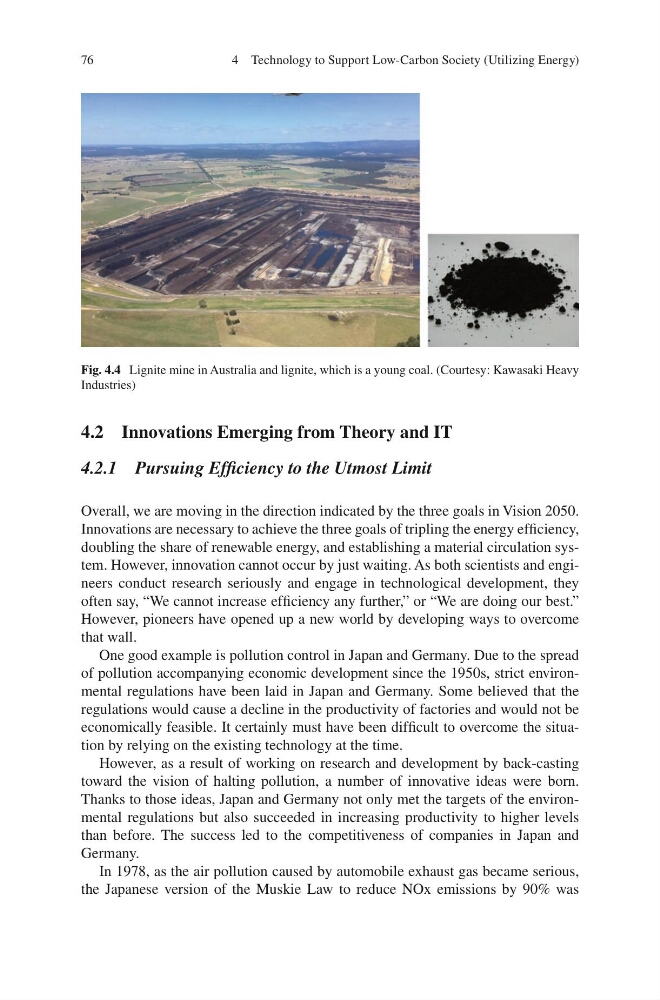
Fig. 4.4 Lignite mine in Australia and lignite, which is a young coal. (Courtesy: Kawasaki Heavy
Industries)
4 Technology to Support Low-Carbon Society (Utilizing Energy)
4.2 Innovations Emerging from Theory and IT
4.2.1 Pursuing Efficiency to the Utmost Limit
Overall, we are moving in the direction indicated by the three goals in Vision 2050.
Innovations are necessary to achieve the three goals of tripling the energy efficiency,
doubling the share of renewable energy, and establishing a material circulation system. However, innovation cannot occur by just waiting. As both scientists and engineers conduct research seriously and engage in technological development, they
often say, “We cannot increase efficiency any further,” or “We are doing our best.”
However, pioneers have opened up a new world by developing ways to overcome
that wall.
One good example is pollution control in Japan and Germany. Due to the spread
of pollution accompanying economic development since the 1950s, strict environmental regulations have been laid in Japan and Germany. Some believed that the
regulations would cause a decline in the productivity of factories and would not be
economically feasible. It certainly must have been difficult to overcome the situation by relying on the existing technology at the time.
However, as a result of working on research and development by back-casting
toward the vision of halting pollution, a number of innovative ideas were born.
Thanks to those ideas, Japan and Germany not only met the targets of the environmental regulations but also succeeded in increasing productivity to higher levels
than before. The success led to the competitiveness of companies in Japan and
Germany.
In 1978, as the air pollution caused by automobile exhaust gas became serious,
the Japanese version of the Muskie Law to reduce NOx emissions by 90% was
Fig. 4.4 Lignite mine in Australia and lignite, which is a young coal. (Courtesy: Kawasaki Heavy
Industries)
4 Technology to Support Low-Carbon Society (Utilizing Energy)