

22
2 Phenomenology of the Massless Dark Photon
Fig. 2.1 Bremsstrahlung of dark photons from electrons in a star and from nucleons in a supernova
[TeV]
Λ
2
4
6
8
1 0
1 2
3
10
×
M
l
d
5
−
10
4
−
10
3
−
10
2
−
10
1
−
10
1
10
2
10
3
10
4
10
5
10
6
10
1 TeV
10 TeV
= 0.01
D
α
= 0.1
D
α
LE P (e )
)
μ
BB N (e ,
sta rs (e )
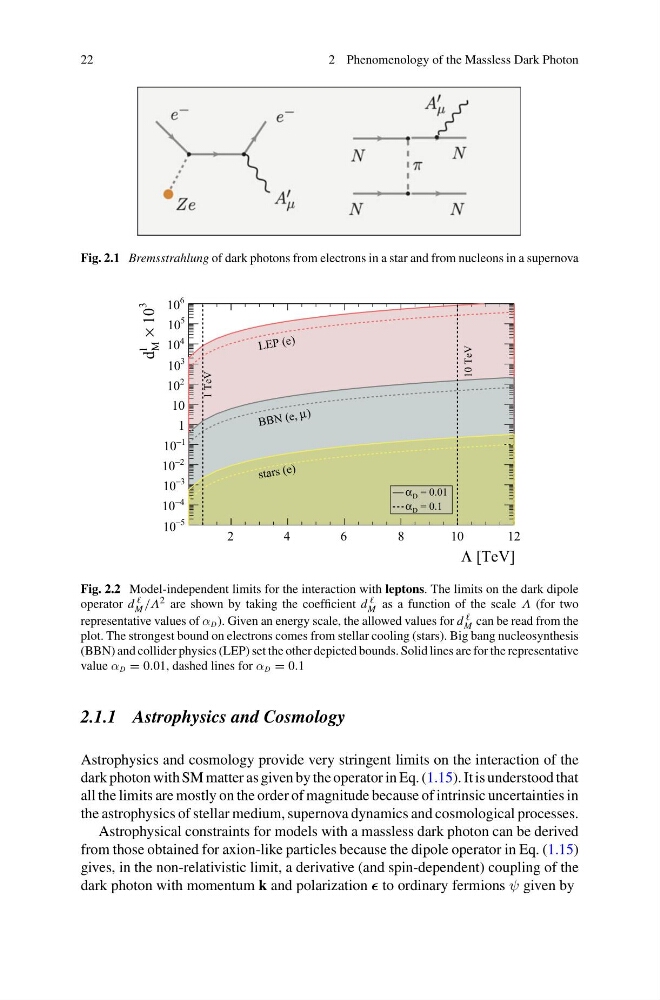
Fig. 2.2 Model-independent limits for the interaction with leptons. The limits on the dark dipole
operator d
M /Λ 2 are shown by taking the coefficient d
M as a function of the scale Λ (for two
representative values of α D ). Given an energy scale, the allowed values for d
M can be read from the
plot. The strongest bound on electrons comes from stellar cooling (stars). Big bang nucleosynthesis
(BBN) and collider physics (LEP) set the other depicted bounds. Solid lines are for the representative
value α D = 0.01, dashed lines for α D = 0.1
2.1.1 Astrophysics and Cosmology
Astrophysics and cosmology provide very stringent limits on the interaction of the
dark photon with SM matter as given by the operator in Eq. (1.15). It is understood that
all the limits are mostly on the order of magnitude because of intrinsic uncertainties in
the astrophysics of stellar medium, supernova dynamics and cosmological processes.
Astrophysical constraints for models with a massless dark photon can be derived
from those obtained for axion-like particles because the dipole operator in Eq. (1.15)
gives, in the non-relativistic limit, a derivative (and spin-dependent) coupling of the
dark photon with momentum k and polarization to ordinary fermions ψ given by
2 Phenomenology of the Massless Dark Photon
Fig. 2.1 Bremsstrahlung of dark photons from electrons in a star and from nucleons in a supernova
[TeV]
Λ
2
4
6
8
1 0
1 2
3
10
×
M
l
d
5
−
10
4
−
10
3
−
10
2
−
10
1
−
10
1
10
2
10
3
10
4
10
5
10
6
10
1 TeV
10 TeV
= 0.01
D
α
= 0.1
D
α
LE P (e )
)
μ
BB N (e ,
sta rs (e )
Fig. 2.2 Model-independent limits for the interaction with leptons. The limits on the dark dipole
operator d
M /Λ 2 are shown by taking the coefficient d
M as a function of the scale Λ (for two
representative values of α D ). Given an energy scale, the allowed values for d
M can be read from the
plot. The strongest bound on electrons comes from stellar cooling (stars). Big bang nucleosynthesis
(BBN) and collider physics (LEP) set the other depicted bounds. Solid lines are for the representative
value α D = 0.01, dashed lines for α D = 0.1
2.1.1 Astrophysics and Cosmology
Astrophysics and cosmology provide very stringent limits on the interaction of the
dark photon with SM matter as given by the operator in Eq. (1.15). It is understood that
all the limits are mostly on the order of magnitude because of intrinsic uncertainties in
the astrophysics of stellar medium, supernova dynamics and cosmological processes.
Astrophysical constraints for models with a massless dark photon can be derived
from those obtained for axion-like particles because the dipole operator in Eq. (1.15)
gives, in the non-relativistic limit, a derivative (and spin-dependent) coupling of the
dark photon with momentum k and polarization to ordinary fermions ψ given by