

40
4.5 Lessons Learned and Conclusions
Scientific knowledge from different fields, such as ecology, planning, urban forestry
and climate science, can improve UGI assessment, but an effort in terms of converting it into guidance that can improve urban planning processes is still needed
(Norton et al. 2015). This chapter showed an example of how to draw on knowledge
and data from different disciplines to improve the understanding of the relationship
between the characteristics of UGI and the provision of ES. UGI represent a great
potential for cities to adapt to multiple challenges; hence, the importance to take
into account the design of UGI, and their capacity to supply a range of ES, in urban
planning (Munang et al. 2013). However, the lack of suitable data and the complexity of modelling tools often pose a challenge to the improvement of UGI design in
planning exercises. In this chapter, out of the bundle of ES provided by UGI, we
focused on micro-climate regulation. The proposed approach links the relevant ecosystem functions and components of a UGI to its capacity to reduce heat, distinguishing among different typologies of UGI. The approach is designed to fit the
urban scale and to work with input data that are sufficient to differentiate among the
cooling capacity provided by different types of UGI, but still easily available during
urban planning processes.
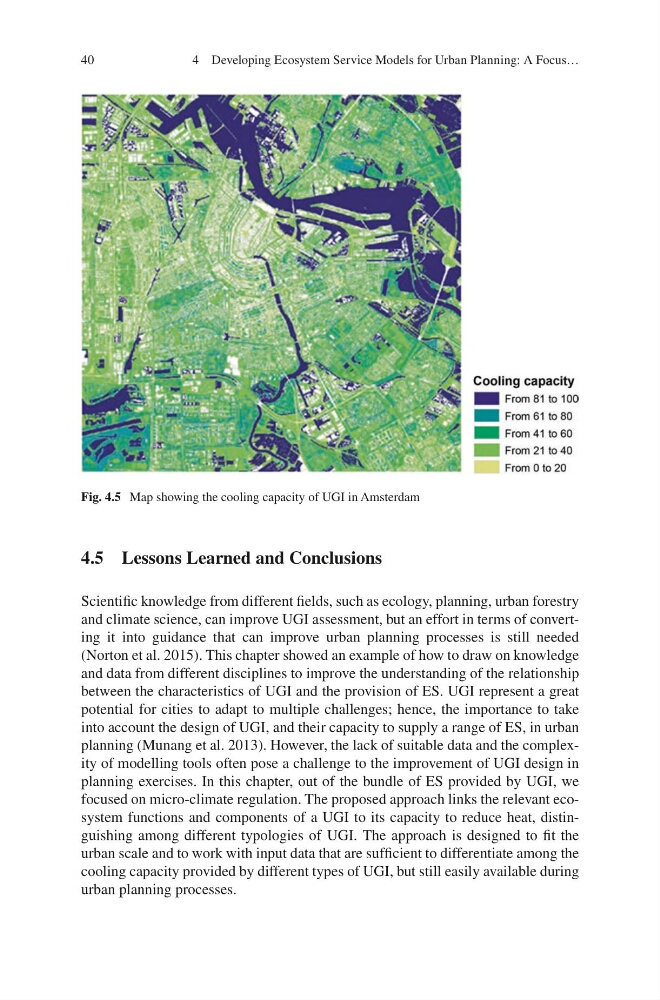
Fig. 4.5 Map showing the cooling capacity of UGI in Amsterdam
4 Developing Ecosystem Service Models for Urban Planning: A Focus…
4.5 Lessons Learned and Conclusions
Scientific knowledge from different fields, such as ecology, planning, urban forestry
and climate science, can improve UGI assessment, but an effort in terms of converting it into guidance that can improve urban planning processes is still needed
(Norton et al. 2015). This chapter showed an example of how to draw on knowledge
and data from different disciplines to improve the understanding of the relationship
between the characteristics of UGI and the provision of ES. UGI represent a great
potential for cities to adapt to multiple challenges; hence, the importance to take
into account the design of UGI, and their capacity to supply a range of ES, in urban
planning (Munang et al. 2013). However, the lack of suitable data and the complexity of modelling tools often pose a challenge to the improvement of UGI design in
planning exercises. In this chapter, out of the bundle of ES provided by UGI, we
focused on micro-climate regulation. The proposed approach links the relevant ecosystem functions and components of a UGI to its capacity to reduce heat, distinguishing among different typologies of UGI. The approach is designed to fit the
urban scale and to work with input data that are sufficient to differentiate among the
cooling capacity provided by different types of UGI, but still easily available during
urban planning processes.
Fig. 4.5 Map showing the cooling capacity of UGI in Amsterdam
4 Developing Ecosystem Service Models for Urban Planning: A Focus…