

9 Copper Micro and Nano Particles Mixture for 3D Interconnection …
241
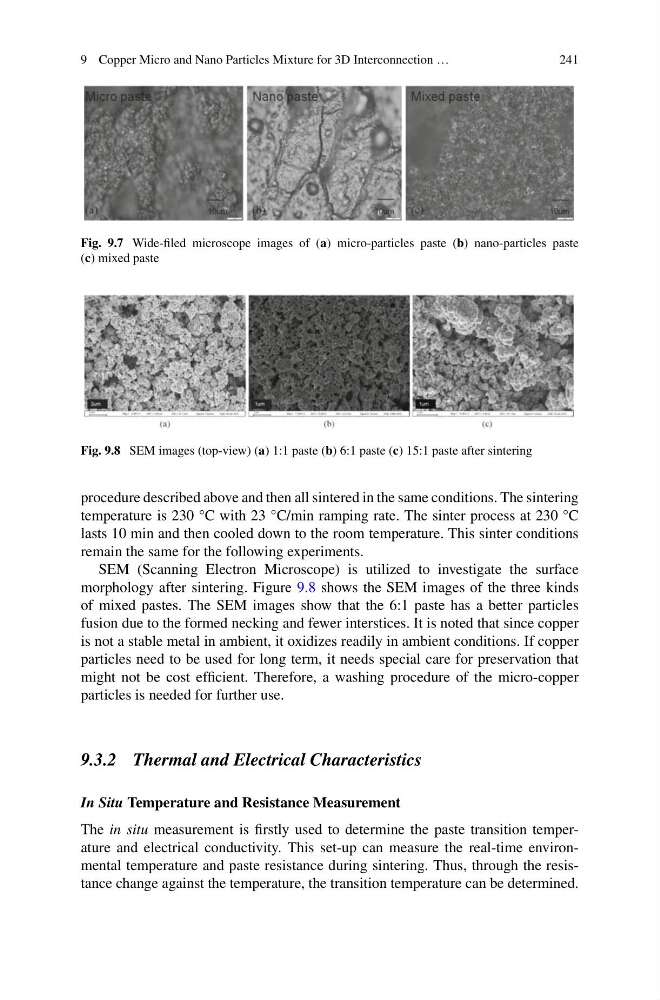
Fig. 9.7 Wide-filed microscope images of (a) micro-particles paste (b) nano-particles paste
(c) mixed paste
Fig. 9.8 SEM images (top-view) (a) 1:1 paste (b) 6:1 paste (c) 15:1 paste after sintering
procedure described above and then all sintered in the same conditions. The sintering
temperature is 230 °C with 23 °C/min ramping rate. The sinter process at 230 °C
lasts 10 min and then cooled down to the room temperature. This sinter conditions
remain the same for the following experiments.
SEM (Scanning Electron Microscope) is utilized to investigate the surface
morphology after sintering. Figure 9.8 shows the SEM images of the three kinds
of mixed pastes. The SEM images show that the 6:1 paste has a better particles
fusion due to the formed necking and fewer interstices. It is noted that since copper
is not a stable metal in ambient, it oxidizes readily in ambient conditions. If copper
particles need to be used for long term, it needs special care for preservation that
might not be cost efficient. Therefore, a washing procedure of the micro-copper
particles is needed for further use.
9.3.2 Thermal and Electrical Characteristics
In Situ Temperature and Resistance Measurement
The in situ measurement is firstly used to determine the paste transition temperature and electrical conductivity. This set-up can measure the real-time environmental temperature and paste resistance during sintering. Thus, through the resistance change against the temperature, the transition temperature can be determined.
241
Fig. 9.7 Wide-filed microscope images of (a) micro-particles paste (b) nano-particles paste
(c) mixed paste
Fig. 9.8 SEM images (top-view) (a) 1:1 paste (b) 6:1 paste (c) 15:1 paste after sintering
procedure described above and then all sintered in the same conditions. The sintering
temperature is 230 °C with 23 °C/min ramping rate. The sinter process at 230 °C
lasts 10 min and then cooled down to the room temperature. This sinter conditions
remain the same for the following experiments.
SEM (Scanning Electron Microscope) is utilized to investigate the surface
morphology after sintering. Figure 9.8 shows the SEM images of the three kinds
of mixed pastes. The SEM images show that the 6:1 paste has a better particles
fusion due to the formed necking and fewer interstices. It is noted that since copper
is not a stable metal in ambient, it oxidizes readily in ambient conditions. If copper
particles need to be used for long term, it needs special care for preservation that
might not be cost efficient. Therefore, a washing procedure of the micro-copper
particles is needed for further use.
9.3.2 Thermal and Electrical Characteristics
In Situ Temperature and Resistance Measurement
The in situ measurement is firstly used to determine the paste transition temperature and electrical conductivity. This set-up can measure the real-time environmental temperature and paste resistance during sintering. Thus, through the resistance change against the temperature, the transition temperature can be determined.