

36
the BMZ-IRRI rice-straw management project (IRRI 2019), the pH value of compost after production was from 6.80 to 6.85 (Table 3.1), which are in line with the
recommended range of from 6.9 to 8.3 at the end of composting (Ameen et al. 2016;
Diaz et al. 2007; El-Haddad et al. 2014).
3.1.4 Carbon-to-Nitrogen Ratio
The ratio of carbon-to-nitrogen (C/N ratio) in the mixing compound depends on the
C/N ratio of the materials and its mixing ratio. It is computed based on the Eq. (3.1):
C N
C
/
.
.
=
* + * +¼ + *
* + * +¼ + *
W C W
W C
W N W N
W N
n
n
n
n
1
1
2
2
1
1
2
2
(3.1)
Where:
W 1 , W 2 ,… W n = weight of single materials
C 1 , C 2 , … C n = organic carbon content of single materials
N 1 , N 2 , … N n = Nitrogen content of single materials
The C/N ratio of the residue to be composted is one the most important factors
affecting the quality and period of composting. In addition, the composition and the
mixing ratio of the raw materials used for composting influence the quality of the
compost. For an optimal process, a C/N ratio in the range of 20–30 is generally
0
10
20
30
40
50
60
70
0
2 0
4 0
6 0
8 0
1 00
Ambient temperature
Composting without EM
Composting with EM
Composting without ANC
Composting with ANC
Four phases of microbial activity
Temperature, 0
C
Days of composting
Thermophilic
Cooling
Maturing
Mesophilic
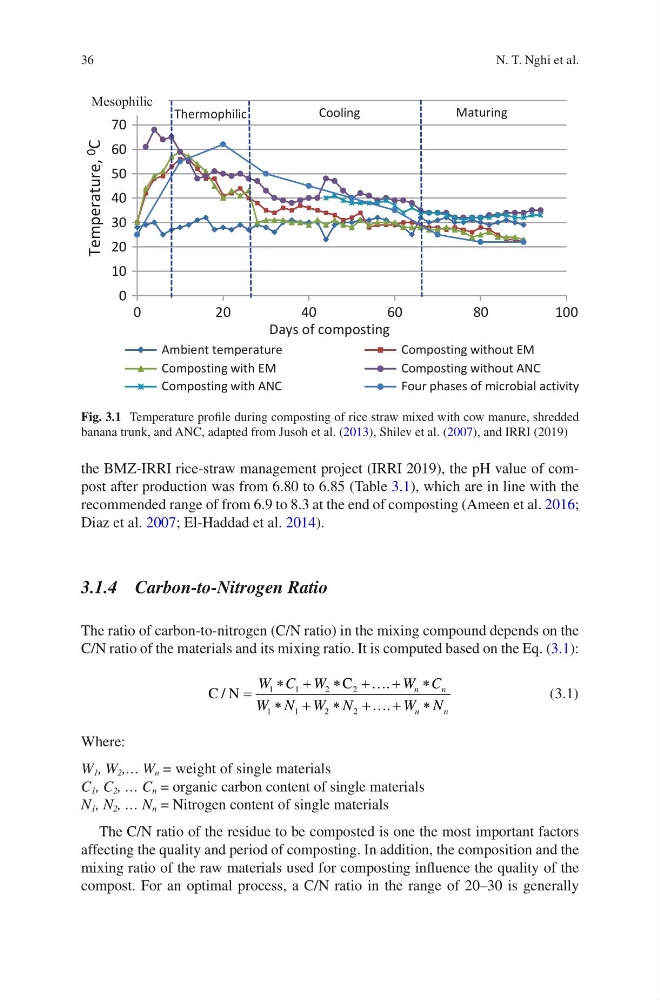
Fig. 3.1 Temperature profile during composting of rice straw mixed with cow manure, shredded
banana trunk, and ANC, adapted from Jusoh et al. (2013), Shilev et al. (2007), and IRRI (2019)
N. T. Nghi et al.
the BMZ-IRRI rice-straw management project (IRRI 2019), the pH value of compost after production was from 6.80 to 6.85 (Table 3.1), which are in line with the
recommended range of from 6.9 to 8.3 at the end of composting (Ameen et al. 2016;
Diaz et al. 2007; El-Haddad et al. 2014).
3.1.4 Carbon-to-Nitrogen Ratio
The ratio of carbon-to-nitrogen (C/N ratio) in the mixing compound depends on the
C/N ratio of the materials and its mixing ratio. It is computed based on the Eq. (3.1):
C N
C
/
.
.
=
* + * +¼ + *
* + * +¼ + *
W C W
W C
W N W N
W N
n
n
n
n
1
1
2
2
1
1
2
2
(3.1)
Where:
W 1 , W 2 ,… W n = weight of single materials
C 1 , C 2 , … C n = organic carbon content of single materials
N 1 , N 2 , … N n = Nitrogen content of single materials
The C/N ratio of the residue to be composted is one the most important factors
affecting the quality and period of composting. In addition, the composition and the
mixing ratio of the raw materials used for composting influence the quality of the
compost. For an optimal process, a C/N ratio in the range of 20–30 is generally
0
10
20
30
40
50
60
70
0
2 0
4 0
6 0
8 0
1 00
Ambient temperature
Composting without EM
Composting with EM
Composting without ANC
Composting with ANC
Four phases of microbial activity
Temperature, 0
C
Days of composting
Thermophilic
Cooling
Maturing
Mesophilic
Fig. 3.1 Temperature profile during composting of rice straw mixed with cow manure, shredded
banana trunk, and ANC, adapted from Jusoh et al. (2013), Shilev et al. (2007), and IRRI (2019)
N. T. Nghi et al.