

35
could be controlled effectively through aeration and mixing in the cooling-down
stage. The final humus is then produced after the maturing phase.
Temperature patterns during the composting process with effective microorganisms (EMs) and without EMs similarly have been shown to fluctuate over time
(IRRI 2019; Jusoh et al. 2013). These studies conducted the experiments on vermicomposting using rice straw, cow manure, shredded banana trunk, and African
Night Crawler (ANC). The temperature profile during composting is shown in
Fig. 3.1. Temperature of the composts reaches to 70 °C during the first and second
phases (thermophilic) of the composting process, and then cools down to from 22 to
35 °C finally balancing with the ambient temperature.
3.1.3 pH Value of Composting Environment
The pH also strongly affects the composting process. High pH together with high
temperature at the beginning of composting can cause a loss of nitrogen through
ammonia volatilization (Diaz et al. 2007). Generally, pH of organic matters used for
composting widely varies from 3 to 11 (Bertoldi et al. 1984). In some specific
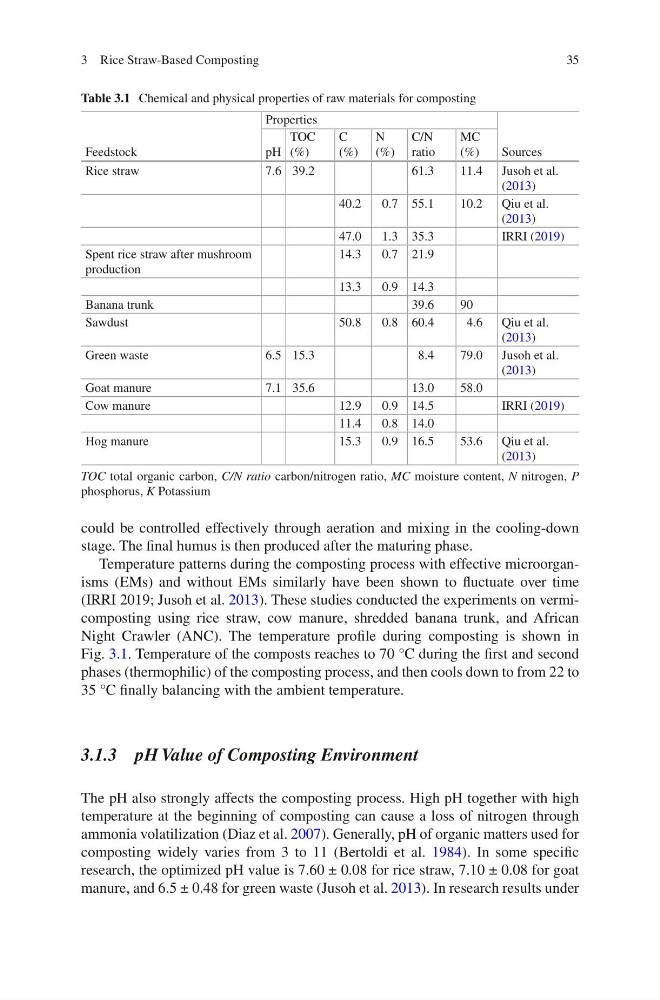
research, the optimized pH value is 7.60 ± 0.08 for rice straw, 7.10 ± 0.08 for goat
manure, and 6.5 ± 0.48 for green waste (Jusoh et al. 2013). In research results under
Table 3.1 Chemical and physical properties of raw materials for composting
Feedstock
Properties
Sources
pH
TOC
(%)
C
(%)
N
(%)
C/N
ratio
MC
(%)
Rice straw
7.6 39.2
61.3
11.4 Jusoh et al.
(2013)
40.2
0.7 55.1
10.2 Qiu et al.
(2013)
47.0
1.3 35.3
IRRI (2019)
Spent rice straw after mushroom
production
14.3
0.7 21.9
13.3
0.9 14.3
Banana trunk
39.6
90
Sawdust
50.8
0.8 60.4
4.6 Qiu et al.
(2013)
Green waste
6.5 15.3
8.4
79.0 Jusoh et al.
(2013)
Goat manure
7.1 35.6
13.0
58.0
Cow manure
12.9
0.9 14.5
IRRI (2019)
11.4
0.8 14.0
Hog manure
15.3
0.9 16.5
53.6 Qiu et al.
(2013)
TOC total organic carbon, C/N ratio carbon/nitrogen ratio, MC moisture content, N nitrogen, P
phosphorus, K Potassium
3 Rice Straw-Based Composting
could be controlled effectively through aeration and mixing in the cooling-down
stage. The final humus is then produced after the maturing phase.
Temperature patterns during the composting process with effective microorganisms (EMs) and without EMs similarly have been shown to fluctuate over time
(IRRI 2019; Jusoh et al. 2013). These studies conducted the experiments on vermicomposting using rice straw, cow manure, shredded banana trunk, and African
Night Crawler (ANC). The temperature profile during composting is shown in
Fig. 3.1. Temperature of the composts reaches to 70 °C during the first and second
phases (thermophilic) of the composting process, and then cools down to from 22 to
35 °C finally balancing with the ambient temperature.
3.1.3 pH Value of Composting Environment
The pH also strongly affects the composting process. High pH together with high
temperature at the beginning of composting can cause a loss of nitrogen through
ammonia volatilization (Diaz et al. 2007). Generally, pH of organic matters used for
composting widely varies from 3 to 11 (Bertoldi et al. 1984). In some specific
research, the optimized pH value is 7.60 ± 0.08 for rice straw, 7.10 ± 0.08 for goat
manure, and 6.5 ± 0.48 for green waste (Jusoh et al. 2013). In research results under
Table 3.1 Chemical and physical properties of raw materials for composting
Feedstock
Properties
Sources
pH
TOC
(%)
C
(%)
N
(%)
C/N
ratio
MC
(%)
Rice straw
7.6 39.2
61.3
11.4 Jusoh et al.
(2013)
40.2
0.7 55.1
10.2 Qiu et al.
(2013)
47.0
1.3 35.3
IRRI (2019)
Spent rice straw after mushroom
production
14.3
0.7 21.9
13.3
0.9 14.3
Banana trunk
39.6
90
Sawdust
50.8
0.8 60.4
4.6 Qiu et al.
(2013)
Green waste
6.5 15.3
8.4
79.0 Jusoh et al.
(2013)
Goat manure
7.1 35.6
13.0
58.0
Cow manure
12.9
0.9 14.5
IRRI (2019)
11.4
0.8 14.0
Hog manure
15.3
0.9 16.5
53.6 Qiu et al.
(2013)
TOC total organic carbon, C/N ratio carbon/nitrogen ratio, MC moisture content, N nitrogen, P
phosphorus, K Potassium
3 Rice Straw-Based Composting