

108
S. Montebugnoli
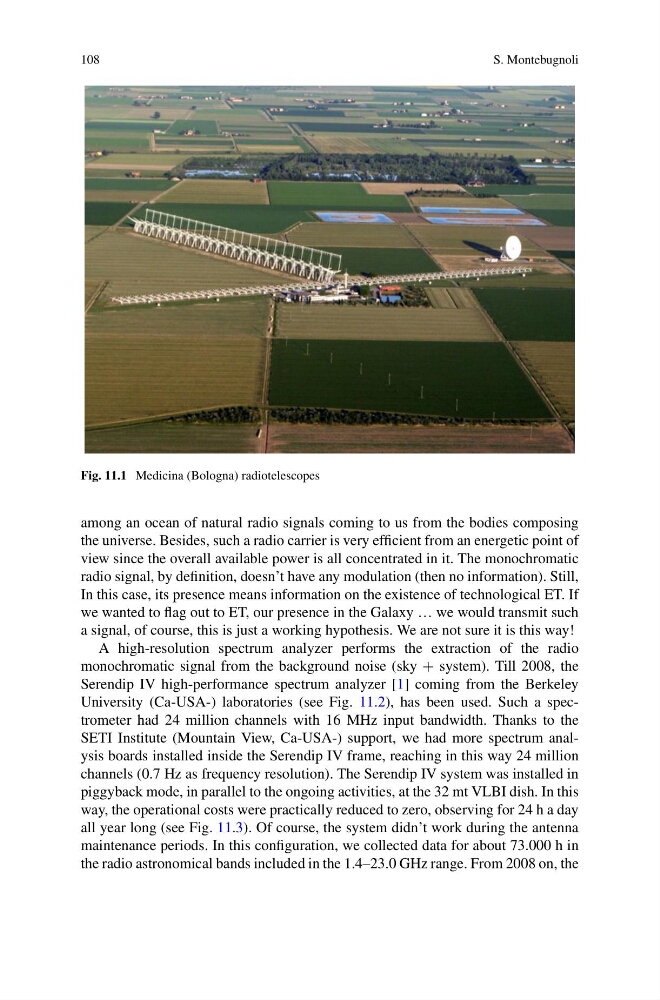
Fig. 11.1 Medicina (Bologna) radiotelescopes
among an ocean of natural radio signals coming to us from the bodies composing
the universe. Besides, such a radio carrier is very efficient from an energetic point of
view since the overall available power is all concentrated in it. The monochromatic
radio signal, by definition, doesn’t have any modulation (then no information). Still,
In this case, its presence means information on the existence of technological ET. If
we wanted to flag out to ET, our presence in the Galaxy … we would transmit such
a signal, of course, this is just a working hypothesis. We are not sure it is this way!
A high-resolution spectrum analyzer performs the extraction of the radio
monochromatic signal from the background noise (sky + system). Till 2008, the
Serendip IV high-performance spectrum analyzer [1] coming from the Berkeley
University (Ca-USA-) laboratories (see Fig. 11.2), has been used. Such a spectrometer had 24 million channels with 16 MHz input bandwidth. Thanks to the
SETI Institute (Mountain View, Ca-USA-) support, we had more spectrum analysis boards installed inside the Serendip IV frame, reaching in this way 24 million
channels (0.7 Hz as frequency resolution). The Serendip IV system was installed in
piggyback mode, in parallel to the ongoing activities, at the 32 mt VLBI dish. In this
way, the operational costs were practically reduced to zero, observing for 24 h a day
all year long (see Fig. 11.3). Of course, the system didn’t work during the antenna
maintenance periods. In this configuration, we collected data for about 73.000 h in
the radio astronomical bands included in the 1.4–23.0 GHz range. From 2008 on, the
S. Montebugnoli
Fig. 11.1 Medicina (Bologna) radiotelescopes
among an ocean of natural radio signals coming to us from the bodies composing
the universe. Besides, such a radio carrier is very efficient from an energetic point of
view since the overall available power is all concentrated in it. The monochromatic
radio signal, by definition, doesn’t have any modulation (then no information). Still,
In this case, its presence means information on the existence of technological ET. If
we wanted to flag out to ET, our presence in the Galaxy … we would transmit such
a signal, of course, this is just a working hypothesis. We are not sure it is this way!
A high-resolution spectrum analyzer performs the extraction of the radio
monochromatic signal from the background noise (sky + system). Till 2008, the
Serendip IV high-performance spectrum analyzer [1] coming from the Berkeley
University (Ca-USA-) laboratories (see Fig. 11.2), has been used. Such a spectrometer had 24 million channels with 16 MHz input bandwidth. Thanks to the
SETI Institute (Mountain View, Ca-USA-) support, we had more spectrum analysis boards installed inside the Serendip IV frame, reaching in this way 24 million
channels (0.7 Hz as frequency resolution). The Serendip IV system was installed in
piggyback mode, in parallel to the ongoing activities, at the 32 mt VLBI dish. In this
way, the operational costs were practically reduced to zero, observing for 24 h a day
all year long (see Fig. 11.3). Of course, the system didn’t work during the antenna
maintenance periods. In this configuration, we collected data for about 73.000 h in
the radio astronomical bands included in the 1.4–23.0 GHz range. From 2008 on, the