

92
S. Masiero and M. S. Erculiani
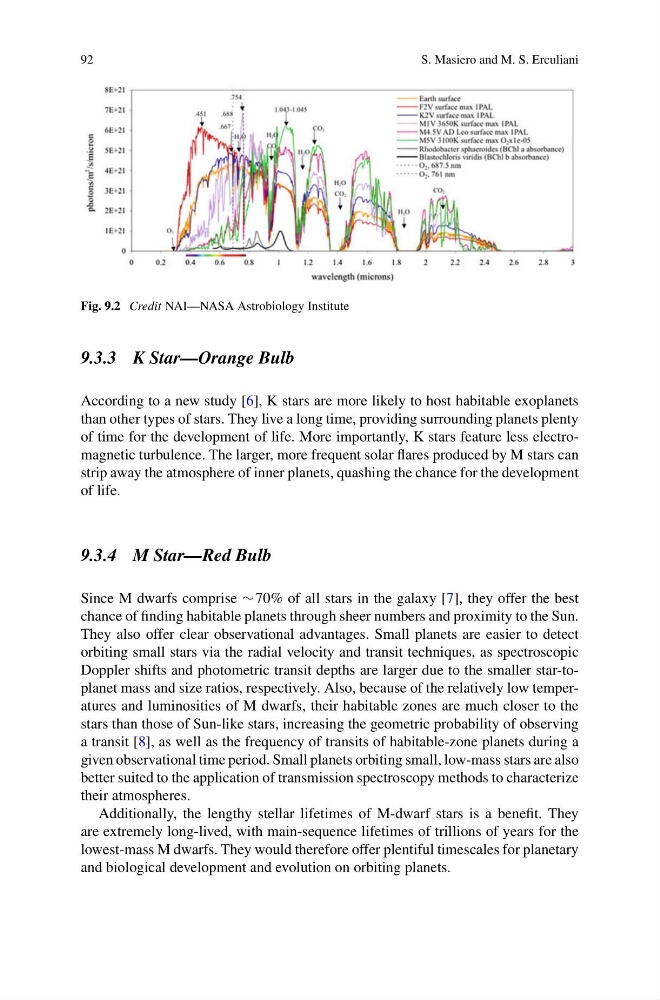
Fig. 9.2 Credit NAI—NASA Astrobiology Institute
9.3.3 K Star—Orange Bulb
According to a new study [6], K stars are more likely to host habitable exoplanets
than other types of stars. They live a long time, providing surrounding planets plenty
of time for the development of life. More importantly, K stars feature less electromagnetic turbulence. The larger, more frequent solar flares produced by M stars can
strip away the atmosphere of inner planets, quashing the chance for the development
of life.
9.3.4 M Star—Red Bulb
Since M dwarfs comprise ∼ 70% of all stars in the galaxy [7], they offer the best
chance of finding habitable planets through sheer numbers and proximity to the Sun.
They also offer clear observational advantages. Small planets are easier to detect
orbiting small stars via the radial velocity and transit techniques, as spectroscopic
Doppler shifts and photometric transit depths are larger due to the smaller star-toplanet mass and size ratios, respectively. Also, because of the relatively low temperatures and luminosities of M dwarfs, their habitable zones are much closer to the
stars than those of Sun-like stars, increasing the geometric probability of observing
a transit [8], as well as the frequency of transits of habitable-zone planets during a
given observational time period. Small planets orbiting small, low-mass stars are also
better suited to the application of transmission spectroscopy methods to characterize
their atmospheres.
Additionally, the lengthy stellar lifetimes of M-dwarf stars is a benefit. They
are extremely long-lived, with main-sequence lifetimes of trillions of years for the
lowest-mass M dwarfs. They would therefore offer plentiful timescales for planetary
and biological development and evolution on orbiting planets.
S. Masiero and M. S. Erculiani
Fig. 9.2 Credit NAI—NASA Astrobiology Institute
9.3.3 K Star—Orange Bulb
According to a new study [6], K stars are more likely to host habitable exoplanets
than other types of stars. They live a long time, providing surrounding planets plenty
of time for the development of life. More importantly, K stars feature less electromagnetic turbulence. The larger, more frequent solar flares produced by M stars can
strip away the atmosphere of inner planets, quashing the chance for the development
of life.
9.3.4 M Star—Red Bulb
Since M dwarfs comprise ∼ 70% of all stars in the galaxy [7], they offer the best
chance of finding habitable planets through sheer numbers and proximity to the Sun.
They also offer clear observational advantages. Small planets are easier to detect
orbiting small stars via the radial velocity and transit techniques, as spectroscopic
Doppler shifts and photometric transit depths are larger due to the smaller star-toplanet mass and size ratios, respectively. Also, because of the relatively low temperatures and luminosities of M dwarfs, their habitable zones are much closer to the
stars than those of Sun-like stars, increasing the geometric probability of observing
a transit [8], as well as the frequency of transits of habitable-zone planets during a
given observational time period. Small planets orbiting small, low-mass stars are also
better suited to the application of transmission spectroscopy methods to characterize
their atmospheres.
Additionally, the lengthy stellar lifetimes of M-dwarf stars is a benefit. They
are extremely long-lived, with main-sequence lifetimes of trillions of years for the
lowest-mass M dwarfs. They would therefore offer plentiful timescales for planetary
and biological development and evolution on orbiting planets.