

4.8 Building Capacity and Learning Within the Program
for Theory of Change Approach
The RBM trial project teams were thrown in at the deep end. Used to a more
traditional LFA, they were tasked with shifting to a TOC and learning-based
approach for planning their projects within the trial. It was quickly apparent that
capacity to plan projects using this new approach had to be built within CCAFS
(and wider CGIAR).
Using TOC approaches within R4D requires the strengthening of capacities of
scientists to do research differently and work with non-research partners for impact,
but also of institutions to facilitate such a shift. Several authors highlight the
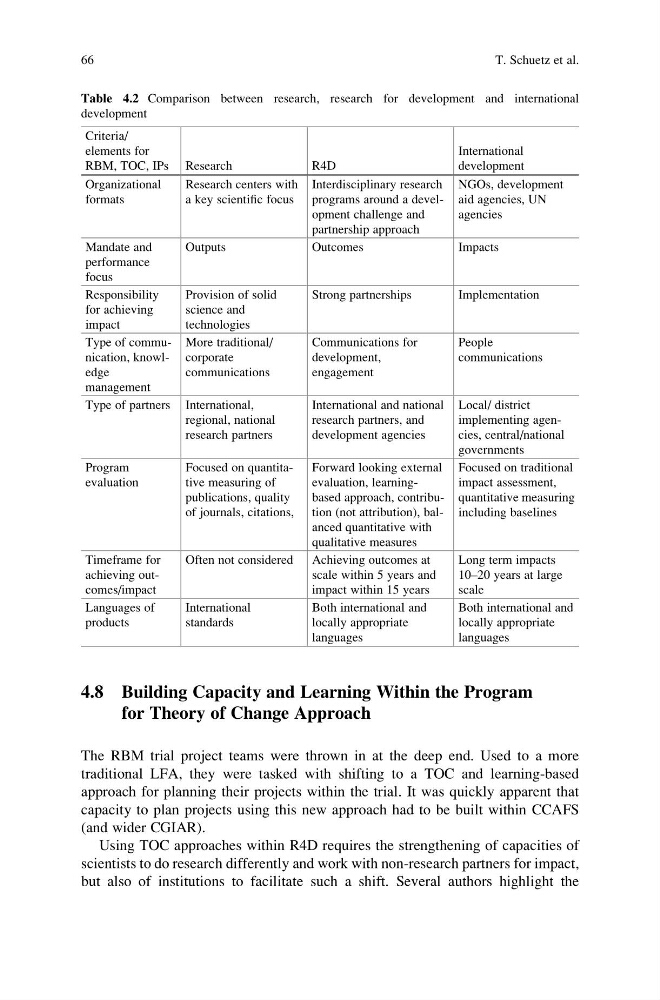
Table 4.2 Comparison between research, research for development and international
development
Criteria/
elements for
RBM, TOC, IPs Research
R4D
International
development
Organizational
formats
Research centers with
a key scientific focus
Interdisciplinary research
programs around a development challenge and
partnership approach
NGOs, development
aid agencies, UN
agencies
Mandate and
performance
focus
Outputs
Outcomes
Impacts
Responsibility
for achieving
impact
Provision of solid
science and
technologies
Strong partnerships
Implementation
Type of communication, knowledge
management
More traditional/
corporate
communications
Communications for
development,
engagement
People
communications
Type of partners International,
regional, national
research partners
International and national
research partners, and
development agencies
Local/ district
implementing agencies, central/national
governments
Program
evaluation
Focused on quantitative measuring of
publications, quality
of journals, citations,
Forward looking external
evaluation, learningbased approach, contribution (not attribution), balanced quantitative with
qualitative measures
Focused on traditional
impact assessment,
quantitative measuring
including baselines
Timeframe for
achieving outcomes/impact
Often not considered Achieving outcomes at
scale within 5 years and
impact within 15 years
Long term impacts
10–20 years at large
scale
Languages of
products
International
standards
Both international and
locally appropriate
languages
Both international and
locally appropriate
languages
66
T. Schuetz et al.
for Theory of Change Approach
The RBM trial project teams were thrown in at the deep end. Used to a more
traditional LFA, they were tasked with shifting to a TOC and learning-based
approach for planning their projects within the trial. It was quickly apparent that
capacity to plan projects using this new approach had to be built within CCAFS
(and wider CGIAR).
Using TOC approaches within R4D requires the strengthening of capacities of
scientists to do research differently and work with non-research partners for impact,
but also of institutions to facilitate such a shift. Several authors highlight the
Table 4.2 Comparison between research, research for development and international
development
Criteria/
elements for
RBM, TOC, IPs Research
R4D
International
development
Organizational
formats
Research centers with
a key scientific focus
Interdisciplinary research
programs around a development challenge and
partnership approach
NGOs, development
aid agencies, UN
agencies
Mandate and
performance
focus
Outputs
Outcomes
Impacts
Responsibility
for achieving
impact
Provision of solid
science and
technologies
Strong partnerships
Implementation
Type of communication, knowledge
management
More traditional/
corporate
communications
Communications for
development,
engagement
People
communications
Type of partners International,
regional, national
research partners
International and national
research partners, and
development agencies
Local/ district
implementing agencies, central/national
governments
Program
evaluation
Focused on quantitative measuring of
publications, quality
of journals, citations,
Forward looking external
evaluation, learningbased approach, contribution (not attribution), balanced quantitative with
qualitative measures
Focused on traditional
impact assessment,
quantitative measuring
including baselines
Timeframe for
achieving outcomes/impact
Often not considered Achieving outcomes at
scale within 5 years and
impact within 15 years
Long term impacts
10–20 years at large
scale
Languages of
products
International
standards
Both international and
locally appropriate
languages
Both international and
locally appropriate
languages
66
T. Schuetz et al.