

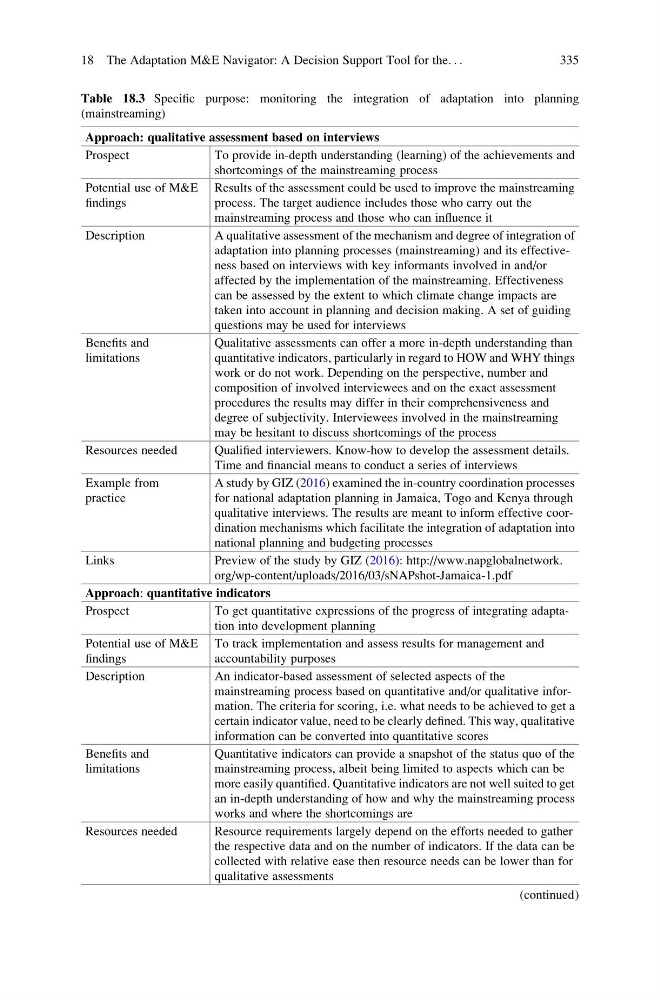
Table 18.3 Specific purpose: monitoring the integration of adaptation into planning
(mainstreaming)
Approach: qualitative assessment based on interviews
Prospect
To provide in-depth understanding (learning) of the achievements and
shortcomings of the mainstreaming process
Potential use of M&E
findings
Results of the assessment could be used to improve the mainstreaming
process. The target audience includes those who carry out the
mainstreaming process and those who can influence it
Description
A qualitative assessment of the mechanism and degree of integration of
adaptation into planning processes (mainstreaming) and its effectiveness based on interviews with key informants involved in and/or
affected by the implementation of the mainstreaming. Effectiveness
can be assessed by the extent to which climate change impacts are
taken into account in planning and decision making. A set of guiding
questions may be used for interviews
Benefits and
limitations
Qualitative assessments can offer a more in-depth understanding than
quantitative indicators, particularly in regard to HOW and WHY things
work or do not work. Depending on the perspective, number and
composition of involved interviewees and on the exact assessment
procedures the results may differ in their comprehensiveness and
degree of subjectivity. Interviewees involved in the mainstreaming
may be hesitant to discuss shortcomings of the process
Resources needed
Qualified interviewers. Know-how to develop the assessment details.
Time and financial means to conduct a series of interviews
Example from
practice
A study by GIZ (2016) examined the in-country coordination processes
for national adaptation planning in Jamaica, Togo and Kenya through
qualitative interviews. The results are meant to inform effective coordination mechanisms which facilitate the integration of adaptation into
national planning and budgeting processes
Links
Preview of the study by GIZ (2016): http://www.napglobalnetwork.
org/wp-content/uploads/2016/03/sNAPshot-Jamaica-1.pdf
Approach: quantitative indicators
Prospect
To get quantitative expressions of the progress of integrating adaptation into development planning
Potential use of M&E
findings
To track implementation and assess results for management and
accountability purposes
Description
An indicator-based assessment of selected aspects of the
mainstreaming process based on quantitative and/or qualitative information. The criteria for scoring, i.e. what needs to be achieved to get a
certain indicator value, need to be clearly defined. This way, qualitative
information can be converted into quantitative scores
Benefits and
limitations
Quantitative indicators can provide a snapshot of the status quo of the
mainstreaming process, albeit being limited to aspects which can be
more easily quantified. Quantitative indicators are not well suited to get
an in-depth understanding of how and why the mainstreaming process
works and where the shortcomings are
Resources needed
Resource requirements largely depend on the efforts needed to gather
the respective data and on the number of indicators. If the data can be
collected with relative ease then resource needs can be lower than for
qualitative assessments
(continued)
18 The Adaptation M&E Navigator: A Decision Support Tool for the. . .
335
(mainstreaming)
Approach: qualitative assessment based on interviews
Prospect
To provide in-depth understanding (learning) of the achievements and
shortcomings of the mainstreaming process
Potential use of M&E
findings
Results of the assessment could be used to improve the mainstreaming
process. The target audience includes those who carry out the
mainstreaming process and those who can influence it
Description
A qualitative assessment of the mechanism and degree of integration of
adaptation into planning processes (mainstreaming) and its effectiveness based on interviews with key informants involved in and/or
affected by the implementation of the mainstreaming. Effectiveness
can be assessed by the extent to which climate change impacts are
taken into account in planning and decision making. A set of guiding
questions may be used for interviews
Benefits and
limitations
Qualitative assessments can offer a more in-depth understanding than
quantitative indicators, particularly in regard to HOW and WHY things
work or do not work. Depending on the perspective, number and
composition of involved interviewees and on the exact assessment
procedures the results may differ in their comprehensiveness and
degree of subjectivity. Interviewees involved in the mainstreaming
may be hesitant to discuss shortcomings of the process
Resources needed
Qualified interviewers. Know-how to develop the assessment details.
Time and financial means to conduct a series of interviews
Example from
practice
A study by GIZ (2016) examined the in-country coordination processes
for national adaptation planning in Jamaica, Togo and Kenya through
qualitative interviews. The results are meant to inform effective coordination mechanisms which facilitate the integration of adaptation into
national planning and budgeting processes
Links
Preview of the study by GIZ (2016): http://www.napglobalnetwork.
org/wp-content/uploads/2016/03/sNAPshot-Jamaica-1.pdf
Approach: quantitative indicators
Prospect
To get quantitative expressions of the progress of integrating adaptation into development planning
Potential use of M&E
findings
To track implementation and assess results for management and
accountability purposes
Description
An indicator-based assessment of selected aspects of the
mainstreaming process based on quantitative and/or qualitative information. The criteria for scoring, i.e. what needs to be achieved to get a
certain indicator value, need to be clearly defined. This way, qualitative
information can be converted into quantitative scores
Benefits and
limitations
Quantitative indicators can provide a snapshot of the status quo of the
mainstreaming process, albeit being limited to aspects which can be
more easily quantified. Quantitative indicators are not well suited to get
an in-depth understanding of how and why the mainstreaming process
works and where the shortcomings are
Resources needed
Resource requirements largely depend on the efforts needed to gather
the respective data and on the number of indicators. If the data can be
collected with relative ease then resource needs can be lower than for
qualitative assessments
(continued)
18 The Adaptation M&E Navigator: A Decision Support Tool for the. . .
335