

13.6.2 Context for Efficiency
Referring to the estimated theory of change for realizing high stakeholder involvement, which is considered to be one of the key IOs in securing a high level of
efficiency. Building partnerships at an early stage seems a common-sensical intervention to yield this IO. However, as reported in the case of Zimbabwe, even if
partnerships are established at an early stage, when participating stakeholders are
not well aware of CCA issues and risks and the CCA programme’s objectives, it is
not likely for this corresponding theory of change to trigger a positive IO. Another
contextual condition which can be identified for this theory of change from all of
the studied evaluations is that the programme design is sector specific and focused
rather than broad. Though this may not be a “recommended” context for a CCA
programme because it can seem to be promoting a “silo” or sector-driven
programme design, the degree of programme interventions’ focus seems to have
enabled this theory of change to realize a high level of stakeholder involvement.
The second theory of change relates to another IO, i.e. level of programme
management achievements. When a national programme management team (case
of Tanzania) or national steering committee (case of Malawi) have not shown
adequate leadership, the corresponding programme theory did not produce positive
results. The more sector specific and focused the programme design is, the more
positive patterns of results concerning this theory of change seem to be generated.
Through a deterministic meta-analysis represented by mere M-O sequence, one
could have ended the analysis in recommending adaptive management and clarified
roles and responsibilities of the involved parties. The realistic approach can facilitate our thinking regarding the necessary contextual conditions and their
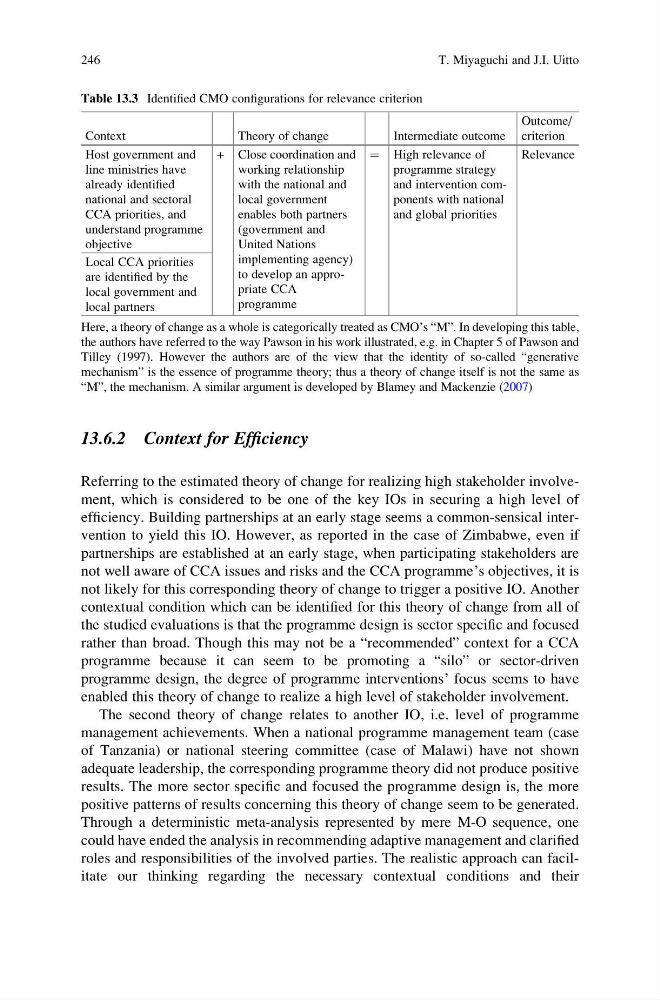
Table 13.3 Identified CMO configurations for relevance criterion
Context
Theory of change
Intermediate outcome
Outcome/
criterion
Host government and
line ministries have
already identified
national and sectoral
CCA priorities, and
understand programme
objective
+ Close coordination and
working relationship
with the national and
local government
enables both partners
(government and
United Nations
implementing agency)
to develop an appropriate CCA
programme
¼ High relevance of
programme strategy
and intervention components with national
and global priorities
Relevance
Local CCA priorities
are identified by the
local government and
local partners
Here, a theory of change as a whole is categorically treated as CMO’s “M”. In developing this table,
the authors have referred to the way Pawson in his work illustrated, e.g. in Chapter 5 of Pawson and
Tilley (1997). However the authors are of the view that the identity of so-called “generative
mechanism” is the essence of programme theory; thus a theory of change itself is not the same as
“M”, the mechanism. A similar argument is developed by Blamey and Mackenzie (2007)
246
T. Miyaguchi and J.I. Uitto
Referring to the estimated theory of change for realizing high stakeholder involvement, which is considered to be one of the key IOs in securing a high level of
efficiency. Building partnerships at an early stage seems a common-sensical intervention to yield this IO. However, as reported in the case of Zimbabwe, even if
partnerships are established at an early stage, when participating stakeholders are
not well aware of CCA issues and risks and the CCA programme’s objectives, it is
not likely for this corresponding theory of change to trigger a positive IO. Another
contextual condition which can be identified for this theory of change from all of
the studied evaluations is that the programme design is sector specific and focused
rather than broad. Though this may not be a “recommended” context for a CCA
programme because it can seem to be promoting a “silo” or sector-driven
programme design, the degree of programme interventions’ focus seems to have
enabled this theory of change to realize a high level of stakeholder involvement.
The second theory of change relates to another IO, i.e. level of programme
management achievements. When a national programme management team (case
of Tanzania) or national steering committee (case of Malawi) have not shown
adequate leadership, the corresponding programme theory did not produce positive
results. The more sector specific and focused the programme design is, the more
positive patterns of results concerning this theory of change seem to be generated.
Through a deterministic meta-analysis represented by mere M-O sequence, one
could have ended the analysis in recommending adaptive management and clarified
roles and responsibilities of the involved parties. The realistic approach can facilitate our thinking regarding the necessary contextual conditions and their
Table 13.3 Identified CMO configurations for relevance criterion
Context
Theory of change
Intermediate outcome
Outcome/
criterion
Host government and
line ministries have
already identified
national and sectoral
CCA priorities, and
understand programme
objective
+ Close coordination and
working relationship
with the national and
local government
enables both partners
(government and
United Nations
implementing agency)
to develop an appropriate CCA
programme
¼ High relevance of
programme strategy
and intervention components with national
and global priorities
Relevance
Local CCA priorities
are identified by the
local government and
local partners
Here, a theory of change as a whole is categorically treated as CMO’s “M”. In developing this table,
the authors have referred to the way Pawson in his work illustrated, e.g. in Chapter 5 of Pawson and
Tilley (1997). However the authors are of the view that the identity of so-called “generative
mechanism” is the essence of programme theory; thus a theory of change itself is not the same as
“M”, the mechanism. A similar argument is developed by Blamey and Mackenzie (2007)
246
T. Miyaguchi and J.I. Uitto