

also supported technically and financially. Feasibility study and capacity building
are supported by full grant.
The interaction between the Japanese government, partner country, the JCM
Joint Committee and other stakeholders which include project participants, thirdparty entities, and the Joint Committee secretariat is illustrated in Fig. 7.2.
The Japanese and each partner country government form a JCM Joint Committee with Co-Chairs appointed by each side. Co-Chair from Japanese side is an
official of the Embassy of Japan in the partner country, and Co-Chair from the
partner country government usually is a representative of the signatory or host
ministry. Host ministry from partner countries is typically the Ministry of the
Environment or related, except for Indonesia (Coordinating Minister of Economic
Affairs), Saudi Arabia (Ministry of Petroleum and Mineral Resources), and Palau
(Minister of Public Infrastructure, Industry and Commerce).
2 The role of Joint
Committee is similar to those of Executive Board of the Clean Development
Mechanism (CDM). It develops and approves rules and procedures, MRV methodologies, registers eligible projects, and approves request for credits issuance.
The secretariat serves the Joint Committee to support these roles. The Japanese
government appoints a private company as its secretariat for all partner countries.
Most partner countries appoint an office under its Co-Chairing host ministry, with
mandates ranging from disaster management, natural resources management, climate change, sustainable development, to environmental conservation fund. In
Indonesia and Mongolia, the Joint Committee established a dedicated entity to
implement the JCM. Partner country secretariat collaborates with the Japanese
secretariat in development of procedures and document reviews.
Project participants, who may be private companies, public organizations, foundations, or academic institutions from Japan and partner country establish a consortium, or a kind of joint venture, and propose projects jointly.
3 The Japanese
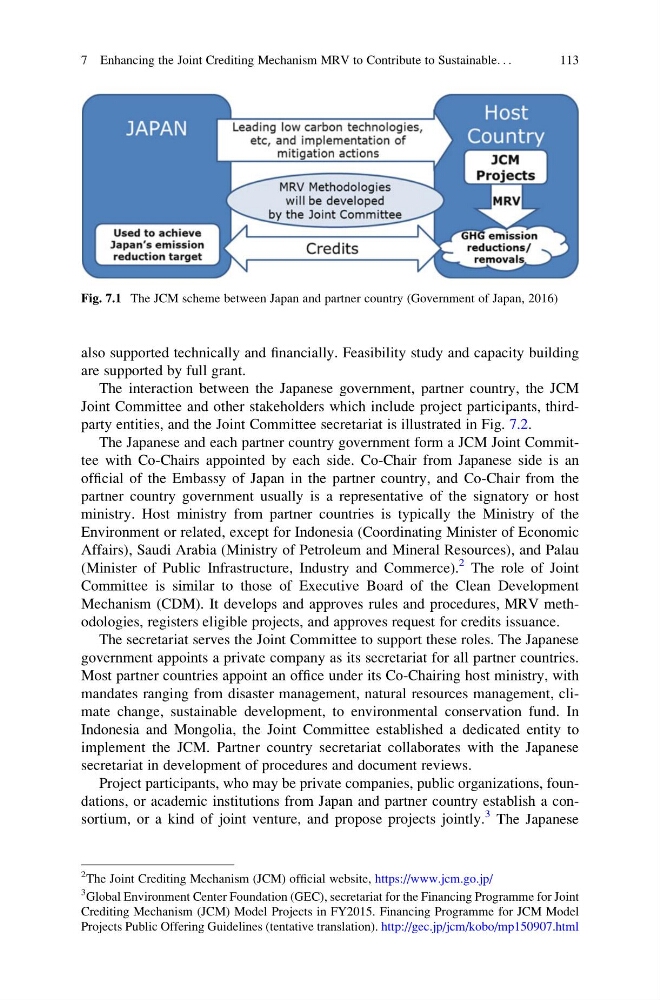
Fig. 7.1 The JCM scheme between Japan and partner country (Government of Japan, 2016)
2 The Joint Crediting Mechanism (JCM) official website, https://www.jcm.go.jp/
3 Global Environment Center Foundation (GEC), secretariat for the Financing Programme for Joint
Crediting Mechanism (JCM) Model Projects in FY2015. Financing Programme for JCM Model
Projects Public Offering Guidelines (tentative translation). http://gec.jp/jcm/kobo/mp150907.html
7 Enhancing the Joint Crediting Mechanism MRV to Contribute to Sustainable. . .
113
are supported by full grant.
The interaction between the Japanese government, partner country, the JCM
Joint Committee and other stakeholders which include project participants, thirdparty entities, and the Joint Committee secretariat is illustrated in Fig. 7.2.
The Japanese and each partner country government form a JCM Joint Committee with Co-Chairs appointed by each side. Co-Chair from Japanese side is an
official of the Embassy of Japan in the partner country, and Co-Chair from the
partner country government usually is a representative of the signatory or host
ministry. Host ministry from partner countries is typically the Ministry of the
Environment or related, except for Indonesia (Coordinating Minister of Economic
Affairs), Saudi Arabia (Ministry of Petroleum and Mineral Resources), and Palau
(Minister of Public Infrastructure, Industry and Commerce).
2 The role of Joint
Committee is similar to those of Executive Board of the Clean Development
Mechanism (CDM). It develops and approves rules and procedures, MRV methodologies, registers eligible projects, and approves request for credits issuance.
The secretariat serves the Joint Committee to support these roles. The Japanese
government appoints a private company as its secretariat for all partner countries.
Most partner countries appoint an office under its Co-Chairing host ministry, with
mandates ranging from disaster management, natural resources management, climate change, sustainable development, to environmental conservation fund. In
Indonesia and Mongolia, the Joint Committee established a dedicated entity to
implement the JCM. Partner country secretariat collaborates with the Japanese
secretariat in development of procedures and document reviews.
Project participants, who may be private companies, public organizations, foundations, or academic institutions from Japan and partner country establish a consortium, or a kind of joint venture, and propose projects jointly.
3 The Japanese
Fig. 7.1 The JCM scheme between Japan and partner country (Government of Japan, 2016)
2 The Joint Crediting Mechanism (JCM) official website, https://www.jcm.go.jp/
3 Global Environment Center Foundation (GEC), secretariat for the Financing Programme for Joint
Crediting Mechanism (JCM) Model Projects in FY2015. Financing Programme for JCM Model
Projects Public Offering Guidelines (tentative translation). http://gec.jp/jcm/kobo/mp150907.html
7 Enhancing the Joint Crediting Mechanism MRV to Contribute to Sustainable. . .
113