

156
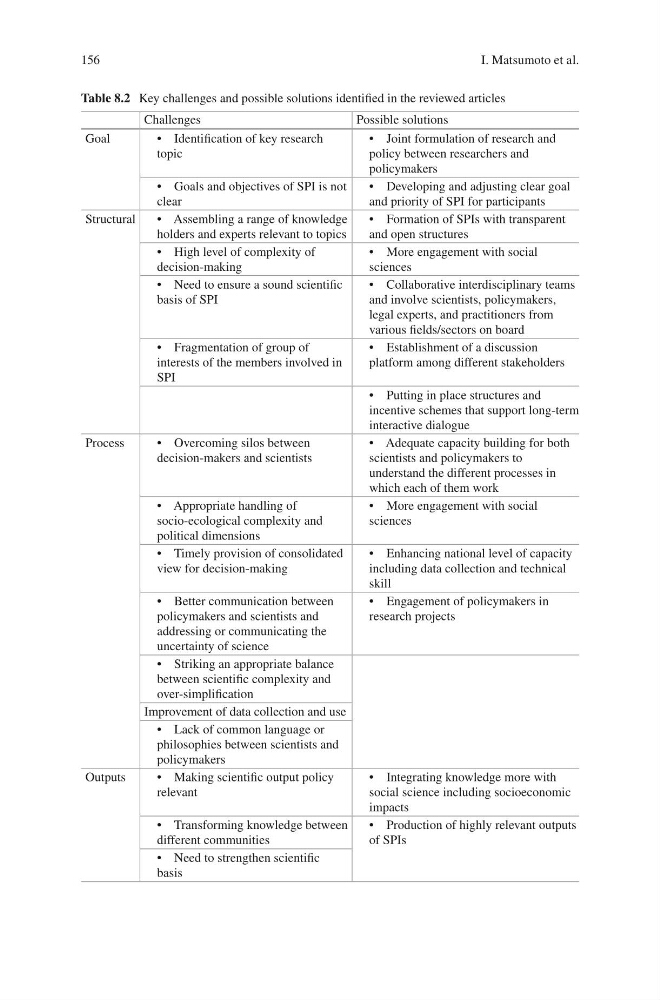
Table 8.2 Key challenges and possible solutions identified in the reviewed articles
Challenges
Possible solutions
Goal
• Identification of key research
topic
• Joint formulation of research and
policy between researchers and
policymakers
• Goals and objectives of SPI is not
clear
• Developing and adjusting clear goal
and priority of SPI for participants
Structural
• Assembling a range of knowledge
holders and experts relevant to topics
• Formation of SPIs with transparent
and open structures
• High level of complexity of
decision-making
• More engagement with social
sciences
• Need to ensure a sound scientific
basis of SPI
• Collaborative interdisciplinary teams
and involve scientists, policymakers,
legal experts, and practitioners from
various fields/sectors on board
• Fragmentation of group of
interests of the members involved in
SPI
• Establishment of a discussion
platform among different stakeholders
• Putting in place structures and
incentive schemes that support long-term
interactive dialogue
Process
• Overcoming silos between
decision-makers and scientists
• Adequate capacity building for both
scientists and policymakers to
understand the different processes in
which each of them work
• Appropriate handling of
socio-ecological complexity and
political dimensions
• More engagement with social
sciences
• Timely provision of consolidated
view for decision-making
• Enhancing national level of capacity
including data collection and technical
skill
• Better communication between
policymakers and scientists and
addressing or communicating the
uncertainty of science
• Engagement of policymakers in
research projects
• Striking an appropriate balance
between scientific complexity and
over-simplification
Improvement of data collection and use
• Lack of common language or
philosophies between scientists and
policymakers
Outputs
• Making scientific output policy
relevant
• Integrating knowledge more with
social science including socioeconomic
impacts
• Transforming knowledge between
different communities
• Production of highly relevant outputs
of SPIs
• Need to strengthen scientific
basis
I. Matsumoto et al.
Table 8.2 Key challenges and possible solutions identified in the reviewed articles
Challenges
Possible solutions
Goal
• Identification of key research
topic
• Joint formulation of research and
policy between researchers and
policymakers
• Goals and objectives of SPI is not
clear
• Developing and adjusting clear goal
and priority of SPI for participants
Structural
• Assembling a range of knowledge
holders and experts relevant to topics
• Formation of SPIs with transparent
and open structures
• High level of complexity of
decision-making
• More engagement with social
sciences
• Need to ensure a sound scientific
basis of SPI
• Collaborative interdisciplinary teams
and involve scientists, policymakers,
legal experts, and practitioners from
various fields/sectors on board
• Fragmentation of group of
interests of the members involved in
SPI
• Establishment of a discussion
platform among different stakeholders
• Putting in place structures and
incentive schemes that support long-term
interactive dialogue
Process
• Overcoming silos between
decision-makers and scientists
• Adequate capacity building for both
scientists and policymakers to
understand the different processes in
which each of them work
• Appropriate handling of
socio-ecological complexity and
political dimensions
• More engagement with social
sciences
• Timely provision of consolidated
view for decision-making
• Enhancing national level of capacity
including data collection and technical
skill
• Better communication between
policymakers and scientists and
addressing or communicating the
uncertainty of science
• Engagement of policymakers in
research projects
• Striking an appropriate balance
between scientific complexity and
over-simplification
Improvement of data collection and use
• Lack of common language or
philosophies between scientists and
policymakers
Outputs
• Making scientific output policy
relevant
• Integrating knowledge more with
social science including socioeconomic
impacts
• Transforming knowledge between
different communities
• Production of highly relevant outputs
of SPIs
• Need to strengthen scientific
basis
I. Matsumoto et al.