

lack of preparation for beyond-design events as well as underestimation of design
tsunami height, i.e., both lack of contingency planning and deficiency in design.
The former issue is related to the importance of identification and resolution of the
“cliff edge effect.”
There are two background factors that led to the underestimation of design
tsunami height. One is an insufficient understanding of the importance of following
the most up-to-date scientific knowledge, where paradigms occasionally shift dramatically, as our knowledge of natural hazards is expanded; the other is an
over-insistence on valid historical evidence to take preventive action. Design
earthquake ground motion and tsunami are evaluated for supposed active faults and
subduction zone earthquakes. For subduction zone earthquakes, the supposed
earthquake characteristics are determined based on the historical records for only
several hundreds of years, while geological data over a longer period of time can be
available for active faults.
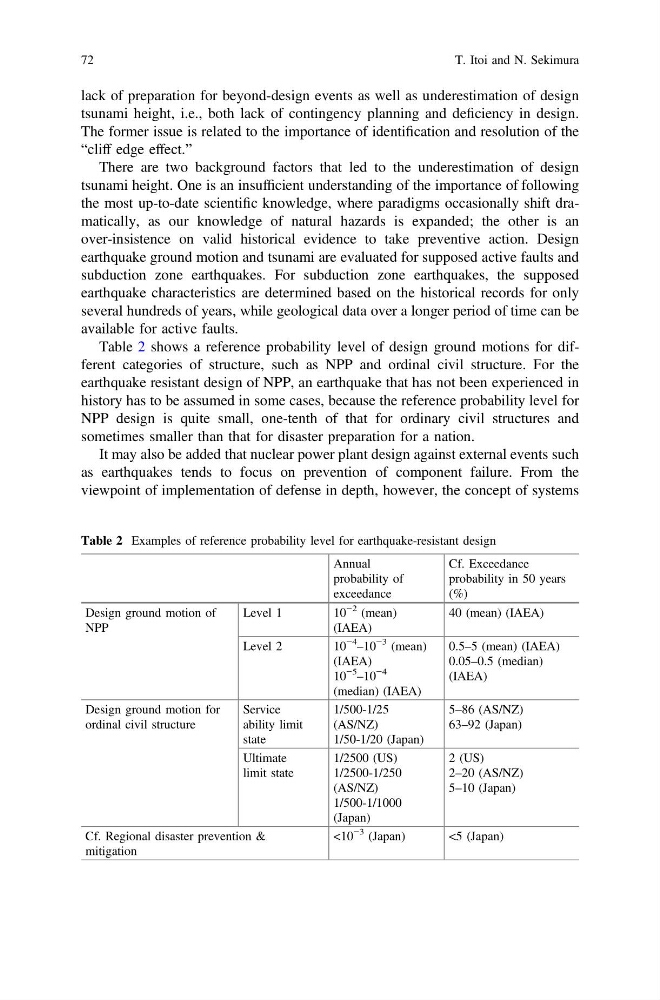
Table 2 shows a reference probability level of design ground motions for different categories of structure, such as NPP and ordinal civil structure. For the
earthquake resistant design of NPP, an earthquake that has not been experienced in
history has to be assumed in some cases, because the reference probability level for
NPP design is quite small, one-tenth of that for ordinary civil structures and
sometimes smaller than that for disaster preparation for a nation.
It may also be added that nuclear power plant design against external events such
as earthquakes tends to focus on prevention of component failure. From the
viewpoint of implementation of defense in depth, however, the concept of systems
Table 2 Examples of reference probability level for earthquake-resistant design
Annual
probability of
exceedance
Cf. Exceedance
probability in 50 years
(%)
Design ground motion of
NPP
Level 1
10
−2 (mean)
(IAEA)
40 (mean) (IAEA)
Level 2
10
−4
–10
−3 (mean)
(IAEA)
10
−5
–10
−4
(median) (IAEA)
0.5–5 (mean) (IAEA)
0.05–0.5 (median)
(IAEA)
Design ground motion for
ordinal civil structure
Service
ability limit
state
1/500-1/25
(AS/NZ)
1/50-1/20 (Japan)
5–86 (AS/NZ)
63–92 (Japan)
Ultimate
limit state
1/2500 (US)
1/2500-1/250
(AS/NZ)
1/500-1/1000
(Japan)
2 (US)
2–20 (AS/NZ)
5–10 (Japan)
Cf. Regional disaster prevention &
mitigation
<10
−3 (Japan)
<5 (Japan)
72
T. Itoi and N. Sekimura
tsunami height, i.e., both lack of contingency planning and deficiency in design.
The former issue is related to the importance of identification and resolution of the
“cliff edge effect.”
There are two background factors that led to the underestimation of design
tsunami height. One is an insufficient understanding of the importance of following
the most up-to-date scientific knowledge, where paradigms occasionally shift dramatically, as our knowledge of natural hazards is expanded; the other is an
over-insistence on valid historical evidence to take preventive action. Design
earthquake ground motion and tsunami are evaluated for supposed active faults and
subduction zone earthquakes. For subduction zone earthquakes, the supposed
earthquake characteristics are determined based on the historical records for only
several hundreds of years, while geological data over a longer period of time can be
available for active faults.
Table 2 shows a reference probability level of design ground motions for different categories of structure, such as NPP and ordinal civil structure. For the
earthquake resistant design of NPP, an earthquake that has not been experienced in
history has to be assumed in some cases, because the reference probability level for
NPP design is quite small, one-tenth of that for ordinary civil structures and
sometimes smaller than that for disaster preparation for a nation.
It may also be added that nuclear power plant design against external events such
as earthquakes tends to focus on prevention of component failure. From the
viewpoint of implementation of defense in depth, however, the concept of systems
Table 2 Examples of reference probability level for earthquake-resistant design
Annual
probability of
exceedance
Cf. Exceedance
probability in 50 years
(%)
Design ground motion of
NPP
Level 1
10
−2 (mean)
(IAEA)
40 (mean) (IAEA)
Level 2
10
−4
–10
−3 (mean)
(IAEA)
10
−5
–10
−4
(median) (IAEA)
0.5–5 (mean) (IAEA)
0.05–0.5 (median)
(IAEA)
Design ground motion for
ordinal civil structure
Service
ability limit
state
1/500-1/25
(AS/NZ)
1/50-1/20 (Japan)
5–86 (AS/NZ)
63–92 (Japan)
Ultimate
limit state
1/2500 (US)
1/2500-1/250
(AS/NZ)
1/500-1/1000
(Japan)
2 (US)
2–20 (AS/NZ)
5–10 (Japan)
Cf. Regional disaster prevention &
mitigation
<10
−3 (Japan)
<5 (Japan)
72
T. Itoi and N. Sekimura