

Recently, ground motion simulation using fault model is widely used for ground
motion simulation for a single site. In the fault model, a simplified characterized
fault model was proposed and used for that purpose, and standardized method, e.g.,
‘recipe’ [3], is proposed. The method, however, was proposed to calculate the
average characteristics of ground motion. More detailed model is needed to conduct
probabilistic seismic risk assessment, which incorporate uncertainty in ground
motion prediction. Therefore, in this study, a probabilistic modeling of slip distribution focusing on crustal earthquake is proposed.
2 A Proposed Model to Simulate the Slip Distribution
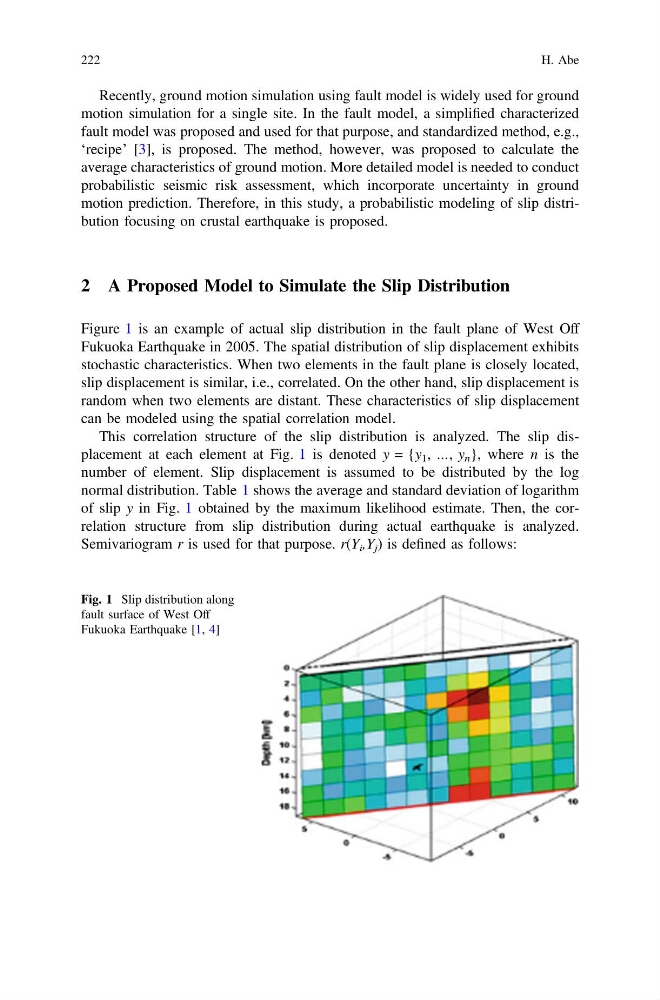
Figure 1 is an example of actual slip distribution in the fault plane of West Off
Fukuoka Earthquake in 2005. The spatial distribution of slip displacement exhibits
stochastic characteristics. When two elements in the fault plane is closely located,
slip displacement is similar, i.e., correlated. On the other hand, slip displacement is
random when two elements are distant. These characteristics of slip displacement
can be modeled using the spatial correlation model.
This correlation structure of the slip distribution is analyzed. The slip displacement at each element at Fig. 1 is denoted y = {y 1 , …, y n }, where n is the
number of element. Slip displacement is assumed to be distributed by the log
normal distribution. Table 1 shows the average and standard deviation of logarithm
of slip y in Fig. 1 obtained by the maximum likelihood estimate. Then, the correlation structure from slip distribution during actual earthquake is analyzed.
Semivariogram r is used for that purpose. r(Y i ,Y j ) is defined as follows:
Fig. 1 Slip distribution along
fault surface of West Off
Fukuoka Earthquake [1, 4]
222
H. Abe
motion simulation for a single site. In the fault model, a simplified characterized
fault model was proposed and used for that purpose, and standardized method, e.g.,
‘recipe’ [3], is proposed. The method, however, was proposed to calculate the
average characteristics of ground motion. More detailed model is needed to conduct
probabilistic seismic risk assessment, which incorporate uncertainty in ground
motion prediction. Therefore, in this study, a probabilistic modeling of slip distribution focusing on crustal earthquake is proposed.
2 A Proposed Model to Simulate the Slip Distribution
Figure 1 is an example of actual slip distribution in the fault plane of West Off
Fukuoka Earthquake in 2005. The spatial distribution of slip displacement exhibits
stochastic characteristics. When two elements in the fault plane is closely located,
slip displacement is similar, i.e., correlated. On the other hand, slip displacement is
random when two elements are distant. These characteristics of slip displacement
can be modeled using the spatial correlation model.
This correlation structure of the slip distribution is analyzed. The slip displacement at each element at Fig. 1 is denoted y = {y 1 , …, y n }, where n is the
number of element. Slip displacement is assumed to be distributed by the log
normal distribution. Table 1 shows the average and standard deviation of logarithm
of slip y in Fig. 1 obtained by the maximum likelihood estimate. Then, the correlation structure from slip distribution during actual earthquake is analyzed.
Semivariogram r is used for that purpose. r(Y i ,Y j ) is defined as follows:
Fig. 1 Slip distribution along
fault surface of West Off
Fukuoka Earthquake [1, 4]
222
H. Abe