

4.10 Complexity Is the Greatest Challenge
77
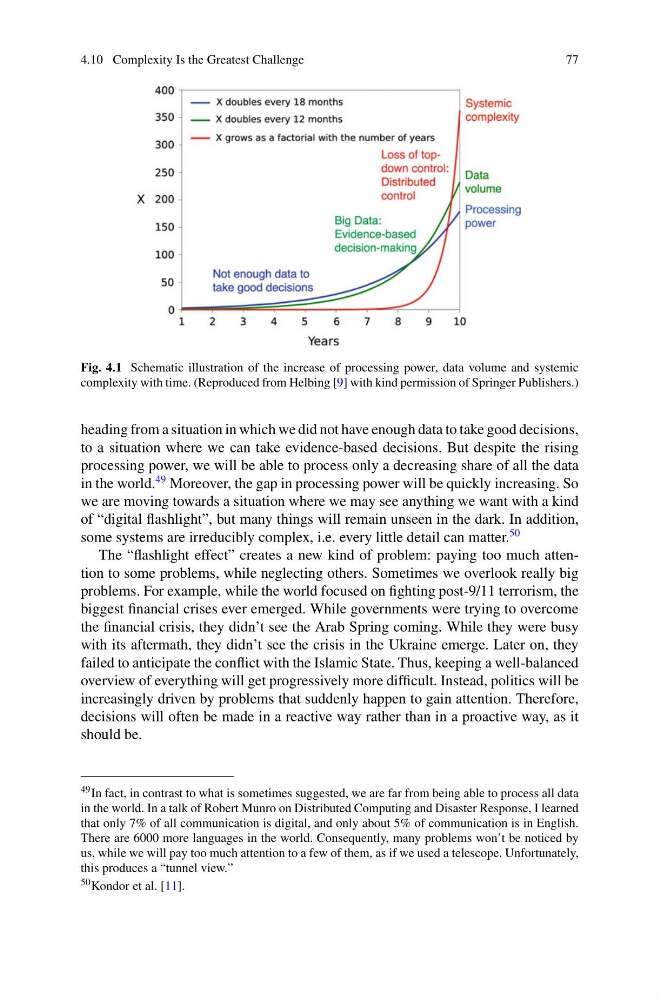
Fig. 4.1 Schematic illustration of the increase of processing power, data volume and systemic
complexity with time. (Reproduced from Helbing [9] with kind permission of Springer Publishers.)
heading from a situation in which we did not have enough data to take good decisions,
to a situation where we can take evidence-based decisions. But despite the rising
processing power, we will be able to process only a decreasing share of all the data
in the world.
49 Moreover, the gap in processing power will be quickly increasing. So
we are moving towards a situation where we may see anything we want with a kind
of “digital flashlight”, but many things will remain unseen in the dark. In addition,
some systems are irreducibly complex, i.e. every little detail can matter.
50
The “flashlight effect” creates a new kind of problem: paying too much attention to some problems, while neglecting others. Sometimes we overlook really big
problems. For example, while the world focused on fighting post-9/11 terrorism, the
biggest financial crises ever emerged. While governments were trying to overcome
the financial crisis, they didn’t see the Arab Spring coming. While they were busy
with its aftermath, they didn’t see the crisis in the Ukraine emerge. Later on, they
failed to anticipate the conflict with the Islamic State. Thus, keeping a well-balanced
overview of everything will get progressively more difficult. Instead, politics will be
increasingly driven by problems that suddenly happen to gain attention. Therefore,
decisions will often be made in a reactive way rather than in a proactive way, as it
should be.
49 In fact, in contrast to what is sometimes suggested, we are far from being able to process all data
in the world. In a talk of Robert Munro on Distributed Computing and Disaster Response, I learned
that only 7% of all communication is digital, and only about 5% of communication is in English.
There are 6000 more languages in the world. Consequently, many problems won’t be noticed by
us, while we will pay too much attention to a few of them, as if we used a telescope. Unfortunately,
this produces a “tunnel view.”
50 Kondor et al. [11].
77
Fig. 4.1 Schematic illustration of the increase of processing power, data volume and systemic
complexity with time. (Reproduced from Helbing [9] with kind permission of Springer Publishers.)
heading from a situation in which we did not have enough data to take good decisions,
to a situation where we can take evidence-based decisions. But despite the rising
processing power, we will be able to process only a decreasing share of all the data
in the world.
49 Moreover, the gap in processing power will be quickly increasing. So
we are moving towards a situation where we may see anything we want with a kind
of “digital flashlight”, but many things will remain unseen in the dark. In addition,
some systems are irreducibly complex, i.e. every little detail can matter.
50
The “flashlight effect” creates a new kind of problem: paying too much attention to some problems, while neglecting others. Sometimes we overlook really big
problems. For example, while the world focused on fighting post-9/11 terrorism, the
biggest financial crises ever emerged. While governments were trying to overcome
the financial crisis, they didn’t see the Arab Spring coming. While they were busy
with its aftermath, they didn’t see the crisis in the Ukraine emerge. Later on, they
failed to anticipate the conflict with the Islamic State. Thus, keeping a well-balanced
overview of everything will get progressively more difficult. Instead, politics will be
increasingly driven by problems that suddenly happen to gain attention. Therefore,
decisions will often be made in a reactive way rather than in a proactive way, as it
should be.
49 In fact, in contrast to what is sometimes suggested, we are far from being able to process all data
in the world. In a talk of Robert Munro on Distributed Computing and Disaster Response, I learned
that only 7% of all communication is digital, and only about 5% of communication is in English.
There are 6000 more languages in the world. Consequently, many problems won’t be noticed by
us, while we will pay too much attention to a few of them, as if we used a telescope. Unfortunately,
this produces a “tunnel view.”
50 Kondor et al. [11].