

7.12 Industry 4.0: Towards Smart, Self-Organizing Production
147
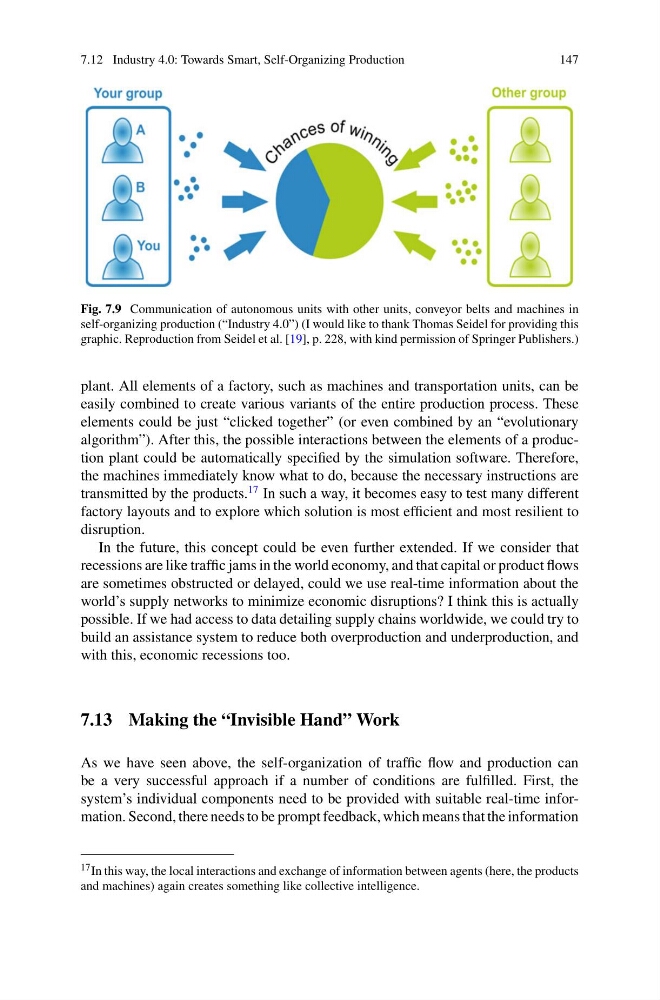
Fig. 7.9 Communication of autonomous units with other units, conveyor belts and machines in
self-organizing production (“Industry 4.0”) (I would like to thank Thomas Seidel for providing this
graphic. Reproduction from Seidel et al. [19], p. 228, with kind permission of Springer Publishers.)
plant. All elements of a factory, such as machines and transportation units, can be
easily combined to create various variants of the entire production process. These
elements could be just “clicked together” (or even combined by an “evolutionary
algorithm”). After this, the possible interactions between the elements of a production plant could be automatically specified by the simulation software. Therefore,
the machines immediately know what to do, because the necessary instructions are
transmitted by the products.
17 In such a way, it becomes easy to test many different
factory layouts and to explore which solution is most efficient and most resilient to
disruption.
In the future, this concept could be even further extended. If we consider that
recessions are like traffic jams in the world economy, and that capital or product flows
are sometimes obstructed or delayed, could we use real-time information about the
world’s supply networks to minimize economic disruptions? I think this is actually
possible. If we had access to data detailing supply chains worldwide, we could try to
build an assistance system to reduce both overproduction and underproduction, and
with this, economic recessions too.
7.13 Making the “Invisible Hand” Work
As we have seen above, the self-organization of traffic flow and production can
be a very successful approach if a number of conditions are fulfilled. First, the
system’s individual components need to be provided with suitable real-time information. Second, there needs to be prompt feedback, which means that the information
17 In this way, the local interactions and exchange of information between agents (here, the products
and machines) again creates something like collective intelligence.
147
Fig. 7.9 Communication of autonomous units with other units, conveyor belts and machines in
self-organizing production (“Industry 4.0”) (I would like to thank Thomas Seidel for providing this
graphic. Reproduction from Seidel et al. [19], p. 228, with kind permission of Springer Publishers.)
plant. All elements of a factory, such as machines and transportation units, can be
easily combined to create various variants of the entire production process. These
elements could be just “clicked together” (or even combined by an “evolutionary
algorithm”). After this, the possible interactions between the elements of a production plant could be automatically specified by the simulation software. Therefore,
the machines immediately know what to do, because the necessary instructions are
transmitted by the products.
17 In such a way, it becomes easy to test many different
factory layouts and to explore which solution is most efficient and most resilient to
disruption.
In the future, this concept could be even further extended. If we consider that
recessions are like traffic jams in the world economy, and that capital or product flows
are sometimes obstructed or delayed, could we use real-time information about the
world’s supply networks to minimize economic disruptions? I think this is actually
possible. If we had access to data detailing supply chains worldwide, we could try to
build an assistance system to reduce both overproduction and underproduction, and
with this, economic recessions too.
7.13 Making the “Invisible Hand” Work
As we have seen above, the self-organization of traffic flow and production can
be a very successful approach if a number of conditions are fulfilled. First, the
system’s individual components need to be provided with suitable real-time information. Second, there needs to be prompt feedback, which means that the information
17 In this way, the local interactions and exchange of information between agents (here, the products
and machines) again creates something like collective intelligence.