

142
7 Digitally Assisted Self-Organization
Fig. 7.5 Illustration of the measurement of traffic flows arriving at a road section of interest (left)
and departing from it (center). (Reproduction with kind permission of Stefan Lämmer from his
Dissertation at TU Dresden, accessible at https://web.archive.org/web/20190303083728/, https://
nbn-resolving.org/urn:nbn:de:swb:14-1194272623825-42598)
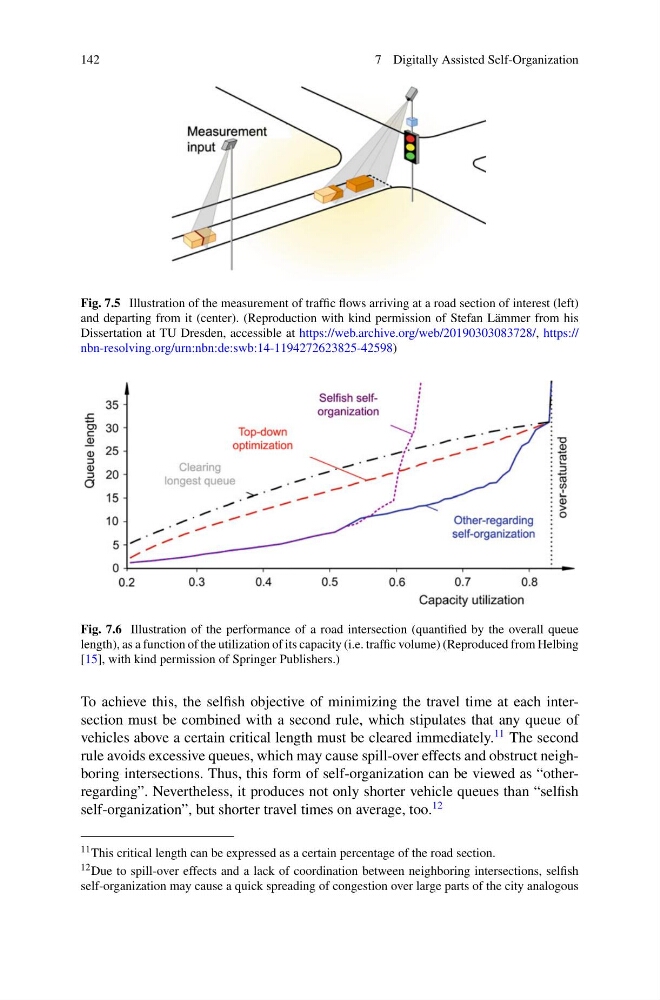
Fig. 7.6 Illustration of the performance of a road intersection (quantified by the overall queue
length), as a function of the utilization of its capacity (i.e. traffic volume) (Reproduced from Helbing
[15], with kind permission of Springer Publishers.)
To achieve this, the selfish objective of minimizing the travel time at each intersection must be combined with a second rule, which stipulates that any queue of
vehicles above a certain critical length must be cleared immediately.
11 The second
rule avoids excessive queues, which may cause spill-over effects and obstruct neighboring intersections. Thus, this form of self-organization can be viewed as “otherregarding”. Nevertheless, it produces not only shorter vehicle queues than “selfish
self-organization”, but shorter travel times on average, too.
12
11 This critical length can be expressed as a certain percentage of the road section.
12 Due to spill-over effects and a lack of coordination between neighboring intersections, selfish
self-organization may cause a quick spreading of congestion over large parts of the city analogous
7 Digitally Assisted Self-Organization
Fig. 7.5 Illustration of the measurement of traffic flows arriving at a road section of interest (left)
and departing from it (center). (Reproduction with kind permission of Stefan Lämmer from his
Dissertation at TU Dresden, accessible at https://web.archive.org/web/20190303083728/, https://
nbn-resolving.org/urn:nbn:de:swb:14-1194272623825-42598)
Fig. 7.6 Illustration of the performance of a road intersection (quantified by the overall queue
length), as a function of the utilization of its capacity (i.e. traffic volume) (Reproduced from Helbing
[15], with kind permission of Springer Publishers.)
To achieve this, the selfish objective of minimizing the travel time at each intersection must be combined with a second rule, which stipulates that any queue of
vehicles above a certain critical length must be cleared immediately.
11 The second
rule avoids excessive queues, which may cause spill-over effects and obstruct neighboring intersections. Thus, this form of self-organization can be viewed as “otherregarding”. Nevertheless, it produces not only shorter vehicle queues than “selfish
self-organization”, but shorter travel times on average, too.
12
11 This critical length can be expressed as a certain percentage of the road section.
12 Due to spill-over effects and a lack of coordination between neighboring intersections, selfish
self-organization may cause a quick spreading of congestion over large parts of the city analogous