

26 Phase Coherence Between Cardiovascular Oscillations in Malaria …
415
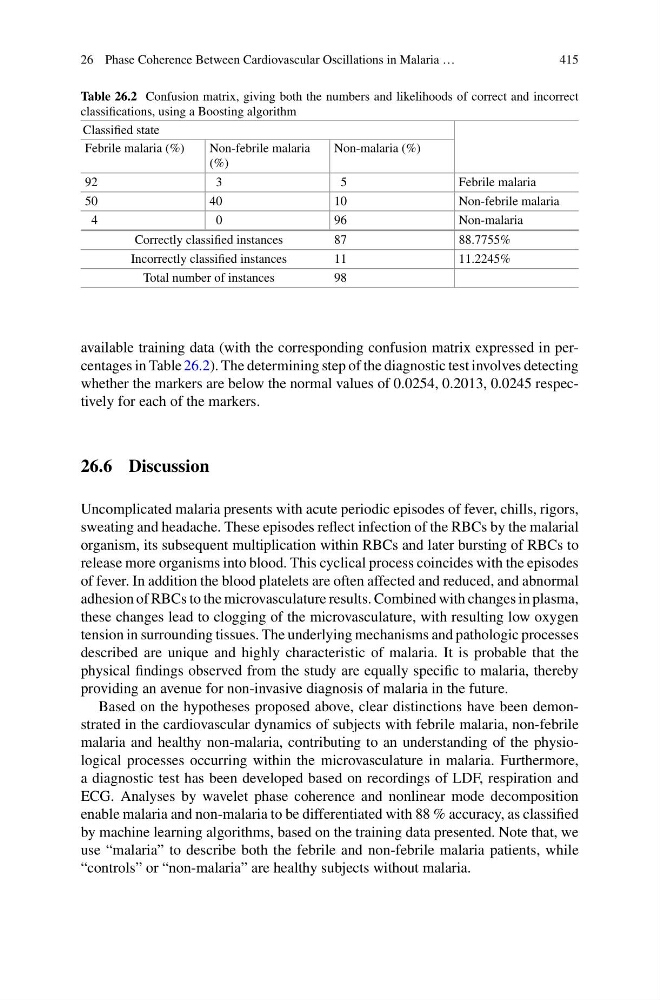
Table 26.2 Confusion matrix, giving both the numbers and likelihoods of correct and incorrect
classifications, using a Boosting algorithm
Classified state
Febrile malaria (%)
Non-febrile malaria
(%)
Non-malaria (%)
92
3
5
Febrile malaria
50
40
10
Non-febrile malaria
4
0
96
Non-malaria
Correctly classified instances
87
88.7755%
Incorrectly classified instances
11
11.2245%
Total number of instances
98
available training data (with the corresponding confusion matrix expressed in percentages in Table 26.2). The determining step of the diagnostic test involves detecting
whether the markers are below the normal values of 0.0254, 0.2013, 0.0245 respectively for each of the markers.
26.6 Discussion
Uncomplicated malaria presents with acute periodic episodes of fever, chills, rigors,
sweating and headache. These episodes reflect infection of the RBCs by the malarial
organism, its subsequent multiplication within RBCs and later bursting of RBCs to
release more organisms into blood. This cyclical process coincides with the episodes
of fever. In addition the blood platelets are often affected and reduced, and abnormal
adhesion of RBCs to the microvasculature results. Combined with changes in plasma,
these changes lead to clogging of the microvasculature, with resulting low oxygen
tension in surrounding tissues. The underlying mechanisms and pathologic processes
described are unique and highly characteristic of malaria. It is probable that the
physical findings observed from the study are equally specific to malaria, thereby
providing an avenue for non-invasive diagnosis of malaria in the future.
Based on the hypotheses proposed above, clear distinctions have been demonstrated in the cardiovascular dynamics of subjects with febrile malaria, non-febrile
malaria and healthy non-malaria, contributing to an understanding of the physiological processes occurring within the microvasculature in malaria. Furthermore,
a diagnostic test has been developed based on recordings of LDF, respiration and
ECG. Analyses by wavelet phase coherence and nonlinear mode decomposition
enable malaria and non-malaria to be differentiated with 88 % accuracy, as classified
by machine learning algorithms, based on the training data presented. Note that, we
use “malaria” to describe both the febrile and non-febrile malaria patients, while
“controls” or “non-malaria” are healthy subjects without malaria.
415
Table 26.2 Confusion matrix, giving both the numbers and likelihoods of correct and incorrect
classifications, using a Boosting algorithm
Classified state
Febrile malaria (%)
Non-febrile malaria
(%)
Non-malaria (%)
92
3
5
Febrile malaria
50
40
10
Non-febrile malaria
4
0
96
Non-malaria
Correctly classified instances
87
88.7755%
Incorrectly classified instances
11
11.2245%
Total number of instances
98
available training data (with the corresponding confusion matrix expressed in percentages in Table 26.2). The determining step of the diagnostic test involves detecting
whether the markers are below the normal values of 0.0254, 0.2013, 0.0245 respectively for each of the markers.
26.6 Discussion
Uncomplicated malaria presents with acute periodic episodes of fever, chills, rigors,
sweating and headache. These episodes reflect infection of the RBCs by the malarial
organism, its subsequent multiplication within RBCs and later bursting of RBCs to
release more organisms into blood. This cyclical process coincides with the episodes
of fever. In addition the blood platelets are often affected and reduced, and abnormal
adhesion of RBCs to the microvasculature results. Combined with changes in plasma,
these changes lead to clogging of the microvasculature, with resulting low oxygen
tension in surrounding tissues. The underlying mechanisms and pathologic processes
described are unique and highly characteristic of malaria. It is probable that the
physical findings observed from the study are equally specific to malaria, thereby
providing an avenue for non-invasive diagnosis of malaria in the future.
Based on the hypotheses proposed above, clear distinctions have been demonstrated in the cardiovascular dynamics of subjects with febrile malaria, non-febrile
malaria and healthy non-malaria, contributing to an understanding of the physiological processes occurring within the microvasculature in malaria. Furthermore,
a diagnostic test has been developed based on recordings of LDF, respiration and
ECG. Analyses by wavelet phase coherence and nonlinear mode decomposition
enable malaria and non-malaria to be differentiated with 88 % accuracy, as classified
by machine learning algorithms, based on the training data presented. Note that, we
use “malaria” to describe both the febrile and non-febrile malaria patients, while
“controls” or “non-malaria” are healthy subjects without malaria.