

368
J. Raeder
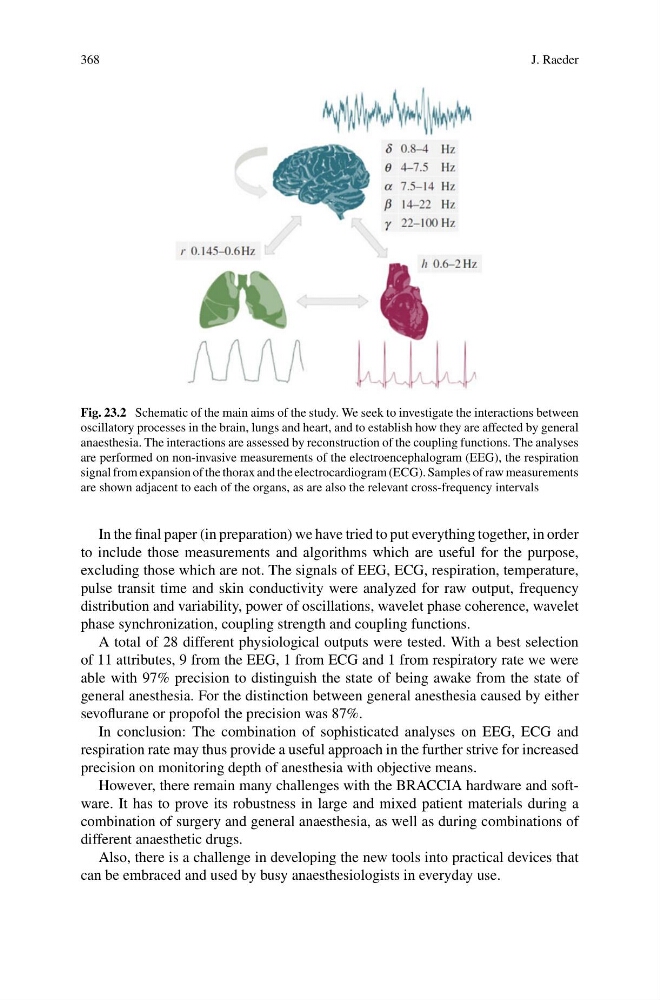
Fig. 23.2 Schematic of the main aims of the study. We seek to investigate the interactions between
oscillatory processes in the brain, lungs and heart, and to establish how they are affected by general
anaesthesia. The interactions are assessed by reconstruction of the coupling functions. The analyses
are performed on non-invasive measurements of the electroencephalogram (EEG), the respiration
signal from expansion of the thorax and the electrocardiogram (ECG). Samples of raw measurements
are shown adjacent to each of the organs, as are also the relevant cross-frequency intervals
In the final paper (in preparation) we have tried to put everything together, in order
to include those measurements and algorithms which are useful for the purpose,
excluding those which are not. The signals of EEG, ECG, respiration, temperature,
pulse transit time and skin conductivity were analyzed for raw output, frequency
distribution and variability, power of oscillations, wavelet phase coherence, wavelet
phase synchronization, coupling strength and coupling functions.
A total of 28 different physiological outputs were tested. With a best selection
of 11 attributes, 9 from the EEG, 1 from ECG and 1 from respiratory rate we were
able with 97% precision to distinguish the state of being awake from the state of
general anesthesia. For the distinction between general anesthesia caused by either
sevoflurane or propofol the precision was 87%.
In conclusion: The combination of sophisticated analyses on EEG, ECG and
respiration rate may thus provide a useful approach in the further strive for increased
precision on monitoring depth of anesthesia with objective means.
However, there remain many challenges with the BRACCIA hardware and software. It has to prove its robustness in large and mixed patient materials during a
combination of surgery and general anaesthesia, as well as during combinations of
different anaesthetic drugs.
Also, there is a challenge in developing the new tools into practical devices that
can be embraced and used by busy anaesthesiologists in everyday use.
J. Raeder
Fig. 23.2 Schematic of the main aims of the study. We seek to investigate the interactions between
oscillatory processes in the brain, lungs and heart, and to establish how they are affected by general
anaesthesia. The interactions are assessed by reconstruction of the coupling functions. The analyses
are performed on non-invasive measurements of the electroencephalogram (EEG), the respiration
signal from expansion of the thorax and the electrocardiogram (ECG). Samples of raw measurements
are shown adjacent to each of the organs, as are also the relevant cross-frequency intervals
In the final paper (in preparation) we have tried to put everything together, in order
to include those measurements and algorithms which are useful for the purpose,
excluding those which are not. The signals of EEG, ECG, respiration, temperature,
pulse transit time and skin conductivity were analyzed for raw output, frequency
distribution and variability, power of oscillations, wavelet phase coherence, wavelet
phase synchronization, coupling strength and coupling functions.
A total of 28 different physiological outputs were tested. With a best selection
of 11 attributes, 9 from the EEG, 1 from ECG and 1 from respiratory rate we were
able with 97% precision to distinguish the state of being awake from the state of
general anesthesia. For the distinction between general anesthesia caused by either
sevoflurane or propofol the precision was 87%.
In conclusion: The combination of sophisticated analyses on EEG, ECG and
respiration rate may thus provide a useful approach in the further strive for increased
precision on monitoring depth of anesthesia with objective means.
However, there remain many challenges with the BRACCIA hardware and software. It has to prove its robustness in large and mixed patient materials during a
combination of surgery and general anaesthesia, as well as during combinations of
different anaesthetic drugs.
Also, there is a challenge in developing the new tools into practical devices that
can be embraced and used by busy anaesthesiologists in everyday use.