

14 Oscillations, Rhythms and Synchronized Time Bases …
229
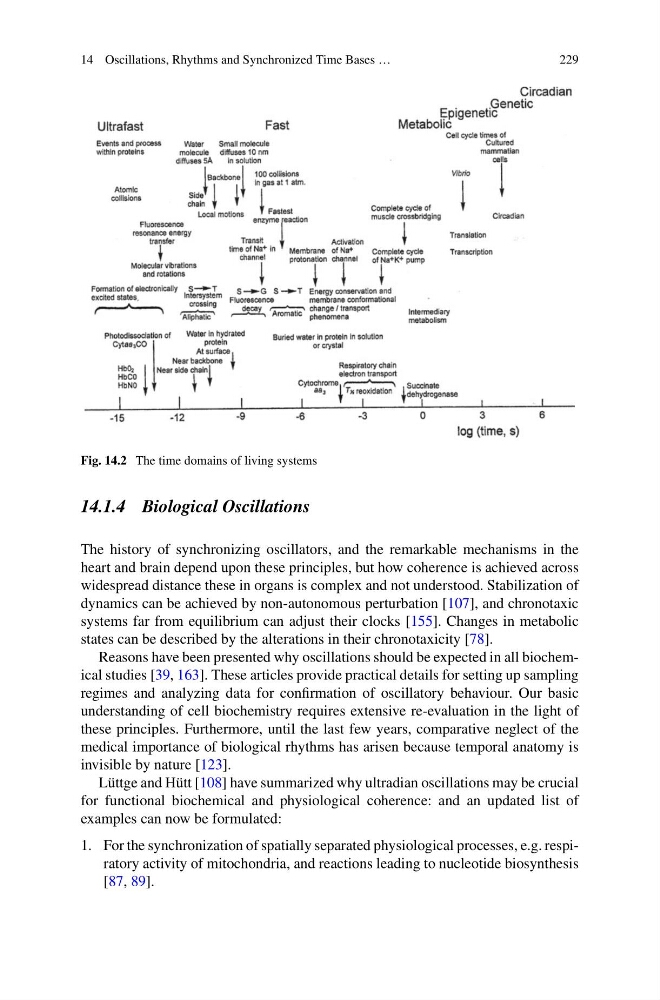
Fig. 14.2 The time domains of living systems
14.1.4 Biological Oscillations
The history of synchronizing oscillators, and the remarkable mechanisms in the
heart and brain depend upon these principles, but how coherence is achieved across
widespread distance these in organs is complex and not understood. Stabilization of
dynamics can be achieved by non-autonomous perturbation [107], and chronotaxic
systems far from equilibrium can adjust their clocks [155]. Changes in metabolic
states can be described by the alterations in their chronotaxicity [78].
Reasons have been presented why oscillations should be expected in all biochemical studies [39, 163]. These articles provide practical details for setting up sampling
regimes and analyzing data for confirmation of oscillatory behaviour. Our basic
understanding of cell biochemistry requires extensive re-evaluation in the light of
these principles. Furthermore, until the last few years, comparative neglect of the
medical importance of biological rhythms has arisen because temporal anatomy is
invisible by nature [123].
Lüttge and Hütt [108] have summarized why ultradian oscillations may be crucial
for functional biochemical and physiological coherence: and an updated list of
examples can now be formulated:
1. For the synchronization of spatially separated physiological processes, e.g. respiratory activity of mitochondria, and reactions leading to nucleotide biosynthesis
[87, 89].
229
Fig. 14.2 The time domains of living systems
14.1.4 Biological Oscillations
The history of synchronizing oscillators, and the remarkable mechanisms in the
heart and brain depend upon these principles, but how coherence is achieved across
widespread distance these in organs is complex and not understood. Stabilization of
dynamics can be achieved by non-autonomous perturbation [107], and chronotaxic
systems far from equilibrium can adjust their clocks [155]. Changes in metabolic
states can be described by the alterations in their chronotaxicity [78].
Reasons have been presented why oscillations should be expected in all biochemical studies [39, 163]. These articles provide practical details for setting up sampling
regimes and analyzing data for confirmation of oscillatory behaviour. Our basic
understanding of cell biochemistry requires extensive re-evaluation in the light of
these principles. Furthermore, until the last few years, comparative neglect of the
medical importance of biological rhythms has arisen because temporal anatomy is
invisible by nature [123].
Lüttge and Hütt [108] have summarized why ultradian oscillations may be crucial
for functional biochemical and physiological coherence: and an updated list of
examples can now be formulated:
1. For the synchronization of spatially separated physiological processes, e.g. respiratory activity of mitochondria, and reactions leading to nucleotide biosynthesis
[87, 89].