

228
D. Lloyd
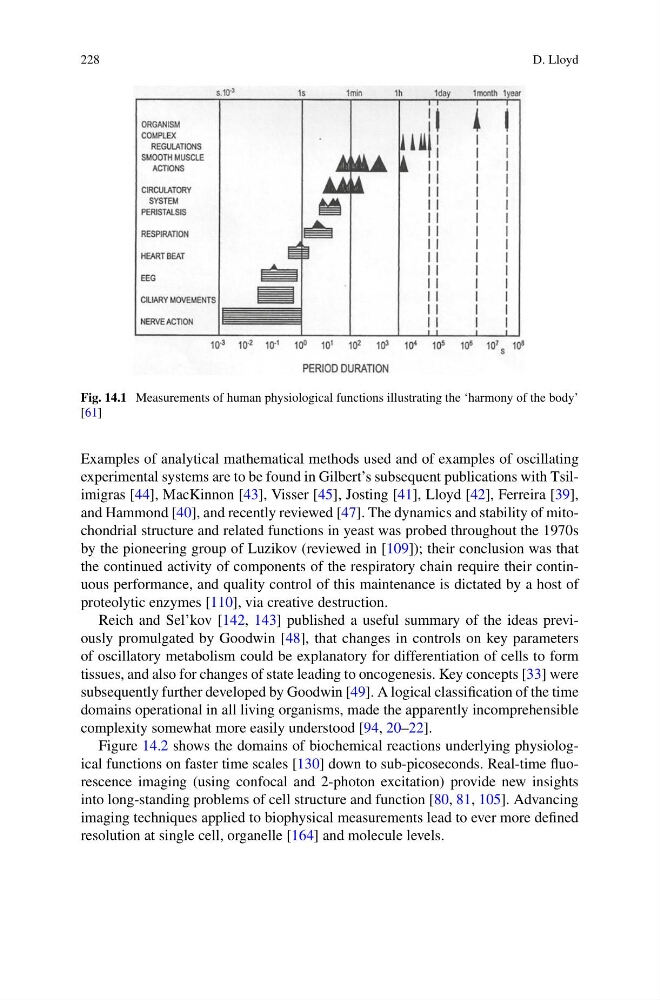
Fig. 14.1 Measurements of human physiological functions illustrating the ‘harmony of the body’
[61]
Examples of analytical mathematical methods used and of examples of oscillating
experimental systems are to be found in Gilbert’s subsequent publications with Tsilimigras [44], MacKinnon [43], Visser [45], Josting [41], Lloyd [42], Ferreira [39],
and Hammond [40], and recently reviewed [47]. The dynamics and stability of mitochondrial structure and related functions in yeast was probed throughout the 1970s
by the pioneering group of Luzikov (reviewed in [109]); their conclusion was that
the continued activity of components of the respiratory chain require their continuous performance, and quality control of this maintenance is dictated by a host of
proteolytic enzymes [110], via creative destruction.
Reich and Sel’kov [142, 143] published a useful summary of the ideas previously promulgated by Goodwin [48], that changes in controls on key parameters
of oscillatory metabolism could be explanatory for differentiation of cells to form
tissues, and also for changes of state leading to oncogenesis. Key concepts [33] were
subsequently further developed by Goodwin [49]. A logical classification of the time
domains operational in all living organisms, made the apparently incomprehensible
complexity somewhat more easily understood [94, 20–22].
Figure 14.2 shows the domains of biochemical reactions underlying physiological functions on faster time scales [130] down to sub-picoseconds. Real-time fluorescence imaging (using confocal and 2-photon excitation) provide new insights
into long-standing problems of cell structure and function [80, 81, 105]. Advancing
imaging techniques applied to biophysical measurements lead to ever more defined
resolution at single cell, organelle [164] and molecule levels.
D. Lloyd
Fig. 14.1 Measurements of human physiological functions illustrating the ‘harmony of the body’
[61]
Examples of analytical mathematical methods used and of examples of oscillating
experimental systems are to be found in Gilbert’s subsequent publications with Tsilimigras [44], MacKinnon [43], Visser [45], Josting [41], Lloyd [42], Ferreira [39],
and Hammond [40], and recently reviewed [47]. The dynamics and stability of mitochondrial structure and related functions in yeast was probed throughout the 1970s
by the pioneering group of Luzikov (reviewed in [109]); their conclusion was that
the continued activity of components of the respiratory chain require their continuous performance, and quality control of this maintenance is dictated by a host of
proteolytic enzymes [110], via creative destruction.
Reich and Sel’kov [142, 143] published a useful summary of the ideas previously promulgated by Goodwin [48], that changes in controls on key parameters
of oscillatory metabolism could be explanatory for differentiation of cells to form
tissues, and also for changes of state leading to oncogenesis. Key concepts [33] were
subsequently further developed by Goodwin [49]. A logical classification of the time
domains operational in all living organisms, made the apparently incomprehensible
complexity somewhat more easily understood [94, 20–22].
Figure 14.2 shows the domains of biochemical reactions underlying physiological functions on faster time scales [130] down to sub-picoseconds. Real-time fluorescence imaging (using confocal and 2-photon excitation) provide new insights
into long-standing problems of cell structure and function [80, 81, 105]. Advancing
imaging techniques applied to biophysical measurements lead to ever more defined
resolution at single cell, organelle [164] and molecule levels.