

either part of a longer trend or a mere fluctuation. But in any case, what can be
deduced from it is that the anthropogenic nitrogen inputs, by causing phosphorus
limitation, have made the lake more sensitive to any natural or human-induced
phosphorus input than it would be otherwise. It is a combined effect of both
nutrients what is causing a response of the system.
14.5 Some Reflections on Conservation
The issues presented here have a characteristic that prevents us from viewing them
using a conventional conservation approach: they cannot be treated within the
boundaries of the own ecosystems. The systems cannot be isolated from the
atmosphere to protect them, and there is no way to “clean” them from the undesirable chemical load already deposited. These facts add a wider dimension to the
concept of conservation: actions at a large scale, and not necessarily related or
applied in a direct way to the ecosystems to be preserved, are required to protect
them. Mountains are not the only example of ecosystems being at risk by a distant
threat. But, at least in Europe, they are perceived as the last wilderness left
untouched. This perception helps to make a strong point and raise public concern
on the message that some kind of global action is required to protect those parts of
nature that a priori seemed unaffected by impacts caused by humans.
The results presented here highlight some notions that are of current concern
regarding the processes involved in the atmospheric transport and fate of polluting
chemicals. The first notion is that they do have a fate. In contrast with an early,
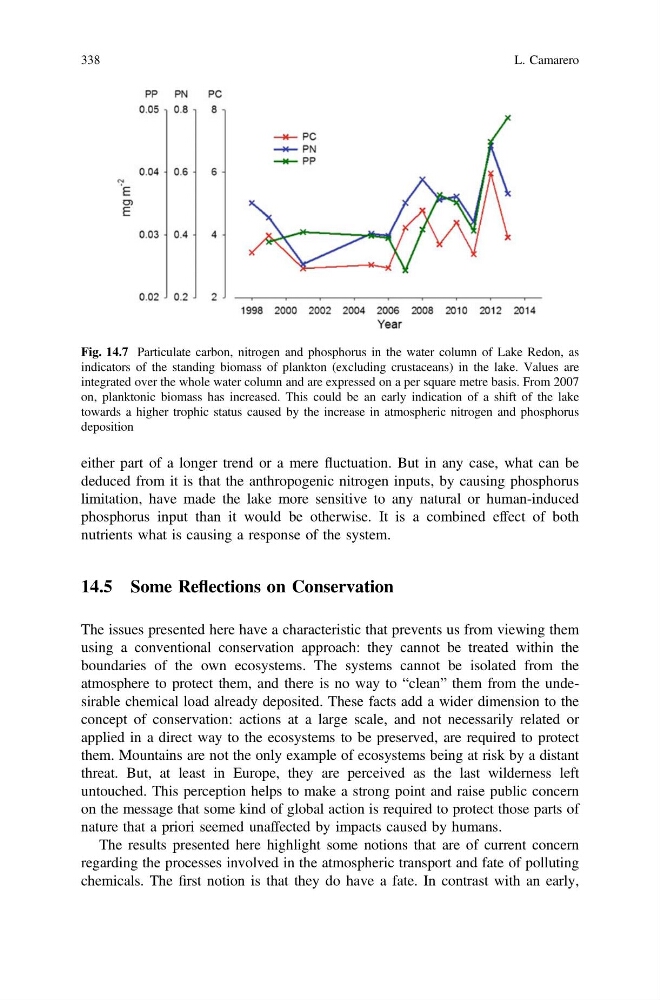
Fig. 14.7 Particulate carbon, nitrogen and phosphorus in the water column of Lake Redon, as
indicators of the standing biomass of plankton (excluding crustaceans) in the lake. Values are
integrated over the whole water column and are expressed on a per square metre basis. From 2007
on, planktonic biomass has increased. This could be an early indication of a shift of the lake
towards a higher trophic status caused by the increase in atmospheric nitrogen and phosphorus
deposition
338
L. Camarero
deduced from it is that the anthropogenic nitrogen inputs, by causing phosphorus
limitation, have made the lake more sensitive to any natural or human-induced
phosphorus input than it would be otherwise. It is a combined effect of both
nutrients what is causing a response of the system.
14.5 Some Reflections on Conservation
The issues presented here have a characteristic that prevents us from viewing them
using a conventional conservation approach: they cannot be treated within the
boundaries of the own ecosystems. The systems cannot be isolated from the
atmosphere to protect them, and there is no way to “clean” them from the undesirable chemical load already deposited. These facts add a wider dimension to the
concept of conservation: actions at a large scale, and not necessarily related or
applied in a direct way to the ecosystems to be preserved, are required to protect
them. Mountains are not the only example of ecosystems being at risk by a distant
threat. But, at least in Europe, they are perceived as the last wilderness left
untouched. This perception helps to make a strong point and raise public concern
on the message that some kind of global action is required to protect those parts of
nature that a priori seemed unaffected by impacts caused by humans.
The results presented here highlight some notions that are of current concern
regarding the processes involved in the atmospheric transport and fate of polluting
chemicals. The first notion is that they do have a fate. In contrast with an early,
Fig. 14.7 Particulate carbon, nitrogen and phosphorus in the water column of Lake Redon, as
indicators of the standing biomass of plankton (excluding crustaceans) in the lake. Values are
integrated over the whole water column and are expressed on a per square metre basis. From 2007
on, planktonic biomass has increased. This could be an early indication of a shift of the lake
towards a higher trophic status caused by the increase in atmospheric nitrogen and phosphorus
deposition
338
L. Camarero