

Eby et al. 2006; Finlay and Vredenburg 2007). Similarly, a reduction of the
amphibians’ emergence can affect terrestrial habitats and predators (Matthews et al.
2002). In the complex, aquatic subsidies depletion by introduced fish can have deep
and detectable, indirect cascading effects in terrestrial habitats (Knight et al. 2005;
Gratton et al. 2008).
On the other hand, the effects of minnow introductions on high mountain lakes
have scarcely been studied in comparison with those of trout. Regardless of their
smaller size, minnows are also occupying the top of the food chain (Hesthagen et al.
1992; Borgstrom et al. 1985; Museth et al. 2010), and when co-occurring with
salmonids remain mainly in the littoral to escape trout predation (Museth et al.
2003). However, minnows are also the main cause for a reduction in trout reproduction (Borgstrøm et al. 1996) that leads to trout disappearances in some high
mountain lakes (Miró and Ventura 2015). In this case, minnow seem to have a
strong impact on amphibians and macroinvertebrates, but also on crustacean
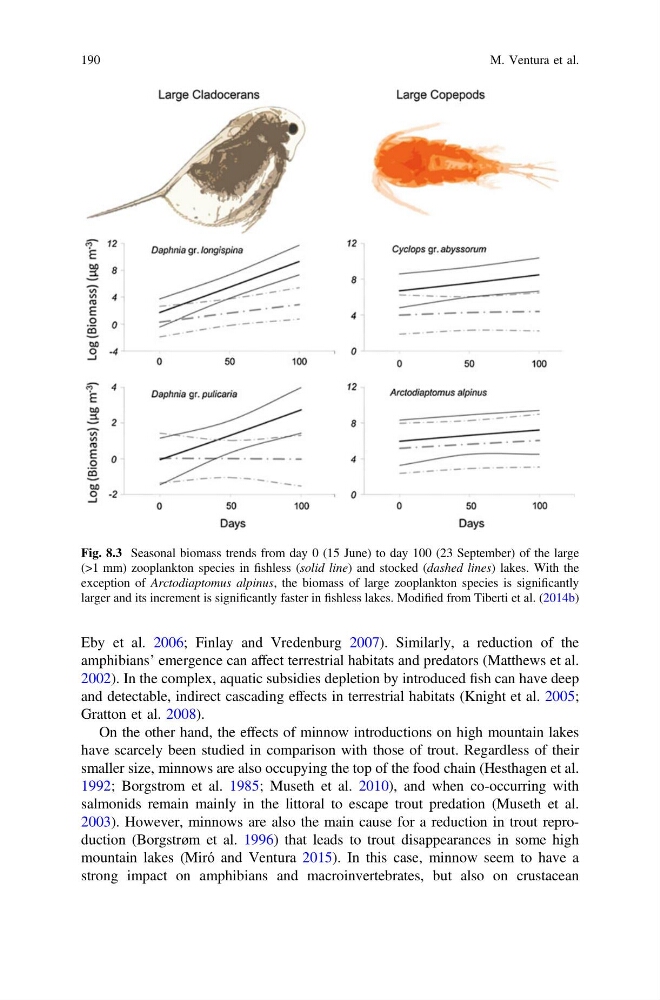
Fig. 8.3 Seasonal biomass trends from day 0 (15 June) to day 100 (23 September) of the large
(>1 mm) zooplankton species in fishless (solid line) and stocked (dashed lines) lakes. With the
exception of Arctodiaptomus alpinus, the biomass of large zooplankton species is significantly
larger and its increment is significantly faster in fishless lakes. Modified from Tiberti et al. (2014b)
190
M. Ventura et al.
amphibians’ emergence can affect terrestrial habitats and predators (Matthews et al.
2002). In the complex, aquatic subsidies depletion by introduced fish can have deep
and detectable, indirect cascading effects in terrestrial habitats (Knight et al. 2005;
Gratton et al. 2008).
On the other hand, the effects of minnow introductions on high mountain lakes
have scarcely been studied in comparison with those of trout. Regardless of their
smaller size, minnows are also occupying the top of the food chain (Hesthagen et al.
1992; Borgstrom et al. 1985; Museth et al. 2010), and when co-occurring with
salmonids remain mainly in the littoral to escape trout predation (Museth et al.
2003). However, minnows are also the main cause for a reduction in trout reproduction (Borgstrøm et al. 1996) that leads to trout disappearances in some high
mountain lakes (Miró and Ventura 2015). In this case, minnow seem to have a
strong impact on amphibians and macroinvertebrates, but also on crustacean
Fig. 8.3 Seasonal biomass trends from day 0 (15 June) to day 100 (23 September) of the large
(>1 mm) zooplankton species in fishless (solid line) and stocked (dashed lines) lakes. With the
exception of Arctodiaptomus alpinus, the biomass of large zooplankton species is significantly
larger and its increment is significantly faster in fishless lakes. Modified from Tiberti et al. (2014b)
190
M. Ventura et al.