

major role in creating heterogeneity within the lakes that promotes microbial
diversity (Vila-Costa et al. 2016). A symbiotic or parasitic lifestyle even with
Bacteria has been suggested for Pacearchaeota and Woesearchaeota, probably
related to small genomes sizes and limited metabolic capabilities (Spang et al. 2015;
Ortiz-Alvarez and Casamayor 2016) but the gap of knowledge is certainly large.
The comparison of PDs for the whole archaeal assemblage and the AOA of
Pyrenean lakes with globally distributed seas and soils unveiled again a phylogenetically rich freshwater assemblage in the Pyrenees, approximately twofold higher
than in other biomes (Fig. 7.10). The regional diversity of AOA in the Pyrenees is
of identical magnitude that the diversity globally observed in marine and soil
habitats (amoA gene phylogenetic diversity by clone libraries). Apparently,
Pyrenean lakes promote the growth of very diverse and distantly related archaeal
communities probably because of the specific combination of persistently
cold (ultra)oligotrophic waters, highly diluted and isolated water bodies, and
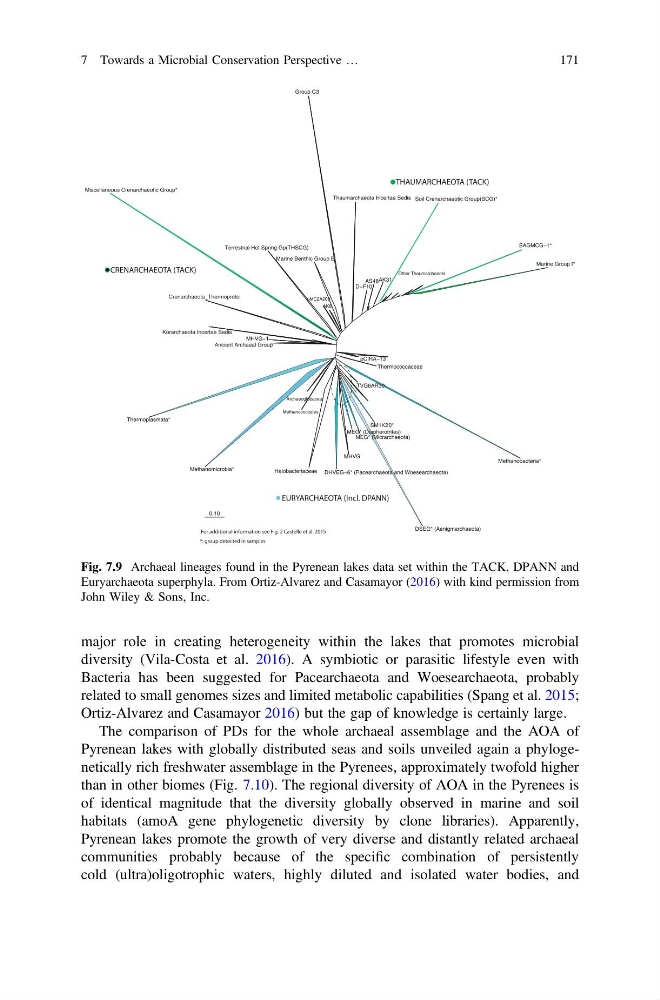
Fig. 7.9 Archaeal lineages found in the Pyrenean lakes data set within the TACK, DPANN and
Euryarchaeota superphyla. From Ortiz-Alvarez and Casamayor (2016) with kind permission from
John Wiley & Sons, Inc.
7 Towards a Microbial Conservation Perspective …
171
diversity (Vila-Costa et al. 2016). A symbiotic or parasitic lifestyle even with
Bacteria has been suggested for Pacearchaeota and Woesearchaeota, probably
related to small genomes sizes and limited metabolic capabilities (Spang et al. 2015;
Ortiz-Alvarez and Casamayor 2016) but the gap of knowledge is certainly large.
The comparison of PDs for the whole archaeal assemblage and the AOA of
Pyrenean lakes with globally distributed seas and soils unveiled again a phylogenetically rich freshwater assemblage in the Pyrenees, approximately twofold higher
than in other biomes (Fig. 7.10). The regional diversity of AOA in the Pyrenees is
of identical magnitude that the diversity globally observed in marine and soil
habitats (amoA gene phylogenetic diversity by clone libraries). Apparently,
Pyrenean lakes promote the growth of very diverse and distantly related archaeal
communities probably because of the specific combination of persistently
cold (ultra)oligotrophic waters, highly diluted and isolated water bodies, and
Fig. 7.9 Archaeal lineages found in the Pyrenean lakes data set within the TACK, DPANN and
Euryarchaeota superphyla. From Ortiz-Alvarez and Casamayor (2016) with kind permission from
John Wiley & Sons, Inc.
7 Towards a Microbial Conservation Perspective …
171