

Coma de Espós (2230 m). In lower altitudes, apart from the Cova del Sardo,
occupations have been documented in Covetes and Cova de Sarradé (1980 m).
At the Cova del Sardo, the occupations inside and outside the rock-shelter
continued in the fourth millennium and first half of the third millennium (Gassiot
et al. 2014). This situation is quite different from the pattern at higher sites which
seem to have been occupied in a single phase. The sequence at Cova del Sardo
appears to reflect periods when the occupation was more stable alternating with
others when the site may have been occupied in passing. Potsherds increase in
number, in particular between 3900 and 3500 cal BC. The lithic assemblage displays some continuity in the parameters of the previous phase, although an increase
in the use of allochthones chert types is seen (Mazzucco 2014). These lithologies
came from the outer river basins in the Pre-Pyrenees and the Ebro valley.
Occasional findings also indicate the possible presence of raw materials from the
Rhone valley, suggesting that the site was integrated within a broader context of
people mobility and artefacts and raw materials exchange. In general, it can be
observed that the circulation of these lithic objects is mainly organised on
south-north axis, through the valleys of the Segre’s affluents. Crossing mobility
pattern with faunal and palaeoecological data, it seems that some form of mobile
herding was carried out involving a movement of flocks and people from plain areas
and valley bottoms to high-altitudes. It has often remarked that such a pattern of
mobility (Geddes 1983; Rojo et al. 2014) is similar to the movements of transhumant flocks in historical times, although such issue should be further investigated to
understand the differences between prehistoric and medieval/modern herding
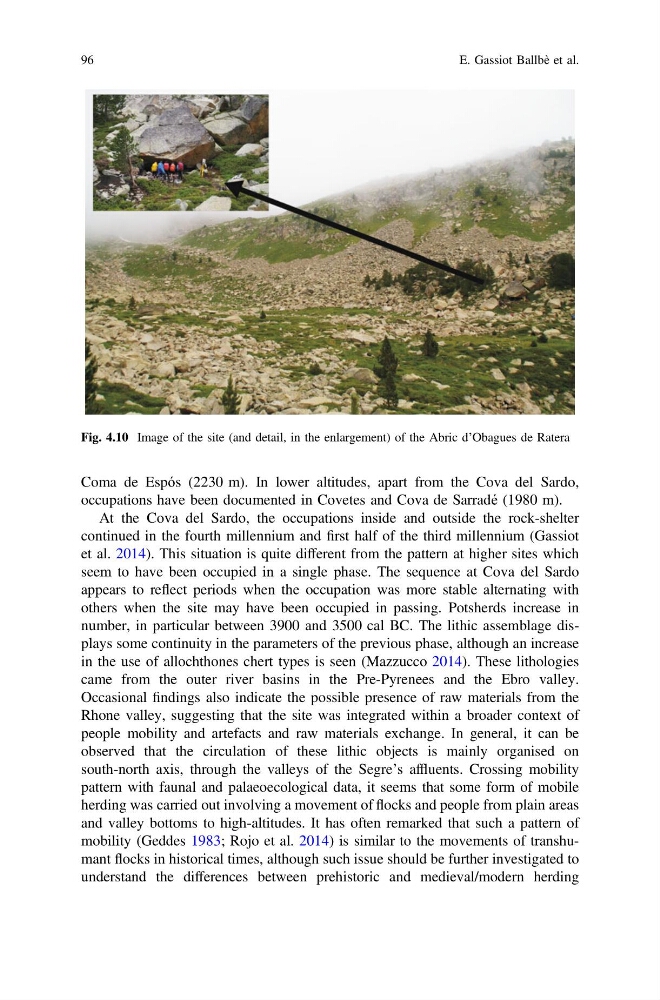
Fig. 4.10 Image of the site (and detail, in the enlargement) of the Abric d’Obagues de Ratera
96
E. Gassiot Ballbè et al.
occupations have been documented in Covetes and Cova de Sarradé (1980 m).
At the Cova del Sardo, the occupations inside and outside the rock-shelter
continued in the fourth millennium and first half of the third millennium (Gassiot
et al. 2014). This situation is quite different from the pattern at higher sites which
seem to have been occupied in a single phase. The sequence at Cova del Sardo
appears to reflect periods when the occupation was more stable alternating with
others when the site may have been occupied in passing. Potsherds increase in
number, in particular between 3900 and 3500 cal BC. The lithic assemblage displays some continuity in the parameters of the previous phase, although an increase
in the use of allochthones chert types is seen (Mazzucco 2014). These lithologies
came from the outer river basins in the Pre-Pyrenees and the Ebro valley.
Occasional findings also indicate the possible presence of raw materials from the
Rhone valley, suggesting that the site was integrated within a broader context of
people mobility and artefacts and raw materials exchange. In general, it can be
observed that the circulation of these lithic objects is mainly organised on
south-north axis, through the valleys of the Segre’s affluents. Crossing mobility
pattern with faunal and palaeoecological data, it seems that some form of mobile
herding was carried out involving a movement of flocks and people from plain areas
and valley bottoms to high-altitudes. It has often remarked that such a pattern of
mobility (Geddes 1983; Rojo et al. 2014) is similar to the movements of transhumant flocks in historical times, although such issue should be further investigated to
understand the differences between prehistoric and medieval/modern herding
Fig. 4.10 Image of the site (and detail, in the enlargement) of the Abric d’Obagues de Ratera
96
E. Gassiot Ballbè et al.