

4 X-ray Dichroisms in Spherical Tensor and Green’s Function Formalism
107
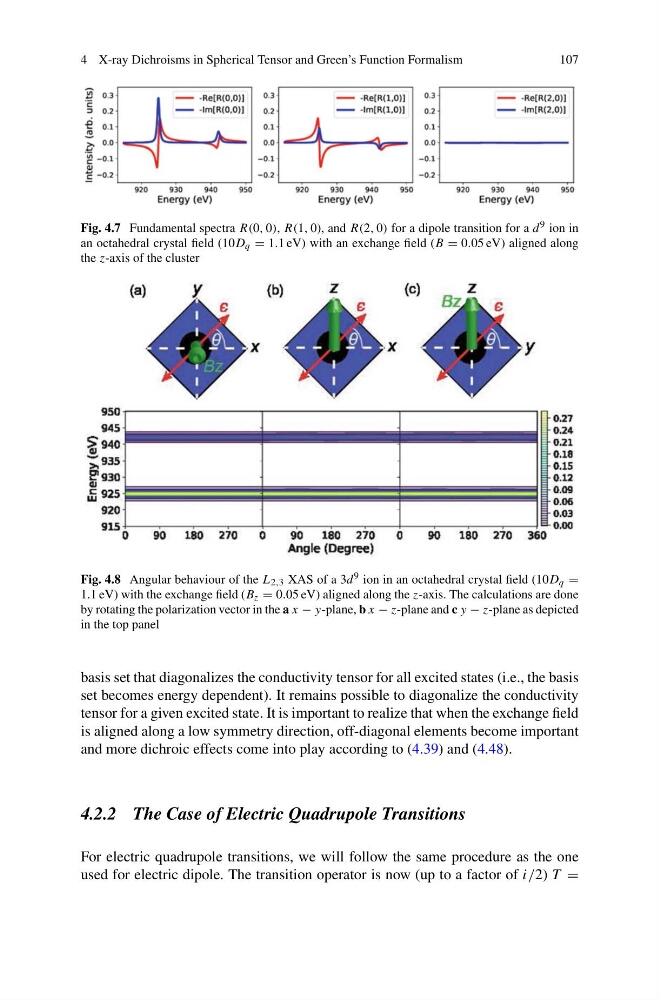
Fig. 4.7 Fundamental spectra R(0, 0), R(1, 0), and R(2, 0) for a dipole transition for a d 9 ion in
an octahedral crystal field (10D q = 1.1 eV) with an exchange field (B = 0.05 eV) aligned along
the z-axis of the cluster
Fig. 4.8 Angular behaviour of the L 2,3 XAS of a 3d 9 ion in an octahedral crystal field (10D q =
1.1 eV) with the exchange field (B z = 0.05 eV) aligned along the z-axis. The calculations are done
by rotating the polarization vector in the a x − y-plane, b x − z-plane and c y − z-plane as depicted
in the top panel
basis set that diagonalizes the conductivity tensor for all excited states (i.e., the basis
set becomes energy dependent). It remains possible to diagonalize the conductivity
tensor for a given excited state. It is important to realize that when the exchange field
is aligned along a low symmetry direction, off-diagonal elements become important
and more dichroic effects come into play according to (4.39) and (4.48).
4.2.2 The Case of Electric Quadrupole Transitions
For electric quadrupole transitions, we will follow the same procedure as the one
used for electric dipole. The transition operator is now (up to a factor of i/2) T =
107
Fig. 4.7 Fundamental spectra R(0, 0), R(1, 0), and R(2, 0) for a dipole transition for a d 9 ion in
an octahedral crystal field (10D q = 1.1 eV) with an exchange field (B = 0.05 eV) aligned along
the z-axis of the cluster
Fig. 4.8 Angular behaviour of the L 2,3 XAS of a 3d 9 ion in an octahedral crystal field (10D q =
1.1 eV) with the exchange field (B z = 0.05 eV) aligned along the z-axis. The calculations are done
by rotating the polarization vector in the a x − y-plane, b x − z-plane and c y − z-plane as depicted
in the top panel
basis set that diagonalizes the conductivity tensor for all excited states (i.e., the basis
set becomes energy dependent). It remains possible to diagonalize the conductivity
tensor for a given excited state. It is important to realize that when the exchange field
is aligned along a low symmetry direction, off-diagonal elements become important
and more dichroic effects come into play according to (4.39) and (4.48).
4.2.2 The Case of Electric Quadrupole Transitions
For electric quadrupole transitions, we will follow the same procedure as the one
used for electric dipole. The transition operator is now (up to a factor of i/2) T =