

50 Acoustic Emissions of Cathode Carbon Block …
571
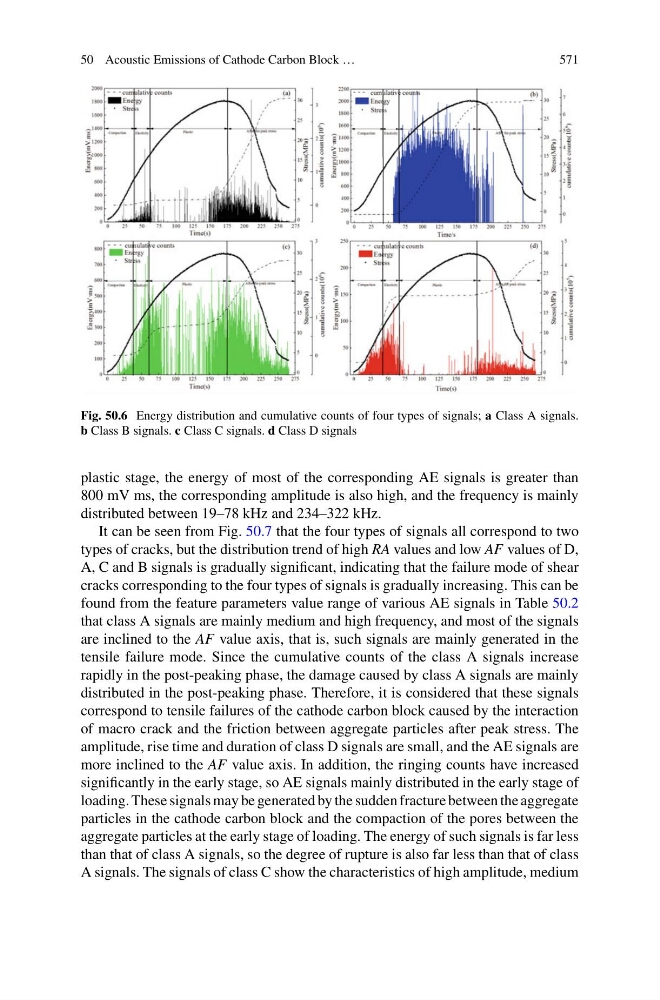
Fig. 50.6 Energy distribution and cumulative counts of four types of signals; a Class A signals.
b Class B signals. c Class C signals. d Class D signals
plastic stage, the energy of most of the corresponding AE signals is greater than
800 mV ms, the corresponding amplitude is also high, and the frequency is mainly
distributed between 19–78 kHz and 234–322 kHz.
It can be seen from Fig. 50.7 that the four types of signals all correspond to two
types of cracks, but the distribution trend of high RA values and low AF values of D,
A, C and B signals is gradually significant, indicating that the failure mode of shear
cracks corresponding to the four types of signals is gradually increasing. This can be
found from the feature parameters value range of various AE signals in Table 50.2
that class A signals are mainly medium and high frequency, and most of the signals
are inclined to the AF value axis, that is, such signals are mainly generated in the
tensile failure mode. Since the cumulative counts of the class A signals increase
rapidly in the post-peaking phase, the damage caused by class A signals are mainly
distributed in the post-peaking phase. Therefore, it is considered that these signals
correspond to tensile failures of the cathode carbon block caused by the interaction
of macro crack and the friction between aggregate particles after peak stress. The
amplitude, rise time and duration of class D signals are small, and the AE signals are
more inclined to the AF value axis. In addition, the ringing counts have increased
significantly in the early stage, so AE signals mainly distributed in the early stage of
loading. These signals may be generated by the sudden fracture between the aggregate
particles in the cathode carbon block and the compaction of the pores between the
aggregate particles at the early stage of loading. The energy of such signals is far less
than that of class A signals, so the degree of rupture is also far less than that of class
A signals. The signals of class C show the characteristics of high amplitude, medium
571
Fig. 50.6 Energy distribution and cumulative counts of four types of signals; a Class A signals.
b Class B signals. c Class C signals. d Class D signals
plastic stage, the energy of most of the corresponding AE signals is greater than
800 mV ms, the corresponding amplitude is also high, and the frequency is mainly
distributed between 19–78 kHz and 234–322 kHz.
It can be seen from Fig. 50.7 that the four types of signals all correspond to two
types of cracks, but the distribution trend of high RA values and low AF values of D,
A, C and B signals is gradually significant, indicating that the failure mode of shear
cracks corresponding to the four types of signals is gradually increasing. This can be
found from the feature parameters value range of various AE signals in Table 50.2
that class A signals are mainly medium and high frequency, and most of the signals
are inclined to the AF value axis, that is, such signals are mainly generated in the
tensile failure mode. Since the cumulative counts of the class A signals increase
rapidly in the post-peaking phase, the damage caused by class A signals are mainly
distributed in the post-peaking phase. Therefore, it is considered that these signals
correspond to tensile failures of the cathode carbon block caused by the interaction
of macro crack and the friction between aggregate particles after peak stress. The
amplitude, rise time and duration of class D signals are small, and the AE signals are
more inclined to the AF value axis. In addition, the ringing counts have increased
significantly in the early stage, so AE signals mainly distributed in the early stage of
loading. These signals may be generated by the sudden fracture between the aggregate
particles in the cathode carbon block and the compaction of the pores between the
aggregate particles at the early stage of loading. The energy of such signals is far less
than that of class A signals, so the degree of rupture is also far less than that of class
A signals. The signals of class C show the characteristics of high amplitude, medium