

388
K. Bo et al.
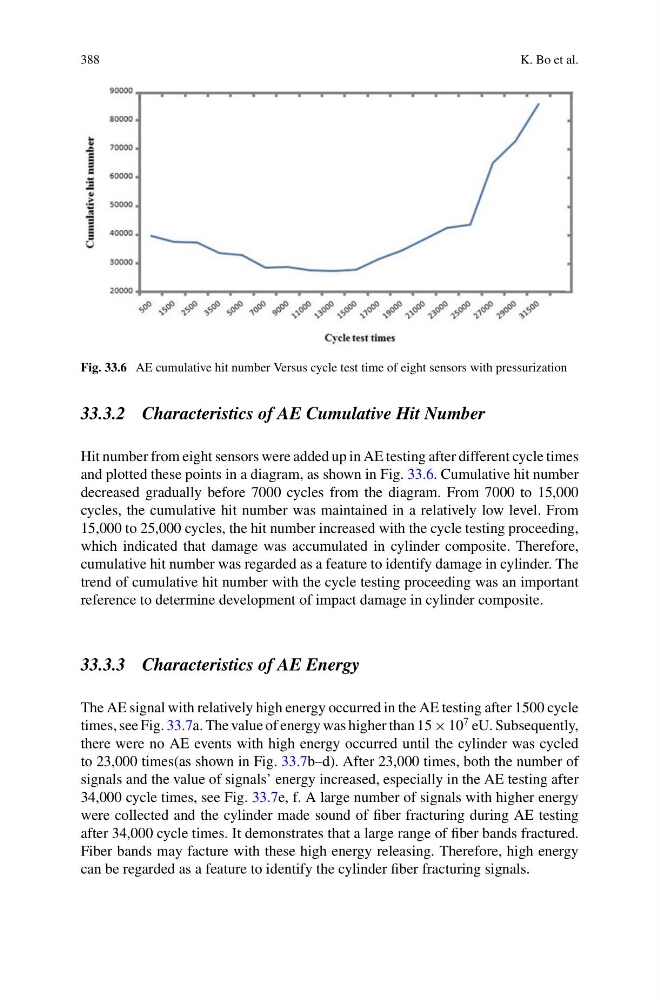
Fig. 33.6 AE cumulative hit number Versus cycle test time of eight sensors with pressurization
33.3.2 Characteristics of AE Cumulative Hit Number
Hit number from eight sensors were added up in AE testing after different cycle times
and plotted these points in a diagram, as shown in Fig. 33.6. Cumulative hit number
decreased gradually before 7000 cycles from the diagram. From 7000 to 15,000
cycles, the cumulative hit number was maintained in a relatively low level. From
15,000 to 25,000 cycles, the hit number increased with the cycle testing proceeding,
which indicated that damage was accumulated in cylinder composite. Therefore,
cumulative hit number was regarded as a feature to identify damage in cylinder. The
trend of cumulative hit number with the cycle testing proceeding was an important
reference to determine development of impact damage in cylinder composite.
33.3.3 Characteristics of AE Energy
The AE signal with relatively high energy occurred in the AE testing after 1500 cycle
times, see Fig. 33.7a. The value of energy was higher than 15 × 10
7 eU. Subsequently,
there were no AE events with high energy occurred until the cylinder was cycled
to 23,000 times(as shown in Fig. 33.7b–d). After 23,000 times, both the number of
signals and the value of signals’ energy increased, especially in the AE testing after
34,000 cycle times, see Fig. 33.7e, f. A large number of signals with higher energy
were collected and the cylinder made sound of fiber fracturing during AE testing
after 34,000 cycle times. It demonstrates that a large range of fiber bands fractured.
Fiber bands may facture with these high energy releasing. Therefore, high energy
can be regarded as a feature to identify the cylinder fiber fracturing signals.
K. Bo et al.
Fig. 33.6 AE cumulative hit number Versus cycle test time of eight sensors with pressurization
33.3.2 Characteristics of AE Cumulative Hit Number
Hit number from eight sensors were added up in AE testing after different cycle times
and plotted these points in a diagram, as shown in Fig. 33.6. Cumulative hit number
decreased gradually before 7000 cycles from the diagram. From 7000 to 15,000
cycles, the cumulative hit number was maintained in a relatively low level. From
15,000 to 25,000 cycles, the hit number increased with the cycle testing proceeding,
which indicated that damage was accumulated in cylinder composite. Therefore,
cumulative hit number was regarded as a feature to identify damage in cylinder. The
trend of cumulative hit number with the cycle testing proceeding was an important
reference to determine development of impact damage in cylinder composite.
33.3.3 Characteristics of AE Energy
The AE signal with relatively high energy occurred in the AE testing after 1500 cycle
times, see Fig. 33.7a. The value of energy was higher than 15 × 10
7 eU. Subsequently,
there were no AE events with high energy occurred until the cylinder was cycled
to 23,000 times(as shown in Fig. 33.7b–d). After 23,000 times, both the number of
signals and the value of signals’ energy increased, especially in the AE testing after
34,000 cycle times, see Fig. 33.7e, f. A large number of signals with higher energy
were collected and the cylinder made sound of fiber fracturing during AE testing
after 34,000 cycle times. It demonstrates that a large range of fiber bands fractured.
Fiber bands may facture with these high energy releasing. Therefore, high energy
can be regarded as a feature to identify the cylinder fiber fracturing signals.