

210
W. Zhou et al.
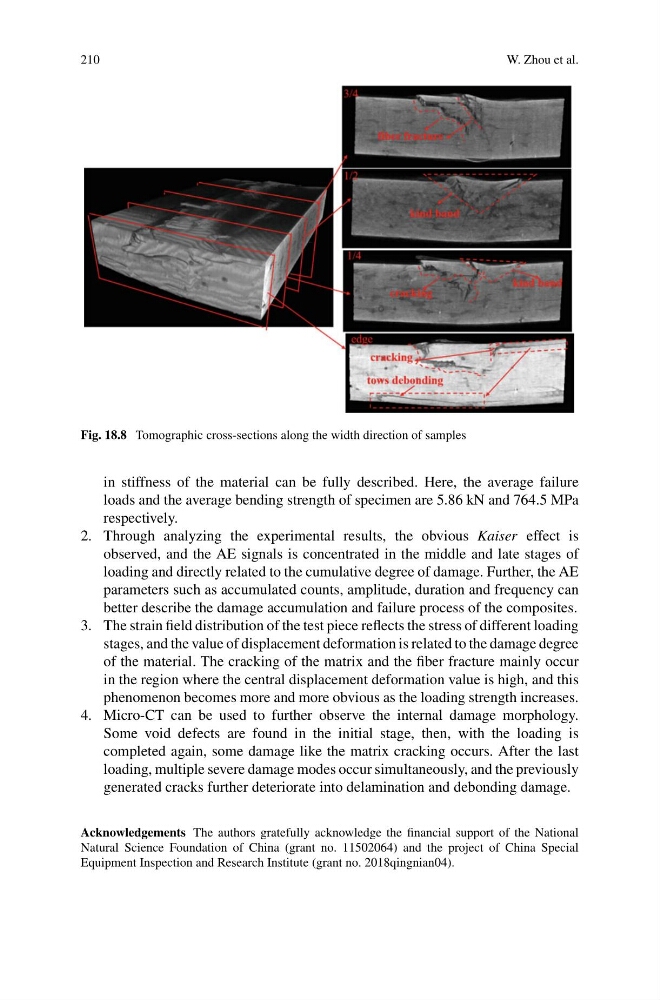
Fig. 18.8 Tomographic cross-sections along the width direction of samples
in stiffness of the material can be fully described. Here, the average failure
loads and the average bending strength of specimen are 5.86 kN and 764.5 MPa
respectively.
2. Through analyzing the experimental results, the obvious Kaiser effect is
observed, and the AE signals is concentrated in the middle and late stages of
loading and directly related to the cumulative degree of damage. Further, the AE
parameters such as accumulated counts, amplitude, duration and frequency can
better describe the damage accumulation and failure process of the composites.
3. The strain field distribution of the test piece reflects the stress of different loading
stages, and the value of displacement deformation is related to the damage degree
of the material. The cracking of the matrix and the fiber fracture mainly occur
in the region where the central displacement deformation value is high, and this
phenomenon becomes more and more obvious as the loading strength increases.
4. Micro-CT can be used to further observe the internal damage morphology.
Some void defects are found in the initial stage, then, with the loading is
completed again, some damage like the matrix cracking occurs. After the last
loading, multiple severe damage modes occur simultaneously, and the previously
generated cracks further deteriorate into delamination and debonding damage.
Acknowledgements The authors gratefully acknowledge the financial support of the National
Natural Science Foundation of China (grant no. 11502064) and the project of China Special
Equipment Inspection and Research Institute (grant no. 2018qingnian04).
W. Zhou et al.
Fig. 18.8 Tomographic cross-sections along the width direction of samples
in stiffness of the material can be fully described. Here, the average failure
loads and the average bending strength of specimen are 5.86 kN and 764.5 MPa
respectively.
2. Through analyzing the experimental results, the obvious Kaiser effect is
observed, and the AE signals is concentrated in the middle and late stages of
loading and directly related to the cumulative degree of damage. Further, the AE
parameters such as accumulated counts, amplitude, duration and frequency can
better describe the damage accumulation and failure process of the composites.
3. The strain field distribution of the test piece reflects the stress of different loading
stages, and the value of displacement deformation is related to the damage degree
of the material. The cracking of the matrix and the fiber fracture mainly occur
in the region where the central displacement deformation value is high, and this
phenomenon becomes more and more obvious as the loading strength increases.
4. Micro-CT can be used to further observe the internal damage morphology.
Some void defects are found in the initial stage, then, with the loading is
completed again, some damage like the matrix cracking occurs. After the last
loading, multiple severe damage modes occur simultaneously, and the previously
generated cracks further deteriorate into delamination and debonding damage.
Acknowledgements The authors gratefully acknowledge the financial support of the National
Natural Science Foundation of China (grant no. 11502064) and the project of China Special
Equipment Inspection and Research Institute (grant no. 2018qingnian04).