

90
A. Antony and J.-H. Boo
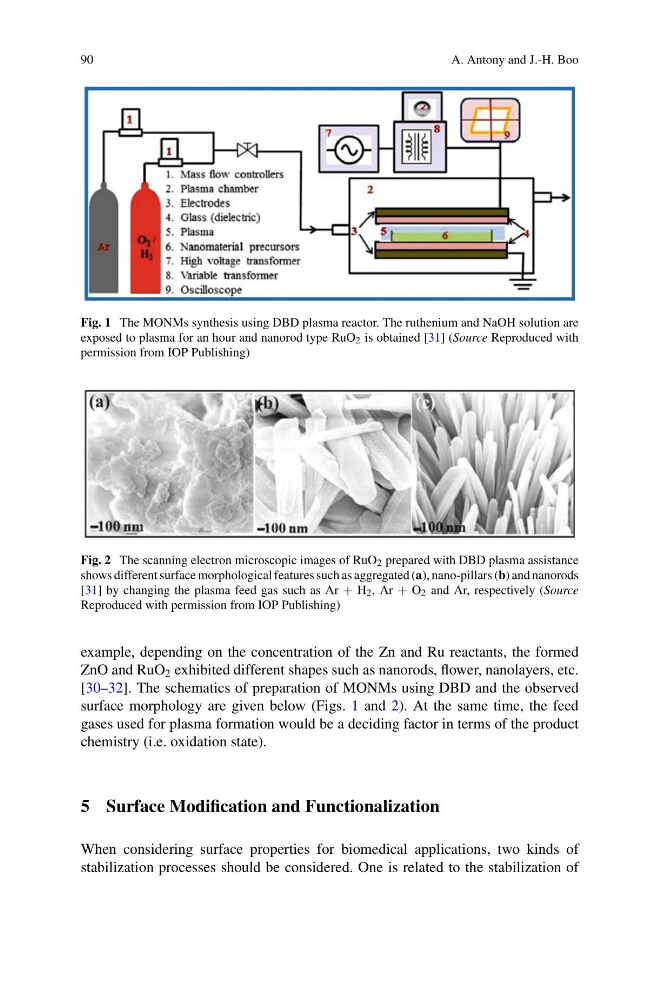
Fig. 1 The MONMs synthesis using DBD plasma reactor. The ruthenium and NaOH solution are
exposed to plasma for an hour and nanorod type RuO 2 is obtained [31] (Source Reproduced with
permission from IOP Publishing)
Fig. 2 The scanning electron microscopic images of RuO 2 prepared with DBD plasma assistance
shows different surface morphological features such as aggregated (a), nano-pillars (b) and nanorods
[31] by changing the plasma feed gas such as Ar + H 2 , Ar + O 2 and Ar, respectively (Source
Reproduced with permission from IOP Publishing)
example, depending on the concentration of the Zn and Ru reactants, the formed
ZnO and RuO 2 exhibited different shapes such as nanorods, flower, nanolayers, etc.
[30–32]. The schematics of preparation of MONMs using DBD and the observed
surface morphology are given below (Figs. 1 and 2). At the same time, the feed
gases used for plasma formation would be a deciding factor in terms of the product
chemistry (i.e. oxidation state).
5 Surface Modification and Functionalization
When considering surface properties for biomedical applications, two kinds of
stabilization processes should be considered. One is related to the stabilization of
A. Antony and J.-H. Boo
Fig. 1 The MONMs synthesis using DBD plasma reactor. The ruthenium and NaOH solution are
exposed to plasma for an hour and nanorod type RuO 2 is obtained [31] (Source Reproduced with
permission from IOP Publishing)
Fig. 2 The scanning electron microscopic images of RuO 2 prepared with DBD plasma assistance
shows different surface morphological features such as aggregated (a), nano-pillars (b) and nanorods
[31] by changing the plasma feed gas such as Ar + H 2 , Ar + O 2 and Ar, respectively (Source
Reproduced with permission from IOP Publishing)
example, depending on the concentration of the Zn and Ru reactants, the formed
ZnO and RuO 2 exhibited different shapes such as nanorods, flower, nanolayers, etc.
[30–32]. The schematics of preparation of MONMs using DBD and the observed
surface morphology are given below (Figs. 1 and 2). At the same time, the feed
gases used for plasma formation would be a deciding factor in terms of the product
chemistry (i.e. oxidation state).
5 Surface Modification and Functionalization
When considering surface properties for biomedical applications, two kinds of
stabilization processes should be considered. One is related to the stabilization of