

468
T. Balusamy et al.
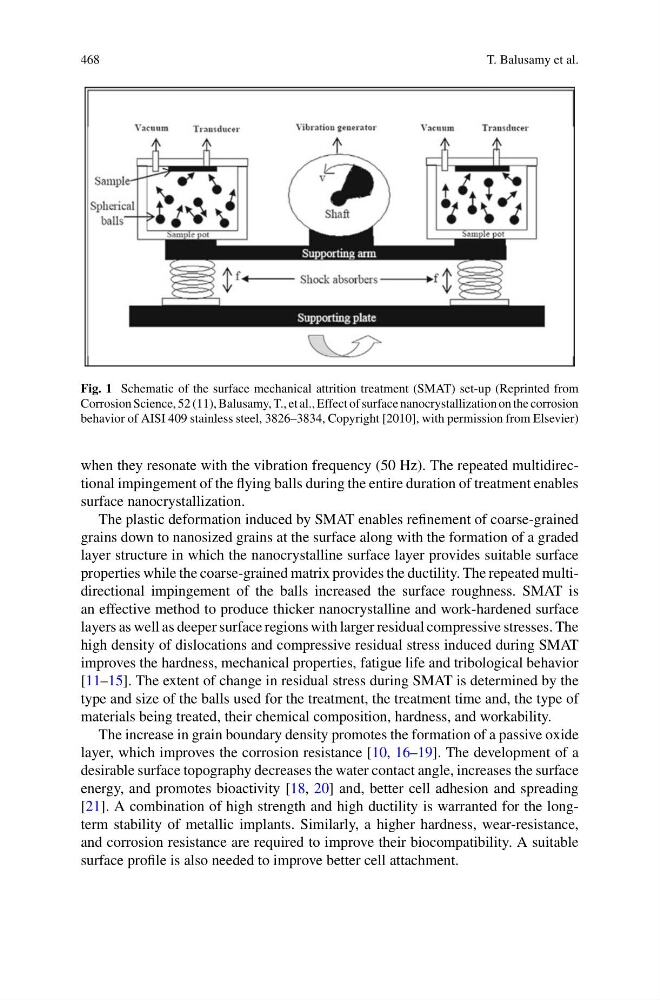
Fig. 1 Schematic of the surface mechanical attrition treatment (SMAT) set-up (Reprinted from
Corrosion Science, 52 (11), Balusamy, T., et al., Effect of surface nanocrystallization on the corrosion
behavior of AISI 409 stainless steel, 3826–3834, Copyright [2010], with permission from Elsevier)
when they resonate with the vibration frequency (50 Hz). The repeated multidirectional impingement of the flying balls during the entire duration of treatment enables
surface nanocrystallization.
The plastic deformation induced by SMAT enables refinement of coarse-grained
grains down to nanosized grains at the surface along with the formation of a graded
layer structure in which the nanocrystalline surface layer provides suitable surface
properties while the coarse-grained matrix provides the ductility. The repeated multidirectional impingement of the balls increased the surface roughness. SMAT is
an effective method to produce thicker nanocrystalline and work-hardened surface
layers as well as deeper surface regions with larger residual compressive stresses. The
high density of dislocations and compressive residual stress induced during SMAT
improves the hardness, mechanical properties, fatigue life and tribological behavior
[11–15]. The extent of change in residual stress during SMAT is determined by the
type and size of the balls used for the treatment, the treatment time and, the type of
materials being treated, their chemical composition, hardness, and workability.
The increase in grain boundary density promotes the formation of a passive oxide
layer, which improves the corrosion resistance [10, 16–19]. The development of a
desirable surface topography decreases the water contact angle, increases the surface
energy, and promotes bioactivity [18, 20] and, better cell adhesion and spreading
[21]. A combination of high strength and high ductility is warranted for the longterm stability of metallic implants. Similarly, a higher hardness, wear-resistance,
and corrosion resistance are required to improve their biocompatibility. A suitable
surface profile is also needed to improve better cell attachment.
T. Balusamy et al.
Fig. 1 Schematic of the surface mechanical attrition treatment (SMAT) set-up (Reprinted from
Corrosion Science, 52 (11), Balusamy, T., et al., Effect of surface nanocrystallization on the corrosion
behavior of AISI 409 stainless steel, 3826–3834, Copyright [2010], with permission from Elsevier)
when they resonate with the vibration frequency (50 Hz). The repeated multidirectional impingement of the flying balls during the entire duration of treatment enables
surface nanocrystallization.
The plastic deformation induced by SMAT enables refinement of coarse-grained
grains down to nanosized grains at the surface along with the formation of a graded
layer structure in which the nanocrystalline surface layer provides suitable surface
properties while the coarse-grained matrix provides the ductility. The repeated multidirectional impingement of the balls increased the surface roughness. SMAT is
an effective method to produce thicker nanocrystalline and work-hardened surface
layers as well as deeper surface regions with larger residual compressive stresses. The
high density of dislocations and compressive residual stress induced during SMAT
improves the hardness, mechanical properties, fatigue life and tribological behavior
[11–15]. The extent of change in residual stress during SMAT is determined by the
type and size of the balls used for the treatment, the treatment time and, the type of
materials being treated, their chemical composition, hardness, and workability.
The increase in grain boundary density promotes the formation of a passive oxide
layer, which improves the corrosion resistance [10, 16–19]. The development of a
desirable surface topography decreases the water contact angle, increases the surface
energy, and promotes bioactivity [18, 20] and, better cell adhesion and spreading
[21]. A combination of high strength and high ductility is warranted for the longterm stability of metallic implants. Similarly, a higher hardness, wear-resistance,
and corrosion resistance are required to improve their biocompatibility. A suitable
surface profile is also needed to improve better cell attachment.