

Nanomaterials: Surface Functionalization …
431
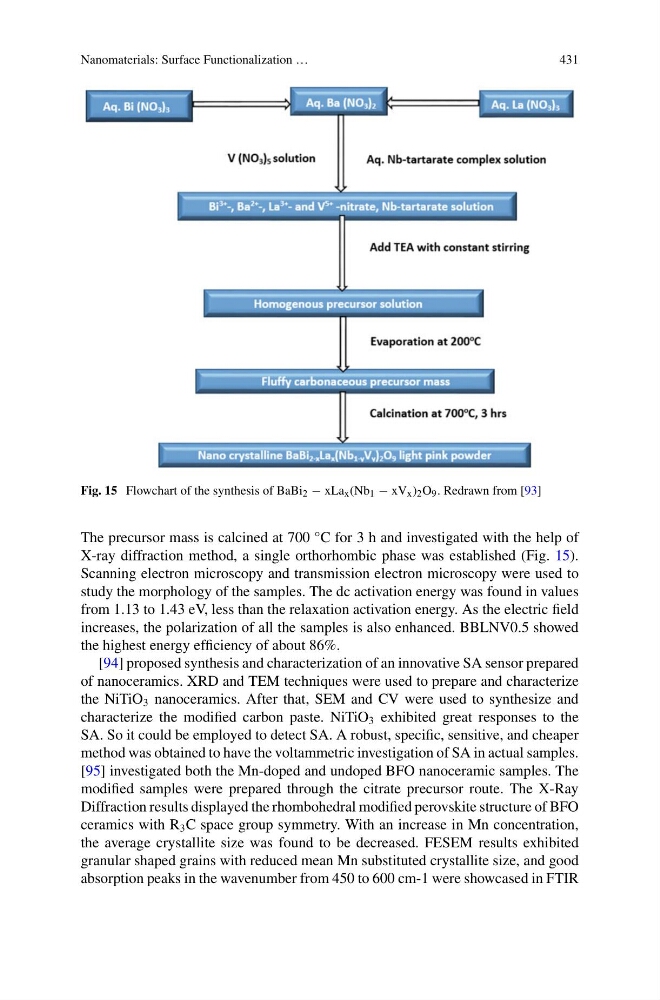
Fig. 15 Flowchart of the synthesis of BaBi 2 − xLa x (Nb 1 − xV x ) 2 O 9 . Redrawn from [93]
The precursor mass is calcined at 700 °C for 3 h and investigated with the help of
X-ray diffraction method, a single orthorhombic phase was established (Fig. 15).
Scanning electron microscopy and transmission electron microscopy were used to
study the morphology of the samples. The dc activation energy was found in values
from 1.13 to 1.43 eV, less than the relaxation activation energy. As the electric field
increases, the polarization of all the samples is also enhanced. BBLNV0.5 showed
the highest energy efficiency of about 86%.
[94] proposed synthesis and characterization of an innovative SA sensor prepared
of nanoceramics. XRD and TEM techniques were used to prepare and characterize
the NiTiO 3 nanoceramics. After that, SEM and CV were used to synthesize and
characterize the modified carbon paste. NiTiO 3 exhibited great responses to the
SA. So it could be employed to detect SA. A robust, specific, sensitive, and cheaper
method was obtained to have the voltammetric investigation of SA in actual samples.
[95] investigated both the Mn-doped and undoped BFO nanoceramic samples. The
modified samples were prepared through the citrate precursor route. The X-Ray
Diffraction results displayed the rhombohedral modified perovskite structure of BFO
ceramics with R 3 C space group symmetry. With an increase in Mn concentration,
the average crystallite size was found to be decreased. FESEM results exhibited
granular shaped grains with reduced mean Mn substituted crystallite size, and good
absorption peaks in the wavenumber from 450 to 600 cm-1 were showcased in FTIR
431
Fig. 15 Flowchart of the synthesis of BaBi 2 − xLa x (Nb 1 − xV x ) 2 O 9 . Redrawn from [93]
The precursor mass is calcined at 700 °C for 3 h and investigated with the help of
X-ray diffraction method, a single orthorhombic phase was established (Fig. 15).
Scanning electron microscopy and transmission electron microscopy were used to
study the morphology of the samples. The dc activation energy was found in values
from 1.13 to 1.43 eV, less than the relaxation activation energy. As the electric field
increases, the polarization of all the samples is also enhanced. BBLNV0.5 showed
the highest energy efficiency of about 86%.
[94] proposed synthesis and characterization of an innovative SA sensor prepared
of nanoceramics. XRD and TEM techniques were used to prepare and characterize
the NiTiO 3 nanoceramics. After that, SEM and CV were used to synthesize and
characterize the modified carbon paste. NiTiO 3 exhibited great responses to the
SA. So it could be employed to detect SA. A robust, specific, sensitive, and cheaper
method was obtained to have the voltammetric investigation of SA in actual samples.
[95] investigated both the Mn-doped and undoped BFO nanoceramic samples. The
modified samples were prepared through the citrate precursor route. The X-Ray
Diffraction results displayed the rhombohedral modified perovskite structure of BFO
ceramics with R 3 C space group symmetry. With an increase in Mn concentration,
the average crystallite size was found to be decreased. FESEM results exhibited
granular shaped grains with reduced mean Mn substituted crystallite size, and good
absorption peaks in the wavenumber from 450 to 600 cm-1 were showcased in FTIR