

Nanomaterials: Surface Functionalization …
421
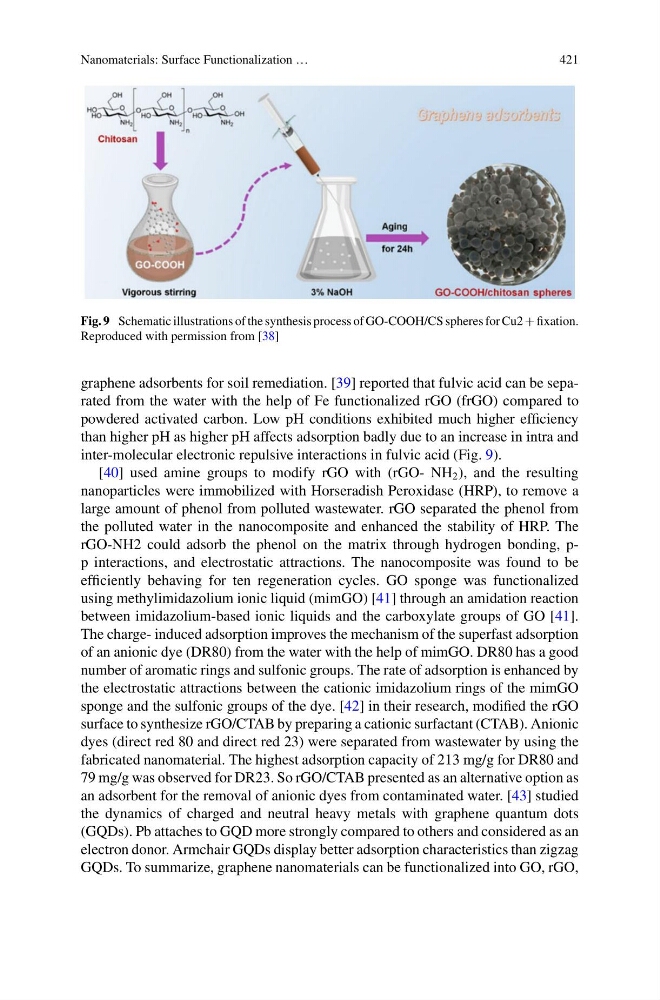
Fig. 9 Schematic illustrations of the synthesis process of GO-COOH/CS spheres for Cu2 + fixation.
Reproduced with permission from [38]
graphene adsorbents for soil remediation. [39] reported that fulvic acid can be separated from the water with the help of Fe functionalized rGO (frGO) compared to
powdered activated carbon. Low pH conditions exhibited much higher efficiency
than higher pH as higher pH affects adsorption badly due to an increase in intra and
inter-molecular electronic repulsive interactions in fulvic acid (Fig. 9).
[40] used amine groups to modify rGO with (rGO- NH 2 ), and the resulting
nanoparticles were immobilized with Horseradish Peroxidase (HRP), to remove a
large amount of phenol from polluted wastewater. rGO separated the phenol from
the polluted water in the nanocomposite and enhanced the stability of HRP. The
rGO-NH2 could adsorb the phenol on the matrix through hydrogen bonding, pp interactions, and electrostatic attractions. The nanocomposite was found to be
efficiently behaving for ten regeneration cycles. GO sponge was functionalized
using methylimidazolium ionic liquid (mimGO) [41] through an amidation reaction
between imidazolium-based ionic liquids and the carboxylate groups of GO [41].
The charge- induced adsorption improves the mechanism of the superfast adsorption
of an anionic dye (DR80) from the water with the help of mimGO. DR80 has a good
number of aromatic rings and sulfonic groups. The rate of adsorption is enhanced by
the electrostatic attractions between the cationic imidazolium rings of the mimGO
sponge and the sulfonic groups of the dye. [42] in their research, modified the rGO
surface to synthesize rGO/CTAB by preparing a cationic surfactant (CTAB). Anionic
dyes (direct red 80 and direct red 23) were separated from wastewater by using the
fabricated nanomaterial. The highest adsorption capacity of 213 mg/g for DR80 and
79 mg/g was observed for DR23. So rGO/CTAB presented as an alternative option as
an adsorbent for the removal of anionic dyes from contaminated water. [43] studied
the dynamics of charged and neutral heavy metals with graphene quantum dots
(GQDs). Pb attaches to GQD more strongly compared to others and considered as an
electron donor. Armchair GQDs display better adsorption characteristics than zigzag
GQDs. To summarize, graphene nanomaterials can be functionalized into GO, rGO,
421
Fig. 9 Schematic illustrations of the synthesis process of GO-COOH/CS spheres for Cu2 + fixation.
Reproduced with permission from [38]
graphene adsorbents for soil remediation. [39] reported that fulvic acid can be separated from the water with the help of Fe functionalized rGO (frGO) compared to
powdered activated carbon. Low pH conditions exhibited much higher efficiency
than higher pH as higher pH affects adsorption badly due to an increase in intra and
inter-molecular electronic repulsive interactions in fulvic acid (Fig. 9).
[40] used amine groups to modify rGO with (rGO- NH 2 ), and the resulting
nanoparticles were immobilized with Horseradish Peroxidase (HRP), to remove a
large amount of phenol from polluted wastewater. rGO separated the phenol from
the polluted water in the nanocomposite and enhanced the stability of HRP. The
rGO-NH2 could adsorb the phenol on the matrix through hydrogen bonding, pp interactions, and electrostatic attractions. The nanocomposite was found to be
efficiently behaving for ten regeneration cycles. GO sponge was functionalized
using methylimidazolium ionic liquid (mimGO) [41] through an amidation reaction
between imidazolium-based ionic liquids and the carboxylate groups of GO [41].
The charge- induced adsorption improves the mechanism of the superfast adsorption
of an anionic dye (DR80) from the water with the help of mimGO. DR80 has a good
number of aromatic rings and sulfonic groups. The rate of adsorption is enhanced by
the electrostatic attractions between the cationic imidazolium rings of the mimGO
sponge and the sulfonic groups of the dye. [42] in their research, modified the rGO
surface to synthesize rGO/CTAB by preparing a cationic surfactant (CTAB). Anionic
dyes (direct red 80 and direct red 23) were separated from wastewater by using the
fabricated nanomaterial. The highest adsorption capacity of 213 mg/g for DR80 and
79 mg/g was observed for DR23. So rGO/CTAB presented as an alternative option as
an adsorbent for the removal of anionic dyes from contaminated water. [43] studied
the dynamics of charged and neutral heavy metals with graphene quantum dots
(GQDs). Pb attaches to GQD more strongly compared to others and considered as an
electron donor. Armchair GQDs display better adsorption characteristics than zigzag
GQDs. To summarize, graphene nanomaterials can be functionalized into GO, rGO,