

418
A. Kumar et al.
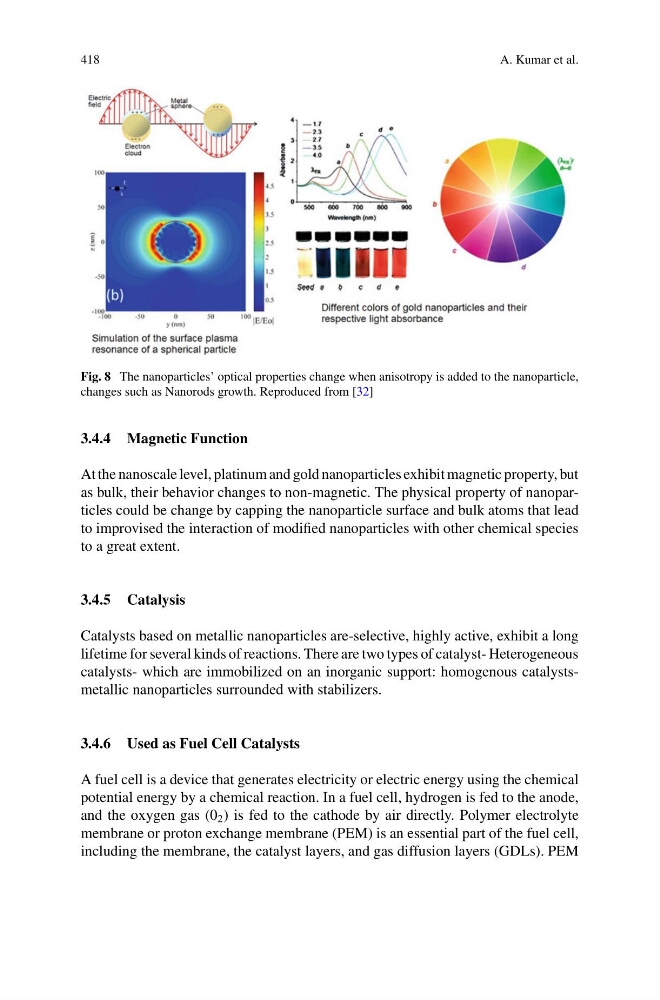
Fig. 8 The nanoparticles’ optical properties change when anisotropy is added to the nanoparticle,
changes such as Nanorods growth. Reproduced from [32]
3.4.4 Magnetic Function
At the nanoscale level, platinum and gold nanoparticles exhibit magnetic property, but
as bulk, their behavior changes to non-magnetic. The physical property of nanoparticles could be change by capping the nanoparticle surface and bulk atoms that lead
to improvised the interaction of modified nanoparticles with other chemical species
to a great extent.
3.4.5 Catalysis
Catalysts based on metallic nanoparticles are-selective, highly active, exhibit a long
lifetime for several kinds of reactions. There are two types of catalyst- Heterogeneous
catalysts- which are immobilized on an inorganic support: homogenous catalystsmetallic nanoparticles surrounded with stabilizers.
3.4.6 Used as Fuel Cell Catalysts
A fuel cell is a device that generates electricity or electric energy using the chemical
potential energy by a chemical reaction. In a fuel cell, hydrogen is fed to the anode,
and the oxygen gas (0 2 ) is fed to the cathode by air directly. Polymer electrolyte
membrane or proton exchange membrane (PEM) is an essential part of the fuel cell,
including the membrane, the catalyst layers, and gas diffusion layers (GDLs). PEM
A. Kumar et al.
Fig. 8 The nanoparticles’ optical properties change when anisotropy is added to the nanoparticle,
changes such as Nanorods growth. Reproduced from [32]
3.4.4 Magnetic Function
At the nanoscale level, platinum and gold nanoparticles exhibit magnetic property, but
as bulk, their behavior changes to non-magnetic. The physical property of nanoparticles could be change by capping the nanoparticle surface and bulk atoms that lead
to improvised the interaction of modified nanoparticles with other chemical species
to a great extent.
3.4.5 Catalysis
Catalysts based on metallic nanoparticles are-selective, highly active, exhibit a long
lifetime for several kinds of reactions. There are two types of catalyst- Heterogeneous
catalysts- which are immobilized on an inorganic support: homogenous catalystsmetallic nanoparticles surrounded with stabilizers.
3.4.6 Used as Fuel Cell Catalysts
A fuel cell is a device that generates electricity or electric energy using the chemical
potential energy by a chemical reaction. In a fuel cell, hydrogen is fed to the anode,
and the oxygen gas (0 2 ) is fed to the cathode by air directly. Polymer electrolyte
membrane or proton exchange membrane (PEM) is an essential part of the fuel cell,
including the membrane, the catalyst layers, and gas diffusion layers (GDLs). PEM