

344
N. Ashwin Kumar et al.
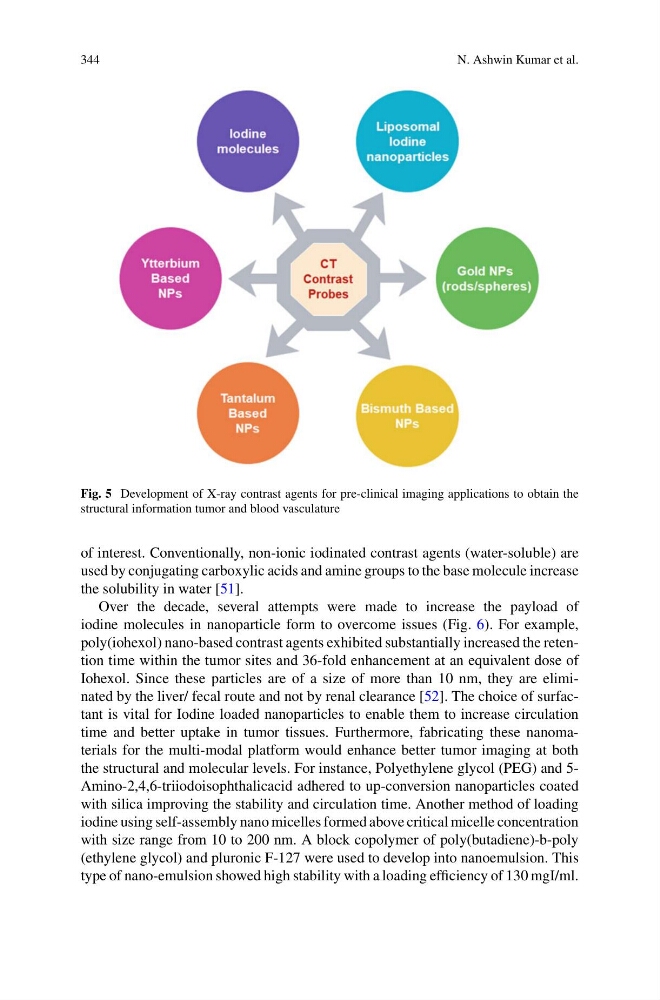
Fig. 5 Development of X-ray contrast agents for pre-clinical imaging applications to obtain the
structural information tumor and blood vasculature
of interest. Conventionally, non-ionic iodinated contrast agents (water-soluble) are
used by conjugating carboxylic acids and amine groups to the base molecule increase
the solubility in water [51].
Over the decade, several attempts were made to increase the payload of
iodine molecules in nanoparticle form to overcome issues (Fig. 6). For example,
poly(iohexol) nano-based contrast agents exhibited substantially increased the retention time within the tumor sites and 36-fold enhancement at an equivalent dose of
Iohexol. Since these particles are of a size of more than 10 nm, they are eliminated by the liver/ fecal route and not by renal clearance [52]. The choice of surfactant is vital for Iodine loaded nanoparticles to enable them to increase circulation
time and better uptake in tumor tissues. Furthermore, fabricating these nanomaterials for the multi-modal platform would enhance better tumor imaging at both
the structural and molecular levels. For instance, Polyethylene glycol (PEG) and 5Amino-2,4,6-triiodoisophthalicacid adhered to up-conversion nanoparticles coated
with silica improving the stability and circulation time. Another method of loading
iodine using self-assembly nano micelles formed above critical micelle concentration
with size range from 10 to 200 nm. A block copolymer of poly(butadiene)-b-poly
(ethylene glycol) and pluronic F-127 were used to develop into nanoemulsion. This
type of nano-emulsion showed high stability with a loading efficiency of 130 mgI/ml.
N. Ashwin Kumar et al.
Fig. 5 Development of X-ray contrast agents for pre-clinical imaging applications to obtain the
structural information tumor and blood vasculature
of interest. Conventionally, non-ionic iodinated contrast agents (water-soluble) are
used by conjugating carboxylic acids and amine groups to the base molecule increase
the solubility in water [51].
Over the decade, several attempts were made to increase the payload of
iodine molecules in nanoparticle form to overcome issues (Fig. 6). For example,
poly(iohexol) nano-based contrast agents exhibited substantially increased the retention time within the tumor sites and 36-fold enhancement at an equivalent dose of
Iohexol. Since these particles are of a size of more than 10 nm, they are eliminated by the liver/ fecal route and not by renal clearance [52]. The choice of surfactant is vital for Iodine loaded nanoparticles to enable them to increase circulation
time and better uptake in tumor tissues. Furthermore, fabricating these nanomaterials for the multi-modal platform would enhance better tumor imaging at both
the structural and molecular levels. For instance, Polyethylene glycol (PEG) and 5Amino-2,4,6-triiodoisophthalicacid adhered to up-conversion nanoparticles coated
with silica improving the stability and circulation time. Another method of loading
iodine using self-assembly nano micelles formed above critical micelle concentration
with size range from 10 to 200 nm. A block copolymer of poly(butadiene)-b-poly
(ethylene glycol) and pluronic F-127 were used to develop into nanoemulsion. This
type of nano-emulsion showed high stability with a loading efficiency of 130 mgI/ml.