

Nanomaterials for Medical Imaging …
341
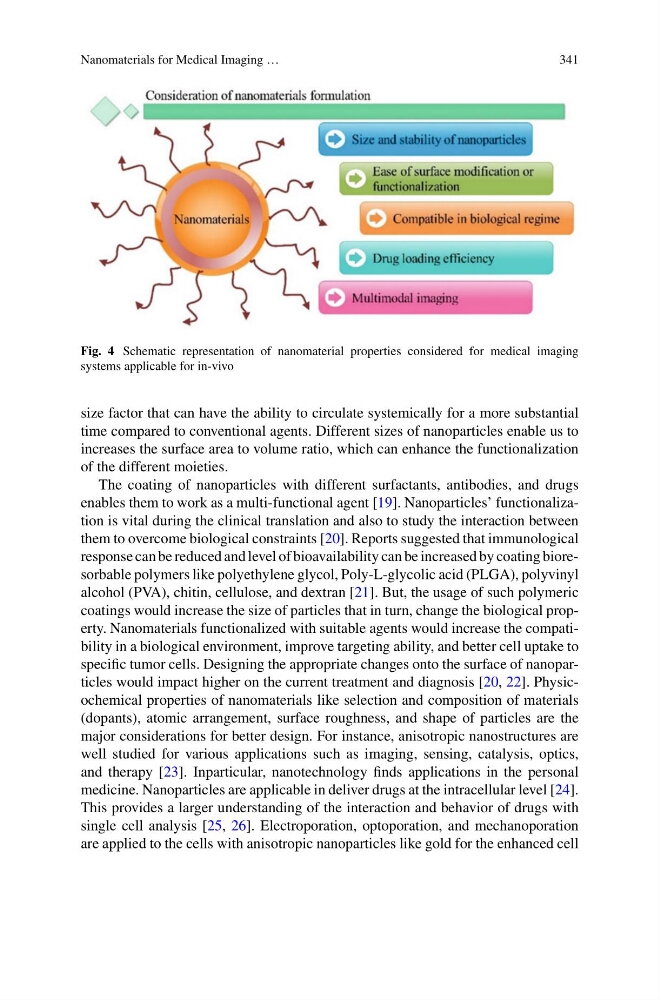
Fig. 4 Schematic representation of nanomaterial properties considered for medical imaging
systems applicable for in-vivo
size factor that can have the ability to circulate systemically for a more substantial
time compared to conventional agents. Different sizes of nanoparticles enable us to
increases the surface area to volume ratio, which can enhance the functionalization
of the different moieties.
The coating of nanoparticles with different surfactants, antibodies, and drugs
enables them to work as a multi-functional agent [19]. Nanoparticles’ functionalization is vital during the clinical translation and also to study the interaction between
them to overcome biological constraints [20]. Reports suggested that immunological
response can be reduced and level of bioavailability can be increased by coating bioresorbable polymers like polyethylene glycol, Poly-L-glycolic acid (PLGA), polyvinyl
alcohol (PVA), chitin, cellulose, and dextran [21]. But, the usage of such polymeric
coatings would increase the size of particles that in turn, change the biological property. Nanomaterials functionalized with suitable agents would increase the compatibility in a biological environment, improve targeting ability, and better cell uptake to
specific tumor cells. Designing the appropriate changes onto the surface of nanoparticles would impact higher on the current treatment and diagnosis [20, 22]. Physicochemical properties of nanomaterials like selection and composition of materials
(dopants), atomic arrangement, surface roughness, and shape of particles are the
major considerations for better design. For instance, anisotropic nanostructures are
well studied for various applications such as imaging, sensing, catalysis, optics,
and therapy [23]. Inparticular, nanotechnology finds applications in the personal
medicine. Nanoparticles are applicable in deliver drugs at the intracellular level [24].
This provides a larger understanding of the interaction and behavior of drugs with
single cell analysis [25, 26]. Electroporation, optoporation, and mechanoporation
are applied to the cells with anisotropic nanoparticles like gold for the enhanced cell
341
Fig. 4 Schematic representation of nanomaterial properties considered for medical imaging
systems applicable for in-vivo
size factor that can have the ability to circulate systemically for a more substantial
time compared to conventional agents. Different sizes of nanoparticles enable us to
increases the surface area to volume ratio, which can enhance the functionalization
of the different moieties.
The coating of nanoparticles with different surfactants, antibodies, and drugs
enables them to work as a multi-functional agent [19]. Nanoparticles’ functionalization is vital during the clinical translation and also to study the interaction between
them to overcome biological constraints [20]. Reports suggested that immunological
response can be reduced and level of bioavailability can be increased by coating bioresorbable polymers like polyethylene glycol, Poly-L-glycolic acid (PLGA), polyvinyl
alcohol (PVA), chitin, cellulose, and dextran [21]. But, the usage of such polymeric
coatings would increase the size of particles that in turn, change the biological property. Nanomaterials functionalized with suitable agents would increase the compatibility in a biological environment, improve targeting ability, and better cell uptake to
specific tumor cells. Designing the appropriate changes onto the surface of nanoparticles would impact higher on the current treatment and diagnosis [20, 22]. Physicochemical properties of nanomaterials like selection and composition of materials
(dopants), atomic arrangement, surface roughness, and shape of particles are the
major considerations for better design. For instance, anisotropic nanostructures are
well studied for various applications such as imaging, sensing, catalysis, optics,
and therapy [23]. Inparticular, nanotechnology finds applications in the personal
medicine. Nanoparticles are applicable in deliver drugs at the intracellular level [24].
This provides a larger understanding of the interaction and behavior of drugs with
single cell analysis [25, 26]. Electroporation, optoporation, and mechanoporation
are applied to the cells with anisotropic nanoparticles like gold for the enhanced cell