

Hydrogels: Biomaterials for Sustained and Localized Drug Delivery
217
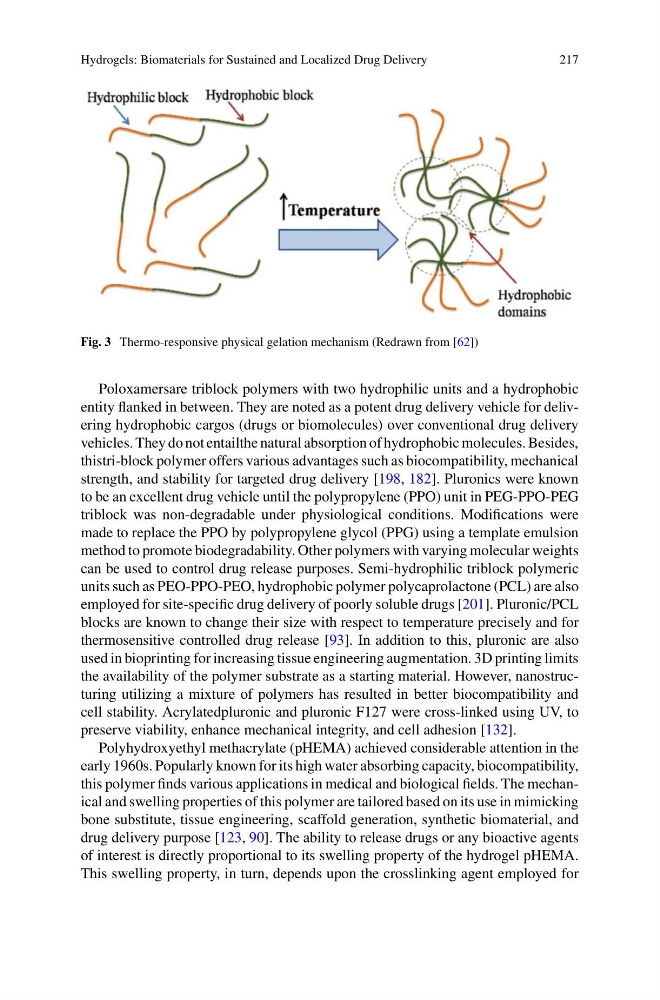
Fig. 3 Thermo-responsive physical gelation mechanism (Redrawn from [62])
Poloxamersare triblock polymers with two hydrophilic units and a hydrophobic
entity flanked in between. They are noted as a potent drug delivery vehicle for delivering hydrophobic cargos (drugs or biomolecules) over conventional drug delivery
vehicles. They do not entailthe natural absorption of hydrophobic molecules. Besides,
thistri-block polymer offers various advantages such as biocompatibility, mechanical
strength, and stability for targeted drug delivery [198, 182]. Pluronics were known
to be an excellent drug vehicle until the polypropylene (PPO) unit in PEG-PPO-PEG
triblock was non-degradable under physiological conditions. Modifications were
made to replace the PPO by polypropylene glycol (PPG) using a template emulsion
method to promote biodegradability. Other polymers with varying molecular weights
can be used to control drug release purposes. Semi-hydrophilic triblock polymeric
units such as PEO-PPO-PEO, hydrophobic polymer polycaprolactone (PCL) are also
employed for site-specific drug delivery of poorly soluble drugs [201]. Pluronic/PCL
blocks are known to change their size with respect to temperature precisely and for
thermosensitive controlled drug release [93]. In addition to this, pluronic are also
used in bioprinting for increasing tissue engineering augmentation. 3D printing limits
the availability of the polymer substrate as a starting material. However, nanostructuring utilizing a mixture of polymers has resulted in better biocompatibility and
cell stability. Acrylatedpluronic and pluronic F127 were cross-linked using UV, to
preserve viability, enhance mechanical integrity, and cell adhesion [132].
Polyhydroxyethyl methacrylate (pHEMA) achieved considerable attention in the
early 1960s. Popularly known for its high water absorbing capacity, biocompatibility,
this polymer finds various applications in medical and biological fields. The mechanical and swelling properties of this polymer are tailored based on its use in mimicking
bone substitute, tissue engineering, scaffold generation, synthetic biomaterial, and
drug delivery purpose [123, 90]. The ability to release drugs or any bioactive agents
of interest is directly proportional to its swelling property of the hydrogel pHEMA.
This swelling property, in turn, depends upon the crosslinking agent employed for
217
Fig. 3 Thermo-responsive physical gelation mechanism (Redrawn from [62])
Poloxamersare triblock polymers with two hydrophilic units and a hydrophobic
entity flanked in between. They are noted as a potent drug delivery vehicle for delivering hydrophobic cargos (drugs or biomolecules) over conventional drug delivery
vehicles. They do not entailthe natural absorption of hydrophobic molecules. Besides,
thistri-block polymer offers various advantages such as biocompatibility, mechanical
strength, and stability for targeted drug delivery [198, 182]. Pluronics were known
to be an excellent drug vehicle until the polypropylene (PPO) unit in PEG-PPO-PEG
triblock was non-degradable under physiological conditions. Modifications were
made to replace the PPO by polypropylene glycol (PPG) using a template emulsion
method to promote biodegradability. Other polymers with varying molecular weights
can be used to control drug release purposes. Semi-hydrophilic triblock polymeric
units such as PEO-PPO-PEO, hydrophobic polymer polycaprolactone (PCL) are also
employed for site-specific drug delivery of poorly soluble drugs [201]. Pluronic/PCL
blocks are known to change their size with respect to temperature precisely and for
thermosensitive controlled drug release [93]. In addition to this, pluronic are also
used in bioprinting for increasing tissue engineering augmentation. 3D printing limits
the availability of the polymer substrate as a starting material. However, nanostructuring utilizing a mixture of polymers has resulted in better biocompatibility and
cell stability. Acrylatedpluronic and pluronic F127 were cross-linked using UV, to
preserve viability, enhance mechanical integrity, and cell adhesion [132].
Polyhydroxyethyl methacrylate (pHEMA) achieved considerable attention in the
early 1960s. Popularly known for its high water absorbing capacity, biocompatibility,
this polymer finds various applications in medical and biological fields. The mechanical and swelling properties of this polymer are tailored based on its use in mimicking
bone substitute, tissue engineering, scaffold generation, synthetic biomaterial, and
drug delivery purpose [123, 90]. The ability to release drugs or any bioactive agents
of interest is directly proportional to its swelling property of the hydrogel pHEMA.
This swelling property, in turn, depends upon the crosslinking agent employed for