

100
A. Antony and J.-H. Boo
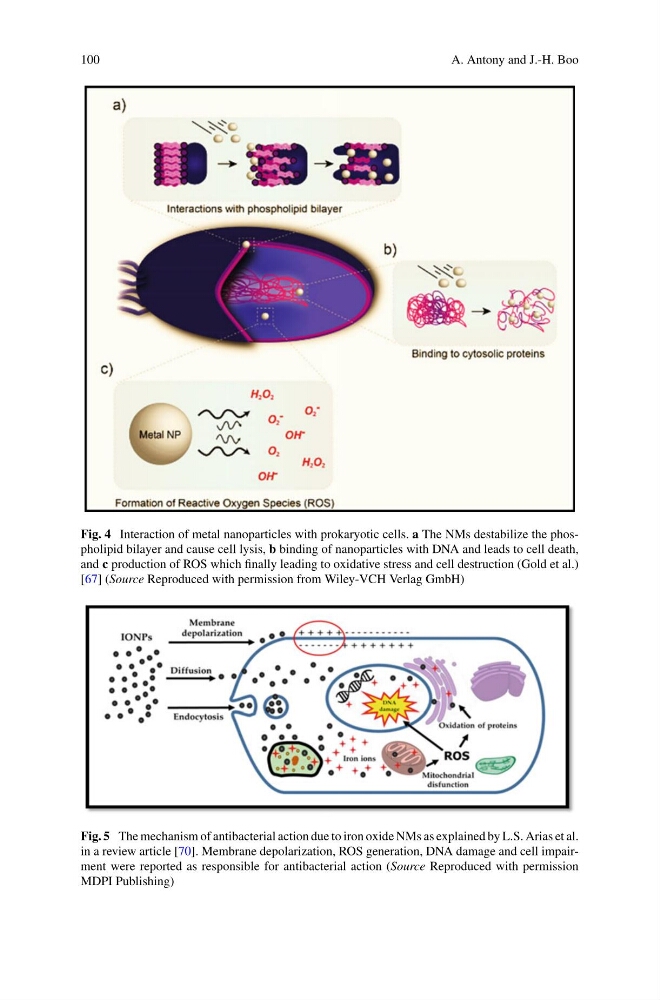
Fig. 4 Interaction of metal nanoparticles with prokaryotic cells. a The NMs destabilize the phospholipid bilayer and cause cell lysis, b binding of nanoparticles with DNA and leads to cell death,
and c production of ROS which finally leading to oxidative stress and cell destruction (Gold et al.)
[67] (Source Reproduced with permission from Wiley-VCH Verlag GmbH)
Fig. 5 The mechanism of antibacterial action due to iron oxide NMs as explained by L.S. Arias et al.
in a review article [70]. Membrane depolarization, ROS generation, DNA damage and cell impairment were reported as responsible for antibacterial action (Source Reproduced with permission
MDPI Publishing)
A. Antony and J.-H. Boo
Fig. 4 Interaction of metal nanoparticles with prokaryotic cells. a The NMs destabilize the phospholipid bilayer and cause cell lysis, b binding of nanoparticles with DNA and leads to cell death,
and c production of ROS which finally leading to oxidative stress and cell destruction (Gold et al.)
[67] (Source Reproduced with permission from Wiley-VCH Verlag GmbH)
Fig. 5 The mechanism of antibacterial action due to iron oxide NMs as explained by L.S. Arias et al.
in a review article [70]. Membrane depolarization, ROS generation, DNA damage and cell impairment were reported as responsible for antibacterial action (Source Reproduced with permission
MDPI Publishing)