

Size and Shape Selective Metal Oxide Nanomaterials …
93
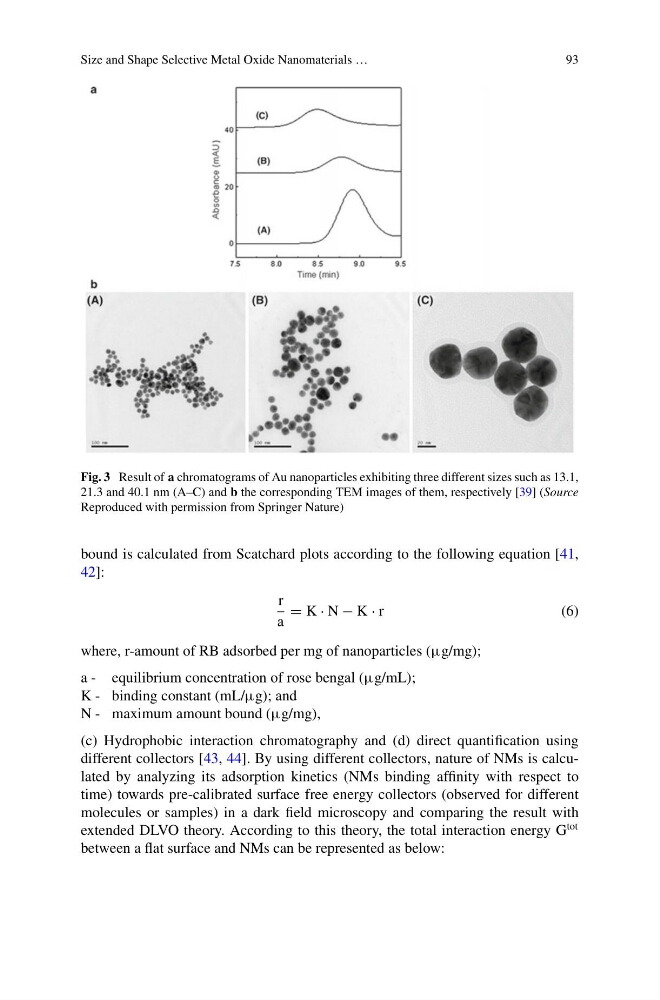
Fig. 3 Result of a chromatograms of Au nanoparticles exhibiting three different sizes such as 13.1,
21.3 and 40.1 nm (A–C) and b the corresponding TEM images of them, respectively [39] (Source
Reproduced with permission from Springer Nature)
bound is calculated from Scatchard plots according to the following equation [41,
42]:
r
a
= K · N − K · r
( 6 )
where, r-amount of RB adsorbed per mg of nanoparticles (μg/mg);
a - equilibrium concentration of rose bengal (μg/mL);
K - binding constant (mL/μg); and
N - maximum amount bound (μg/mg),
(c) Hydrophobic interaction chromatography and (d) direct quantification using
different collectors [43, 44]. By using different collectors, nature of NMs is calculated by analyzing its adsorption kinetics (NMs binding affinity with respect to
time) towards pre-calibrated surface free energy collectors (observed for different
molecules or samples) in a dark field microscopy and comparing the result with
extended DLVO theory. According to this theory, the total interaction energy G
tot
between a flat surface and NMs can be represented as below:
93
Fig. 3 Result of a chromatograms of Au nanoparticles exhibiting three different sizes such as 13.1,
21.3 and 40.1 nm (A–C) and b the corresponding TEM images of them, respectively [39] (Source
Reproduced with permission from Springer Nature)
bound is calculated from Scatchard plots according to the following equation [41,
42]:
r
a
= K · N − K · r
( 6 )
where, r-amount of RB adsorbed per mg of nanoparticles (μg/mg);
a - equilibrium concentration of rose bengal (μg/mL);
K - binding constant (mL/μg); and
N - maximum amount bound (μg/mg),
(c) Hydrophobic interaction chromatography and (d) direct quantification using
different collectors [43, 44]. By using different collectors, nature of NMs is calculated by analyzing its adsorption kinetics (NMs binding affinity with respect to
time) towards pre-calibrated surface free energy collectors (observed for different
molecules or samples) in a dark field microscopy and comparing the result with
extended DLVO theory. According to this theory, the total interaction energy G
tot
between a flat surface and NMs can be represented as below: