

7.9 Signatures of Chaos in a Soft Sinai Lattice
231
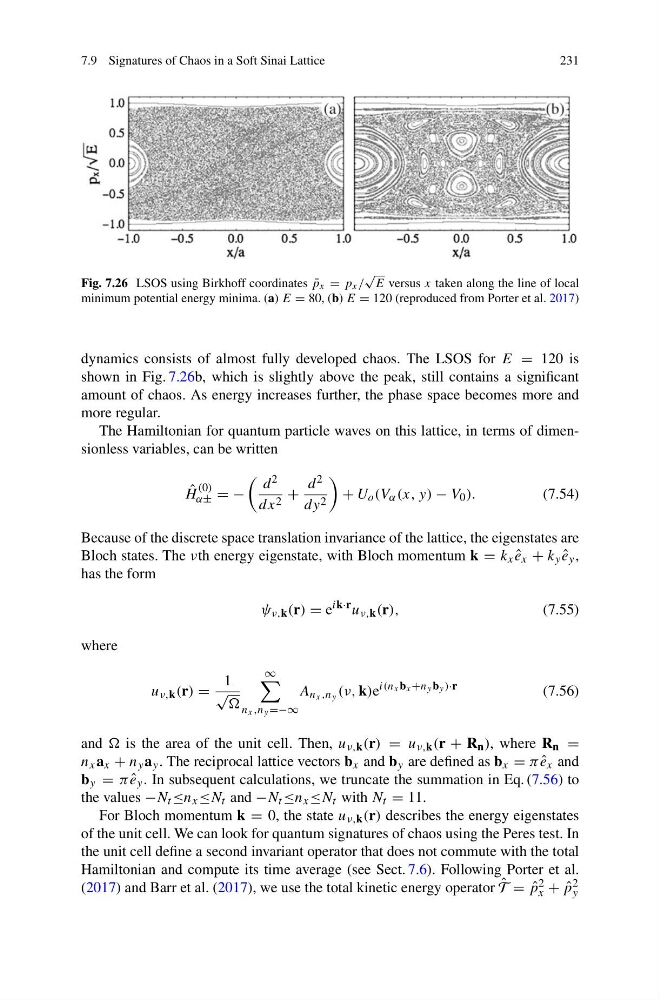
Fig. 7.26 LSOS using Birkhoff coordinates ¯
p x = p x /
√
E versus x taken along the line of local
minimum potential energy minima. (a) E = 80, (b) E = 120 (reproduced from Porter et al. 2017)
dynamics consists of almost fully developed chaos. The LSOS for E = 120 is
shown in Fig. 7.26b, which is slightly above the peak, still contains a significant
amount of chaos. As energy increases further, the phase space becomes more and
more regular.
The Hamiltonian for quantum particle waves on this lattice, in terms of dimensionless variables, can be written
ˆ
H
(0)
α± = −
d 2
dx 2 +
d 2
dy 2
+ U o (V α (x, y) − V 0 ).
(7.54)
Because of the discrete space translation invariance of the lattice, the eigenstates are
Bloch states. The νth energy eigenstate, with Bloch momentum k = k x ˆ
e x + k y ˆ
e y ,
has the form
ψ ν,k (r) = e
ik·r u ν,k (r),
(7.55)
where
u ν,k (r) =
1
√
∞
n x ,n y =−∞
A n x ,n y (ν, k)e
i(n x b x +n y b y )·r
(7.56)
and is the area of the unit cell. Then, u ν,k (r) = u ν,k (r + R n ), where R n =
n x a x + n y a y . The reciprocal lattice vectors b x and b y are defined as b x = π ˆ
e x and
b y = π ˆ
e y . In subsequent calculations, we truncate the summation in Eq. (7.56) to
the values −N t ≤n x ≤N t and −N t ≤n x ≤N t with N t = 11.
For Bloch momentum k = 0, the state u ν,k (r) describes the energy eigenstates
of the unit cell. We can look for quantum signatures of chaos using the Peres test. In
the unit cell define a second invariant operator that does not commute with the total
Hamiltonian and compute its time average (see Sect. 7.6). Following Porter et al.
(2017) and Barr et al. (2017), we use the total kinetic energy operator ˆ
T = ˆ
p 2
x + ˆ
p 2
y
231
Fig. 7.26 LSOS using Birkhoff coordinates ¯
p x = p x /
√
E versus x taken along the line of local
minimum potential energy minima. (a) E = 80, (b) E = 120 (reproduced from Porter et al. 2017)
dynamics consists of almost fully developed chaos. The LSOS for E = 120 is
shown in Fig. 7.26b, which is slightly above the peak, still contains a significant
amount of chaos. As energy increases further, the phase space becomes more and
more regular.
The Hamiltonian for quantum particle waves on this lattice, in terms of dimensionless variables, can be written
ˆ
H
(0)
α± = −
d 2
dx 2 +
d 2
dy 2
+ U o (V α (x, y) − V 0 ).
(7.54)
Because of the discrete space translation invariance of the lattice, the eigenstates are
Bloch states. The νth energy eigenstate, with Bloch momentum k = k x ˆ
e x + k y ˆ
e y ,
has the form
ψ ν,k (r) = e
ik·r u ν,k (r),
(7.55)
where
u ν,k (r) =
1
√
∞
n x ,n y =−∞
A n x ,n y (ν, k)e
i(n x b x +n y b y )·r
(7.56)
and is the area of the unit cell. Then, u ν,k (r) = u ν,k (r + R n ), where R n =
n x a x + n y a y . The reciprocal lattice vectors b x and b y are defined as b x = π ˆ
e x and
b y = π ˆ
e y . In subsequent calculations, we truncate the summation in Eq. (7.56) to
the values −N t ≤n x ≤N t and −N t ≤n x ≤N t with N t = 11.
For Bloch momentum k = 0, the state u ν,k (r) describes the energy eigenstates
of the unit cell. We can look for quantum signatures of chaos using the Peres test. In
the unit cell define a second invariant operator that does not commute with the total
Hamiltonian and compute its time average (see Sect. 7.6). Following Porter et al.
(2017) and Barr et al. (2017), we use the total kinetic energy operator ˆ
T = ˆ
p 2
x + ˆ
p 2
y