

meteorological years considered is limited to a single year in 70 % of both the
AQPs and RPs.
3.2.3 Impact
The block on IMPACT describes the consequences of modifications of environmental conditions related to the STATE of air quality, being either beneficial or
adverse.
Only 34 studies included the assessment of Health Impact (HI): 21 Air Quality
Action Plans, 11 Research Projects and 2 other activities. But, only 5 questionnaires
have specifically expressed HIA as the main objective, respectively 4 for research
projects and 1 for another activity. This reflects the fact that Integrated Assessment
Models do not all necessarily include the health aspects and the AQPs are designed
not with the main scope to assess HI.
The most common approaches used for HIA are the predictive approach (11
times) and the retrospective approach (7 times), while the counterfactual approach
had been answered 2 times and other methods 14 times.
Among all the activities, 11 (6 of which were AQPs) HIAs focused on both
short-time and long-term exposure to pollutants, 10 focused on long term exposure
and 1 on short-term exposure.
The most frequent air pollutants included in the health impact assessments are
related to the urban pollutants, such as particles (PM10 and PM2.5) followed by
1 to 50
1 to 50
50 to 200
>200
0%
10%
20%
30%
40%
50%
60%
70%
80%
90%
100%
AQP (7 answers)
RP (13 answers)
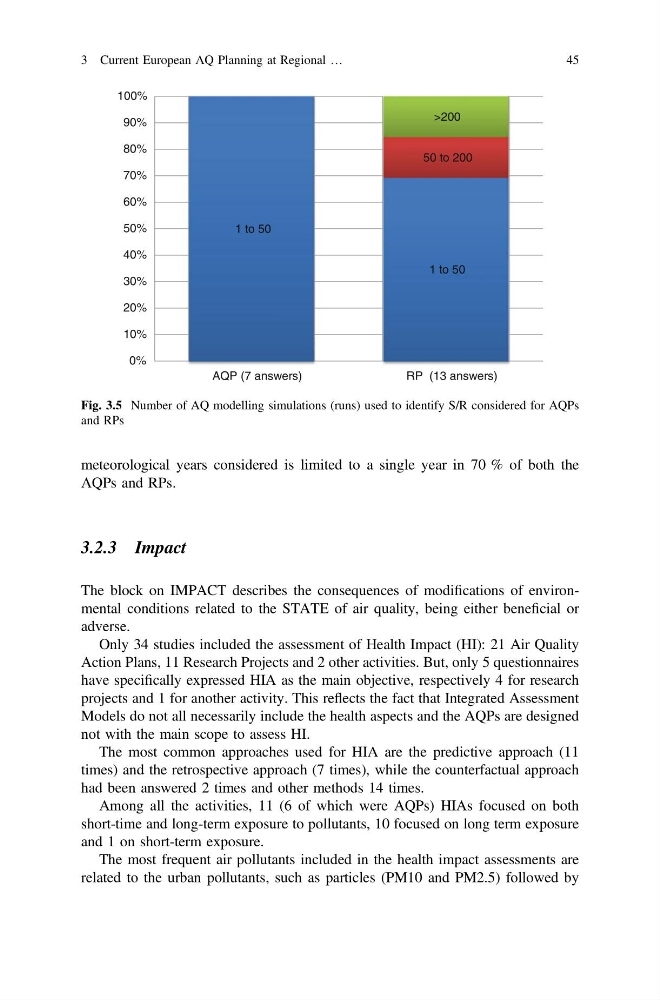
Fig. 3.5 Number of AQ modelling simulations (runs) used to identify S/R considered for AQPs
and RPs
3 Current European AQ Planning at Regional …
45
AQPs and RPs.
3.2.3 Impact
The block on IMPACT describes the consequences of modifications of environmental conditions related to the STATE of air quality, being either beneficial or
adverse.
Only 34 studies included the assessment of Health Impact (HI): 21 Air Quality
Action Plans, 11 Research Projects and 2 other activities. But, only 5 questionnaires
have specifically expressed HIA as the main objective, respectively 4 for research
projects and 1 for another activity. This reflects the fact that Integrated Assessment
Models do not all necessarily include the health aspects and the AQPs are designed
not with the main scope to assess HI.
The most common approaches used for HIA are the predictive approach (11
times) and the retrospective approach (7 times), while the counterfactual approach
had been answered 2 times and other methods 14 times.
Among all the activities, 11 (6 of which were AQPs) HIAs focused on both
short-time and long-term exposure to pollutants, 10 focused on long term exposure
and 1 on short-term exposure.
The most frequent air pollutants included in the health impact assessments are
related to the urban pollutants, such as particles (PM10 and PM2.5) followed by
1 to 50
1 to 50
50 to 200
>200
0%
10%
20%
30%
40%
50%
60%
70%
80%
90%
100%
AQP (7 answers)
RP (13 answers)
Fig. 3.5 Number of AQ modelling simulations (runs) used to identify S/R considered for AQPs
and RPs
3 Current European AQ Planning at Regional …
45