

73
transfer and optimisation of breeding pipelines. MNCs have led the global
development of applied breeding technology in genomics, phenomics and mechanisation, and can therefore complement ongoing public breeding efforts with modern technology to drive genetic gain. Technologies such as doubled haploids,
1
marker assisted selection,
2
precision phenotyping tools and data management platforms have transformed plant breeding in mature seed markets to develop products
quickly in response to customer requirements. MNCs also have access to global
sources of elite germplasm for a range of traits that will become more important in
ESA as a result of CC (in terms of tolerance to drought, new pests and diseases).
PPPs between public institutions and MNCs are likely to focus on germplasm
exchange, the creation and release of joint products, the provision of technological
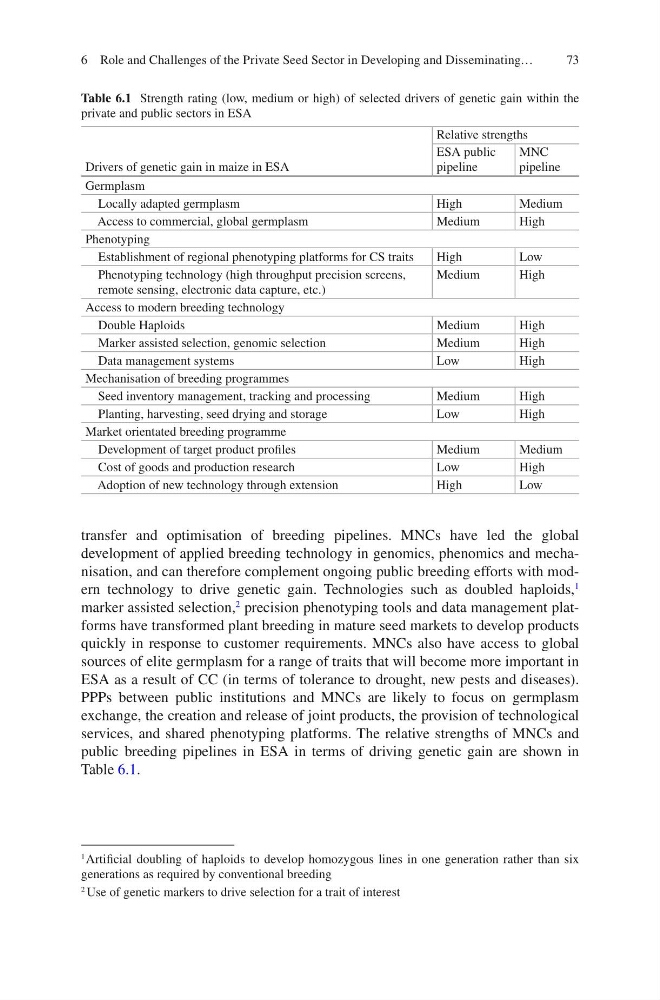
services, and shared phenotyping platforms. The relative strengths of MNCs and
public breeding pipelines in ESA in terms of driving genetic gain are shown in
Table 6.1.
1 Artificial doubling of haploids to develop homozygous lines in one generation rather than six
generations as required by conventional breeding
2 Use of genetic markers to drive selection for a trait of interest
Table 6.1 Strength rating (low, medium or high) of selected drivers of genetic gain within the
private and public sectors in ESA
Drivers of genetic gain in maize in ESA
Relative strengths
ESA public
pipeline
MNC
pipeline
Germplasm
Locally adapted germplasm
High
Medium
Access to commercial, global germplasm
Medium
High
Phenotyping
Establishment of regional phenotyping platforms for CS traits
High
Low
Phenotyping technology (high throughput precision screens,
remote sensing, electronic data capture, etc.)
Medium
High
Access to modern breeding technology
Double Haploids
Medium
High
Marker assisted selection, genomic selection
Medium
High
Data management systems
Low
High
Mechanisation of breeding programmes
Seed inventory management, tracking and processing
Medium
High
Planting, harvesting, seed drying and storage
Low
High
Market orientated breeding programme
Development of target product profiles
Medium
Medium
Cost of goods and production research
Low
High
Adoption of new technology through extension
High
Low
6 Role and Challenges of the Private Seed Sector in Developing and Disseminating…
transfer and optimisation of breeding pipelines. MNCs have led the global
development of applied breeding technology in genomics, phenomics and mechanisation, and can therefore complement ongoing public breeding efforts with modern technology to drive genetic gain. Technologies such as doubled haploids,
1
marker assisted selection,
2
precision phenotyping tools and data management platforms have transformed plant breeding in mature seed markets to develop products
quickly in response to customer requirements. MNCs also have access to global
sources of elite germplasm for a range of traits that will become more important in
ESA as a result of CC (in terms of tolerance to drought, new pests and diseases).
PPPs between public institutions and MNCs are likely to focus on germplasm
exchange, the creation and release of joint products, the provision of technological
services, and shared phenotyping platforms. The relative strengths of MNCs and
public breeding pipelines in ESA in terms of driving genetic gain are shown in
Table 6.1.
1 Artificial doubling of haploids to develop homozygous lines in one generation rather than six
generations as required by conventional breeding
2 Use of genetic markers to drive selection for a trait of interest
Table 6.1 Strength rating (low, medium or high) of selected drivers of genetic gain within the
private and public sectors in ESA
Drivers of genetic gain in maize in ESA
Relative strengths
ESA public
pipeline
MNC
pipeline
Germplasm
Locally adapted germplasm
High
Medium
Access to commercial, global germplasm
Medium
High
Phenotyping
Establishment of regional phenotyping platforms for CS traits
High
Low
Phenotyping technology (high throughput precision screens,
remote sensing, electronic data capture, etc.)
Medium
High
Access to modern breeding technology
Double Haploids
Medium
High
Marker assisted selection, genomic selection
Medium
High
Data management systems
Low
High
Mechanisation of breeding programmes
Seed inventory management, tracking and processing
Medium
High
Planting, harvesting, seed drying and storage
Low
High
Market orientated breeding programme
Development of target product profiles
Medium
Medium
Cost of goods and production research
Low
High
Adoption of new technology through extension
High
Low
6 Role and Challenges of the Private Seed Sector in Developing and Disseminating…