

62
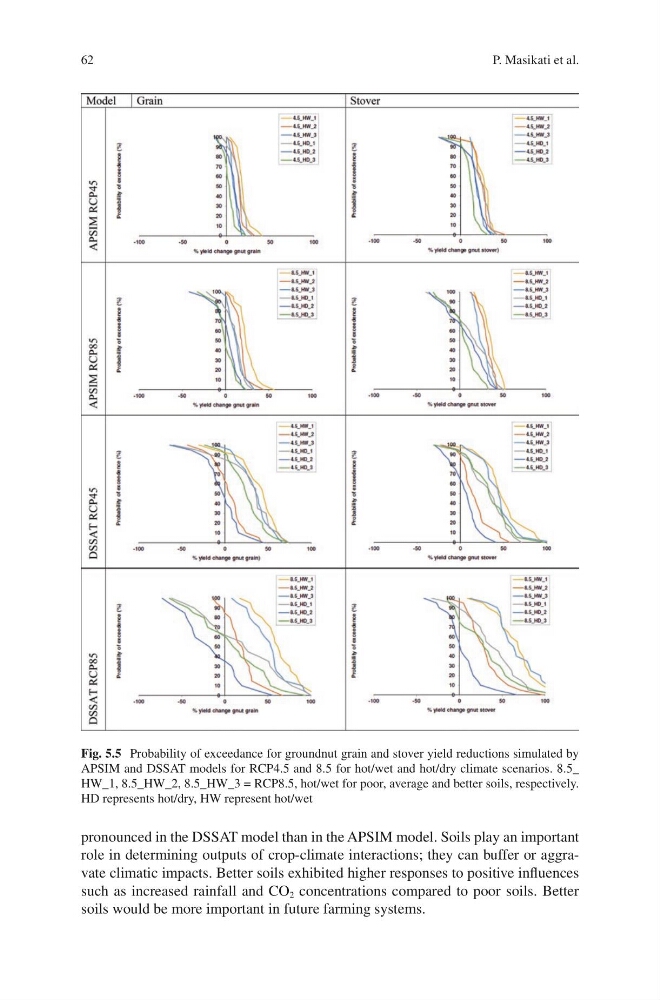
Fig. 5.5 Probability of exceedance for groundnut grain and stover yield reductions simulated by
APSIM and DSSAT models for RCP4.5 and 8.5 for hot/wet and hot/dry climate scenarios. 8.5_
HW_1, 8.5_HW_2, 8.5_HW_3 = RCP8.5, hot/wet for poor, average and better soils, respectively.
HD represents hot/dry, HW represent hot/wet
pronounced in the DSSAT model than in the APSIM model. Soils play an important
role in determining outputs of crop-climate interactions; they can buffer or aggravate climatic impacts. Better soils exhibited higher responses to positive influences
such as increased rainfall and CO 2 concentrations compared to poor soils. Better
soils would be more important in future farming systems.
P. Masikati et al.
Fig. 5.5 Probability of exceedance for groundnut grain and stover yield reductions simulated by
APSIM and DSSAT models for RCP4.5 and 8.5 for hot/wet and hot/dry climate scenarios. 8.5_
HW_1, 8.5_HW_2, 8.5_HW_3 = RCP8.5, hot/wet for poor, average and better soils, respectively.
HD represents hot/dry, HW represent hot/wet
pronounced in the DSSAT model than in the APSIM model. Soils play an important
role in determining outputs of crop-climate interactions; they can buffer or aggravate climatic impacts. Better soils exhibited higher responses to positive influences
such as increased rainfall and CO 2 concentrations compared to poor soils. Better
soils would be more important in future farming systems.
P. Masikati et al.